



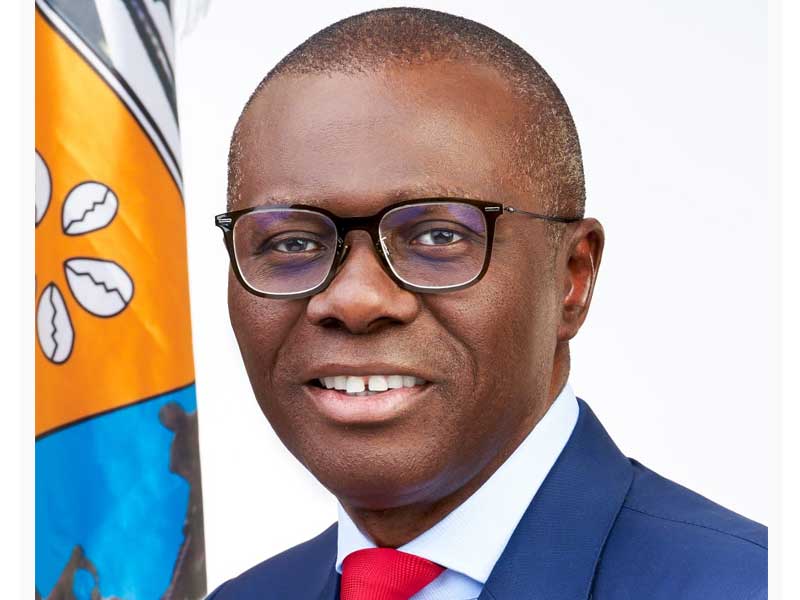
The Lagos International Financial Centre signals the power of sustained leadership, contends
ADE OLUMUYIWA
Governance in Lagos has often been described as a relay race rather than a solo sprint. Each administration inherits not only infrastructure and institutions but also ideas, long-term visions designed to outlive electoral cycles. In that tradition, Governor Babajide Sanwo-Olu’s push for the Lagos International Financial Centre (LIFC) represents more than a policy initiative; it signals consolidation of a reform trajectory that began during the administration of President Bola Tinubu when he governed Lagos State.
The concept of positioning Lagos as Africa’s premier financial hub did not emerge overnight. During Tinubu’s tenure as governor (1999–2007), foundational reforms were initiated in revenue generation, institutional restructuring, urban renewal, and private sector partnerships. Those reforms laid the groundwork for Lagos’ evolution into Nigeria’s undisputed commercial nerve centre. Today, Sanwo-Olu’s championing of the LIFC can be seen as the next logical step in that continuum, elevating Lagos from a national commercial capital to a globally competitive financial destination.
Speaking at a welcome dinner in honour of delegates attending the Nigeria Foreign Direct Investment Training Programme at the Moller Institute, University of Cambridge, Sanwo-Olu revealed that President Tinubu was not only aware of the LIFC initiative but “very excited” about it. According to the governor, the President has requested a high-level memo and is eager to take leadership and ownership of the idea.
That enthusiasm is significant. It underscores alignment between federal and state leadership, a synergy that can accelerate regulatory approvals, policy harmonisation, and international investor confidence. Financial centres thrive on clarity, coherence, and political backing at the highest levels. Tinubu’s support signals that the LIFC is not merely a Lagos project but a national economic strategy.
Sanwo-Olu’s framing of the initiative reinforces this broader ambition. “It is not about any particular person or region; it is about the country,” he said. In a federation where regional competition sometimes overshadows collaboration, such positioning reflects strategic maturity. A successful Lagos International Financial Centre would not only benefit Lagos but also serve as a gateway for investment flows into Nigeria as a whole.
The roots of this moment trace back to Tinubu’s fiscal reforms in the early 2000s. By strengthening internally generated revenue systems, modernising tax administration, and professionalising public finance management, his government established Lagos as financially resilient. Those reforms gave subsequent administrations, including Sanwo-Olu’s, the fiscal space to pursue ambitious projects.
Today, the LIFC represents a natural extension of that fiscal modernisation agenda. Financial centres are not built solely on skyscrapers; they require regulatory sophistication, capital market depth, digital infrastructure, legal certainty, and skilled human capital. The training programme at the University of Cambridge, organised by TheCityUK and supported by the UK’s Foreign Commonwealth and Development Office, reflects an understanding that capacity-building must precede branding.
By participating personally in the training, Sanwo-Olu signals commitment to technical depth rather than rhetorical flourish. Alongside him are influential stakeholders such as Aigboje Aig-Imoukhuede, co-chairman of the LIFC Council, Senators including Tokunbo Abiru, regulatory leaders like SEC Director-General Emomotimi Agama, and representatives of the Central Bank of Nigeria and the Nigerian Investment Promotion Commission. The diversity of participants reflects a multi-sectoral approach essential for financial centre development.
One of Tinubu’s most enduring governance legacies in Lagos was institutionalised collaboration with the private sector. From public-private partnerships in infrastructure to structured engagement with business associations, that model helped Lagos leverage private capital for public good.
The LIFC initiative continues that tradition. EnterpriseNGR and other private sector stakeholders are deeply involved, signalling that this is not a government-imposed vision but a co-created enterprise. Aig-Imoukhuede’s remarks at Cambridge highlighted the private sector’s enthusiasm and readiness to “think really big.”
Financial hubs like London, Singapore, and Dubai did not emerge through government decree alone; they evolved through sustained alignment between regulators, policymakers, and market participants. By fostering similar collaboration, Sanwo-Olu is building on the template established two decades ago.
Africa’s financial landscape is increasingly competitive. Cities such as Johannesburg, Nairobi, and Casablanca are vying for continental financial leadership. For Lagos to secure a dominant role, it must combine scale with credibility. Nigeria’s economy is Africa’s largest by population and one of its most dynamic markets, yet investor perception often hinges on regulatory stability and macroeconomic clarity.
The LIFC seeks to address these perception gaps. A structured, internationally benchmarked financial centre can enhance transparency, attract foreign direct investment, and provide a platform for innovative financial instruments. It can also deepen Nigeria’s capital markets, facilitating infrastructure financing and enterprise growth.
Tinubu’s excitement, as relayed by Sanwo-Olu, suggests that federal reforms, including financial sector restructuring and investment promotion, may align with the LIFC’s objectives. Such coherence between national economic strategy and state-level execution strengthens the initiative’s credibility.
Perhaps the most compelling aspect of this development is the demonstration of leadership continuity. In many political environments, successive administrations distance themselves from predecessors’ ideas. Lagos has largely avoided that trap. From Tinubu to subsequent governors, there has been a consistent commitment to long-term urban and economic planning.
Sanwo-Olu’s stewardship of the LIFC underscores this maturity. Rather than attempting to reinvent the wheel, he is extending an established trajectory, one that prioritises institutional strengthening, revenue sustainability, and global engagement. This continuity fosters investor confidence. Markets value predictability. When policies outlast personalities, they signal structural seriousness.
Of course, ambition must confront reality. Establishing a credible international financial centre requires robust legal frameworks, dispute resolution mechanisms, currency stability, cybersecurity infrastructure, and skilled workforce pipelines. Regulatory overlap between federal and state authorities must be carefully managed.
However, the deliberate approach, beginning with international training and high-level stakeholder engagement, suggests awareness of these complexities. The fact that Sanwo-Olu emphasised conceptual clarity and policy documentation before formal rollout indicates a methodical strategy.
Moreover, Tinubu’s readiness to review a detailed memo implies that federal instruments, legislative support, regulatory harmonisation, and possibly tax incentives, could be mobilised to reinforce the initiative.
If successfully realised, the Lagos International Financial Centre could mark a transformative chapter in Nigeria’s economic evolution. It would symbolise the transition from commodity dependence to financial intermediation, from reactive policy to strategic positioning.
For Sanwo-Olu, it represents both consolidation and innovation, consolidating the fiscal and institutional gains initiated under Tinubu’s governorship, while innovating toward global competitiveness. For Tinubu, now as President, it offers an opportunity to see a foundational vision scaled to national significance.
Ultimately, the story of the LIFC is about more than buildings or branding. It is about continuity of purpose, a demonstration that governance, when anchored in long-term thinking, can transcend political cycles. In consolidating the reform gains of previous administrations, Sanwo-Olu is reinforcing Lagos’ identity as Nigeria’s economic laboratory and Africa’s rising financial powerhouse.
When the vision materialises as conceived, the Lagos International Financial Centre may well stand as a testament to the power of sustained leadership, a bridge between past reforms and future prosperity.
Olumuyiwa writes from Lagos








Leave a comment