



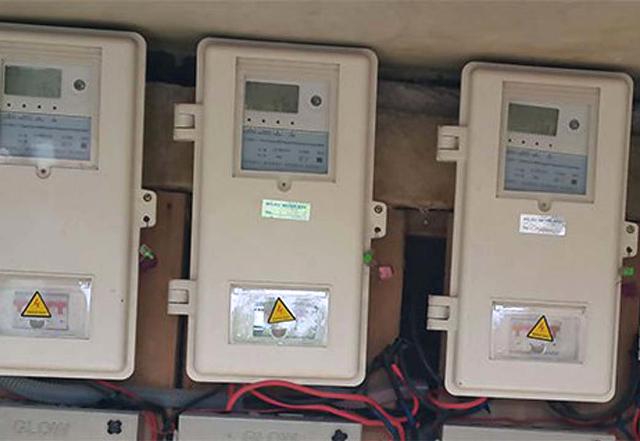

Nigeria’s electricity distribution companies ended 2025 with a modest improvement in customer metering, closing December with 6,966,584 metered customers and a national metering rate of 57.27 per cent, fresh data released by the Nigerian Electricity Regulatory Commission have shown.
The latest figures seen on Wednesday indicate that 109,556 customers were newly metered in December alone, up from 88,592 recorded in November, signalling a late-year acceleration in meter deployment across the 11 distribution companies.
As of December 2025, the total number of active electricity customers, defined as those billed or who vended electricity at least once within a 12-month period, stood at 12,163,412. Of this figure, 6,966,584 have been metered, leaving about 5.19 million customers still on estimated billing.
The data disclosed that the number of metered customers in Nigeria’s power sector moved closer to the seven-million mark for the first time, rising to 6,966,584 as of December 2025.
This represents an increase of 677,942 meters within the 12 months of 2025, compared to 6,288,642 metered customers recorded in December 2024. In percentage terms, this translates to a 10.78 per cent year-on-year growth in metered customers.
The national metering rate also improved significantly from 46.57 per cent in December 2024 to 57.27 per cent in December 2025, an increase of 10.7 percentage points.
Data show that meter installations equally rose from 572,055 end-use customer meters deployed in 2024 to 677,942 in 2025, indicating an additional 105,887 meters installed year-on-year, an 18.51 per cent increase in annual installations.
However, the gains were recorded against a shrinking customer base. The number of active customers in the Nigerian Electricity Supply Industry dropped from 13,503,342 as of December 31, 2024, to 12,163,412 in December 2025, a decline of 1,339,930 customers, representing a 9.92 per cent reduction.
Despite the improvement in coverage, more than four out of every 10 electricity customers remain unmetered, underscoring the scale of Nigeria’s longstanding metering deficit.
The 57.27 per cent metering rate recorded in December 2025 reflects gradual progress driven by regulatory pressure and ongoing initiatives, but significant gaps persist in achieving universal metering across the country.
A month-on-month analysis of the sector’s performance shows steady growth in metering between November and December 2025. As of November 2025, the total number of metered customers stood at 6,857,028, representing a national metering rate of 56.54 per cent out of 12,128,611 active customers. Within that month alone, distribution companies installed 88,592 new meters.
By December 2025, the number of metered customers had increased to 6,966,584, pushing the national metering rate to 57.27 per cent. The total active customer base also rose slightly to 12,163,412. Notably, meter installations accelerated during the month, with 109,556 customers newly metered, 20,964 more than the figure recorded in November.
The data indicate that metering growth outpaced the increase in active customers, resulting in a 0.73 percentage-point improvement in the national metering rate within one month. The December performance suggests a stronger push by distribution companies to close the metering gap before year-end, although millions of customers remain on estimated billing.
The data further reveal that while the number of active customers rose by 34,801 within one month, metering growth outpaced customer expansion, resulting in a 0.73 percentage-point improvement in the national metering rate.
In the period under review, Ikeja, Eko, and Abuja DisCos emerged as leading distribution companies in meter installations.
A breakdown of the December 2025 metering performance across the 11 electricity distribution companies showed wide disparities in coverage, with only a few operators crossing the 70 per cent threshold.
In Abuja DisCo’s franchise area, active customers stood at 1,341,807, out of which 1,044,014 have been metered, translating to a 77.81 per cent metering rate. The company added 19,953 new meters during the month, reinforcing its position among the top performers.
Similarly, Eko DisCo maintained one of the highest coverage levels nationwide, recording 550,764 metered customers out of 641,411 active users, representing an 85.87 per cent metering rate. Ikeja DisCo posted the strongest performance overall, with 1,130,213 of its 1,308,042 active customers metered, resulting in an 86.40 per cent coverage. Ikeja installed 7,748 new meters in December.
In the mid-tier category, Port Harcourt DisCo recorded 678,446 metered customers out of 1,057,858 active users, representing a 64.13 per cent metering rate, with 17,471 new meters installed. Benin DisCo achieved a 53.45 per cent metering rate after metering 564,500 of its 1,056,069 customers, deploying 17,928 meters within the month.
Ibadan and Enugu DisCos posted similar coverage levels slightly above 51 per cent. Ibadan metered 1,267,503 of its 2,444,715 active customers, with 11,298 new installations, while Enugu recorded 847,109 metered customers out of 1,641,569 active users, but added only 1,538 new meters in December.
However, several DisCos continued to trail significantly behind the national average. Jos DisCo recorded 257,258 metered customers out of 818,628 active users, representing a 31.43 per cent metering rate, despite installing 13,626 meters during the month. Kaduna DisCo posted a 34.42 per cent coverage with 187,050 metered customers from a base of 543,497, while Kano DisCo recorded 35.35 per cent, having metered 282,319 of its 798,718 customers.
Yola DisCo remained among the lowest performers, with 157,408 metered customers out of 511,098 active users, translating to a 30.80 per cent metering rate, even as it deployed 4,763 meters in December.
Overall, the sector recorded 12,163,412 active customers in December 2025, of which 6,966,584 were metered, reflecting a national metering rate of 57.27 per cent. A total of 109,556 customers were newly metered within the month, underscoring ongoing efforts to narrow the country’s persistent metering gap.
The improvement in metering rates comes amid persistent complaints from consumers over estimated billing practices.
Consumer groups have repeatedly argued that closing the metering gap is critical to restoring trust in the electricity market, improving revenue assurance for DisCos, and reducing disputes.
They note that metering remains central to the financial viability of Nigeria’s power sector. Without accurate consumption data, distribution companies struggle with revenue leakages, energy theft, and billing inefficiencies, challenges that ultimately affect liquidity across the entire value chain, from generation companies to gas suppliers.
Despite the progress recorded in 2025, the numbers show that approximately 5.19 million active customers were still unmetered as of December.
At the current monthly average deployment rate of roughly 100,000 meters, analysts estimate that it could take several more years to fully eliminate the metering deficit unless deployment is significantly scaled up.
Commenting on the latest metering figures, the Executive Director and Convener of PowerUp Nigeria, Mr Adetayo Adegbemle, said that although progress had been recorded, the pace remained insufficient to close the country’s wide metering gap in the near term.
“From the data presented against the metering gap, we still have a long way to go. Yes, there have been improvements, but if we look at where we are headed, the rate is still very slow,” he said.
Adegbemle stressed that the government must explore alternative strategies to accelerate meter deployment, noting that recent interventions under the Distribution Sector Recovery Programme were a step in the right direction.
“The DISREP meters that the minister recently received at the port are supposed to total about five million units. That is a move in the right direction. What we need to do now is ensure proper monitoring and make sure these meters are installed in the right places,” he stated.
He added that accountability was critical, particularly as the programme is being financed through a World Bank facility.
“It is going to help us a lot, especially since it is a World Bank loan and something we have to pay back. The monitoring aspect is not just for the government alone; it is the duty of every Nigerian. We must ensure transparency and proper deployment if we truly want to build and strengthen the power sector,” Adegbemle said.
As Nigeria deepens its electricity market reforms and state-level regulatory transitions gather momentum, metering performance is likely to become a key benchmark for operational efficiency and consumer protection in 2026.












Leave a comment