



Idris Ali Muhammed
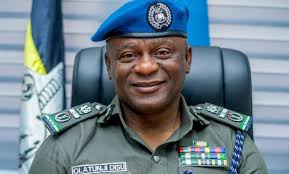
History is rarely altered by hesitation. It bends, instead, to moments of clarity: when leadership recognises that an old structure can no longer bear the weight of new realities. Nigeria appears to be standing in such a moment. And in the first decisive hours of his stewardship as the nation’s 23rd Inspector-General of Police, Tunji Disu, signalled that he understands the gravity of the hour.
Barely sworn in by President Bola Tinubu, the new IG inaugurated a seven-member committee to oversee the implementation of state police in Nigeria. It was an act both symbolic and substantive; symbolic because it announced a break from incrementalism; substantive because it set in motion the machinery required to translate aspiration into architecture.
The committee, chaired by Professor Olu Ogunsakin, has been entrusted with responsibilities that cut to the heart of Nigeria’s federal experiment: to review policing models within and outside the country; to assess the nation’s evolving security needs; to propose an operational framework for state police; and to design robust mechanisms for recruitment, training, resource allocation, accountability, and oversight. In short, it must craft a system that decentralises without destabilising, empowers without fragmenting, and innovates without eroding national cohesion.
IG Disu’s urgency is commendable. It reflects the deepening national consensus that Nigeria’s current security architecture; centralised, overstretched, and often distant from local realities, can no longer single-handedly guarantee safety across a federation of more than 230 million citizens. Yet, if speed is necessary, depth is indispensable. Structural reform of this magnitude demands not only administrative action but philosophical clarity and legislative memory.
It is here that the experience and insight of Senator Uba Sani, the Governor of Kaduna State, become profoundly relevant.
Long before the present crescendo of consensus, Uba Sani was a steady voice in the wilderness of reform. As a senator in the 9th National Assembly, he did not merely advocate rhetorically for state police; he engineered a comprehensive legislative blueprint to make it constitutionally viable. He sponsored a suite of bills aimed at altering the 1999 Constitution and recalibrating Nigeria’s policing framework to reflect federal realities.
The Constitution Alteration Bill (SB. 592) sought to establish state police forces across the federation, create State Police Service Commissions, and appropriately redefine federal supervisory structures. The Police Service Commission Act (Repeal and Re-Enactment) Bill (SB. 594) aimed to clarify disciplinary jurisdictions and institutional mandates. The Nigerian Police Act (Amendment) Bill (SB. 593) proposed an operational structure for state police, while the State Police Service Commission (Establishment) Bill (SB. 595) detailed oversight and disciplinary mechanisms at the subnational level.
These were not isolated legislative curiosities; they formed a coherent ecosystem. They anticipated the anxieties of critics and addressed the practicalities of implementation. They recognised that decentralisation must be anchored in standards, regulation, and constitutional clarity. Though Senator Sani’s bills progressed significantly, they stalled at the Joint Committee on Constitutional Amendment; victims not of conceptual weakness but of insufficient political will at the time.
Today, the political climate has changed. President Bola Ahmed Tinubu has personally called upon the National Assembly to amend the Constitution to create a legal framework for state police. Both chambers have commenced the process. The National Economic Council has seen all 36 governors align in support. What was once controversial is now increasingly inevitable.
Yet inevitability does not guarantee coherence. To decentralise policing is to navigate delicate questions: How will standards be harmonised across states? How will officers be recruited and trained to ensure professionalism rather than parochialism? What safeguards will prevent abuse by overzealous subnational authorities? How will intelligence-sharing between federal and state commands be institutionalised? How will inter-state crimes be pursued without jurisdictional friction?
These are not abstract questions; they are structural fault lines. And it is precisely because Governor Sani has grappled with them legislatively and executively that his guidance could prove invaluable to the IG and his committee.
His advocacy rests on a simple but profound proposition: a federated republic demands federated security. The federal government alone cannot secure Nigeria. A centralised police force numbering fewer than 400,000 officers cannot adequately police a vast and diverse federation. Proximity matters in law enforcement. Local knowledge matters. Community trust matters. To bring policing closer to the people is to deepen intelligence, accelerate response times, and cultivate legitimacy.
Governor Sani eloquently articulated this philosophy when he delivered a landmark lecture at the Nigerian Institute of International Affairs (NIIA) in Lagos, titled “The Role of State Governments in Overcoming Insecurity in Nigeria.” There, before an audience of diplomats, jurists, and policy scholars, he reframed the security debate. Insecurity, he argued, has too often been discussed as a purely federal burden. But states are not administrative appendages; they are constitutional partners. They must be architects of peace, not passive recipients of directives.
He insisted that properly legislated and regulated state police forces are not threats to unity but guarantors of it. Regulation, transparency, and oversight are the antidotes to abuse. Unity is not preserved by overcentralisation; it is strengthened by shared responsibility.
Importantly, Governor Sani’s vision is not theoretical. In Kaduna State, he has sought to embody the principles of decentralised security governance. Upon assuming office, he confronted banditry, kidnappings, and communal fractures. Rather than rely solely on distant command structures, he institutionalised regular State Security Council meetings, enhanced intelligence collaboration, and invested in community engagement; consulting traditional rulers, religious leaders, youth groups, and civil society actors.
This approach, often described as the “Kaduna Peace Model,” links security to development. More than 535 schools previously shut due to insecurity have reopened. Farming and rural trade have revived. Vigilante groups have been trained and equipped to work in coordination with formal security agencies. The emphasis has been on inclusion, dialogue, and empowerment; recognising that security is not merely the absence of violence but the presence of justice and opportunity.
Simultaneously, his administration has pursued infrastructure renewal and social investment with deliberate intensity: over 1,350 kilometres of roads constructed or rehabilitated; 1,700 classrooms built or renovated; 1,100 primary healthcare centres upgraded, 255 of them to Level Two status; and a 300-bed specialist hospital inaugurated as a statement of commitment to human security. Peace, he has argued, without development remains fragile.
Even Kaduna’s ethno-religious diversity, once combustible, has been recalibrated through inclusive governance. For over two and a half years, the state has not recorded ethno-religious crises. The United Kingdom’s revision of its travel advisory from “Red” to “Amber” stands as a quiet but significant international affirmation of stability.
Why does this matter for the new Inspector-General? Because state police cannot be successfully birthed in a vacuum. It must emerge from a framework that understands both constitutional design and lived governance. IG Disu’s committee must avoid the twin perils of haste and abstraction. It must ensure that decentralisation strengthens, rather than fragments, national security.
Governor Sani’s legislative foresight offers a template for harmonising federal and state mandates. His executive record offers evidence that proximity-driven security can yield tangible results. At the North-West Zonal Public Hearing on constitutional review in Kaduna, he even offered to provide documentation and expert insight to the National Assembly’s Joint Review Committee free of charge, an act that underscores a commitment to national progress over personal acclaim.
President Tinubu’s Renewed Hope Agenda provides the political canopy under which this reform can flourish. The president’s courage in reopening the constitutional question reflects an awareness that governance must evolve with circumstance. But political will must now be matched by institutional wisdom.
Nigeria’s security challenges are complex: banditry, terrorism, communal conflict, organised crime, cyber threats. A centralised system alone has struggled to respond with sufficient agility. Decentralisation is not a repudiation of federal authority; it is an adaptation to complexity. It is a recognition that effective policing requires nearness; cultural, geographic, and psychological.
IG Tunji Disu has demonstrated resolve. The president has demonstrated commitment. The governors have demonstrated consensus. What remains is the careful construction of a system that will endure beyond personalities and political cycles.
In this delicate and consequential undertaking, the guidance of Governor Sani could serve as both compass and anchor. His long-standing advocacy, legislative craftsmanship, and executive experimentation provide rare continuity in a reform that has too often been episodic.
Nigeria stands on the threshold of redefining its security architecture. If thoughtfully designed and effectively implemented, state policing holds immense promise: quicker responses to emerging threats, deeper community trust, enhanced accountability, and a reinvigorated federal compact.
The moment calls for collaboration among visionaries. It calls for humility before complexity. It calls for learning from those who have prepared for this hour long before it arrived.
The new Inspector-General has opened the chapter with commendable urgency. The president has turned the page with political courage. The nation now waits for a narrative of reform that will secure its towns, restore its villages, and reassure its cities.
And as that narrative is written, it would be wise, indeed profoundly wise, for the architects of Nigeria’s new policing order to draw deeply from the experience, insight, and statesmanship of Governor Sani.
Dr. Muhammed, a sociology teacher, resides in Samaru, Zaria
















Leave a comment