



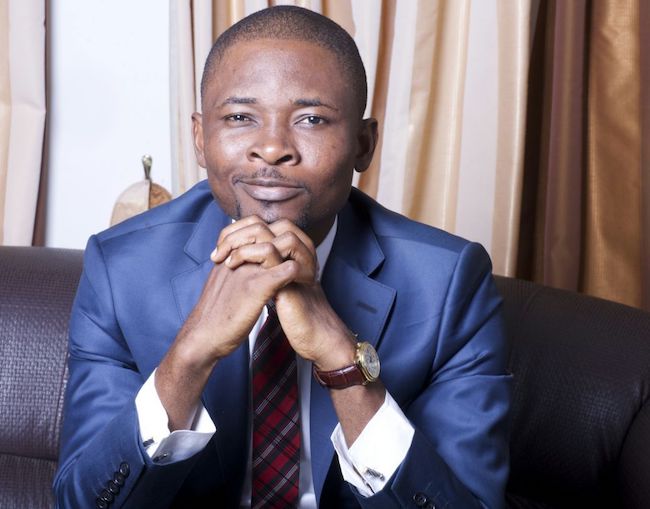
It’s time to turn attention to the revenue and expenditure policies of the government, argues JOSHUA J. OMOJUWA
Every major reform project reaches a point where it must confront the limits of what policy tweaks can achieve. Nigeria may now be standing at that point. After months of monetary cleanup, exchange rate reforms, and aggressive steps to stabilize the naira, attention must shift to the other half of the economic picture; the fiscal side. That is the next frontier of reform, and perhaps the more complex one. The success (or failure) of these coming years depends more on what happens across Nigeria’s fiscal architecture: how we raise money, how we spend it, and who feels the impact. Taiwo Oyedele said this much during his ministerial screening and he looks set to lead Nigeria on this front.
The early wins have been monetary. We have seen foreign reserves rise, exchange rates gradually stabilize, and investor confidence inch back. Those were indispensable achievements, but as several economists have pointed out, you cannot tighten your way to prosperity. Monetary stability, while crucial, is a platform and not the destination. It creates breathing room. What policymakers choose to do with that room will determine whether the average Nigerian sees actual progress or just another round of celebration in government briefings.
What does the fiscal side mean here? It begins with revenue. For decades, Nigeria’s public finances have rested on a narrow base. The country’s dependence on oil revenues has turned the federal budget into a function of oil prices rather than productivity. When oil prices are high, the government spends big; when they fall, we panic and borrow even bigger. Tax revenues—the foundation of fiscal stability elsewhere—remain low by every international measure. Analysts often mention the figure: Nigeria’s tax to GDP ratio hovers around ten percent, barely half the African average. That number tells a story of an economy where government has very little reach and citizens, in turn, feel little obligation toward government.
The Tinubu administration seems to recognize this. The creation of the Presidential Fiscal Policy and Tax Reforms Committee was not just bureaucratic symbolism; it was a signal. Chaired by Taiwo Oyedele, the same technocrat many consider one of government’s most competent hands, the committee’s task is to reimagine how the Nigerian state raises revenue without crushing productivity. It is not enough to demand more taxes; people and businesses need to see transparency, simplicity, and fairness. What drives tax compliance is not fear but trust; that the money collected will return to citizens as roads, schools, hospitals, and safety. That is still Nigeria’s biggest fiscal challenge: not just what to tax, but how to earn trust.
The second leg of the fiscal story is spending. Even if Nigeria doubled its revenue tomorrow, waste would swallow much of it. Public expenditure is riddled with duplication, inefficiency, and the institutional reluctance to measure results. Recurrent spending continues to take the lion’s share. Real reform will mean a cultural change in government itself.
Rationalizing agencies, cutting redundancy, and introducing performance based budgeting must become survival strategies. The clamour for more fiscal discipline is a recognition that efficiency is ultimately a moral question. A wasteful government is not merely poor at math; it is unfair to its people.
There are external complications too. As foreign investors weigh Nigeria’s potential, they also study her fiscal direction. A country that can show clarity will attract longer term commitments rather than speculative money chasing short term gains. Fiscal credibility is thus as much about perception as it is about policy. Investors, like citizens, are willing to be patient if they can see seriousness.
At the center of all these threads lies the question of federalism. Nigeria’s fiscal imbalance is not only about revenue or spending but about where those happen. The federal government controls most of the money, while the subnationals hold most of the responsibilities directly affecting lives. Education, health, local infrastructure, security, these are state matters funded mainly by federal transfers. But as allocations rise, citizens have every right to ask: what are states doing with the record inflows from the Federation Account? Fiscal reform will not succeed if it remains a conversation limited to Abuja. It must spread to the thirty six states and the FCT, where fiscal opacity is often worse and accountability weaker.
There is also the human side of the fiscal picture. For the ordinary Nigerian, “fiscal policy” can sound distant, like an academic phrase belonging to economists in suits. But its effects are immediate. A fairer tax system determines whether small businesses can survive. More efficient spending determines whether local clinics have drugs and schools have teachers. Debt management determines whether future generations inherit opportunity or burden. Fiscal reform, therefore, is not about numbers on a spreadsheet but about the country’s social contract.
The danger now is complacency. Monetary stabilization has created a faint feeling of relief, credit to the Central Bank Governor, Yemi Cardoso here. But it would be a mistake to confuse calm for arrival. The harder and deeper work begins on the fiscal front. That is where transparency meets sacrifice, where reform stops being abstract, becomes palpable. This phase will test not only policymakers’ intellect but their nerve. It is one thing to float a currency or scrap a subsidy; it is another to redesign how an entire government spends and earns.
Yet this is precisely the reform frontier that offers the greatest payoff. If Nigeria can modernize its public finances; expand its tax base without stifling growth, spend with discipline, and borrow only with purpose, the rewards will cascade across every sector. Jobs will follow investment; confidence will follow accountability; and maybe, for once, prosperity will not feel like a privilege for a few but a promise to all.
Nigeria has taken its first steps on the right path. The hope now is that it finds the courage to keep walking toward a future where the numbers make sense not just on paper, but in people’s lives. Like this page made clear last week, until the Nigerian masses start to count the gains of these reforms for themselves, the job’s not done.
Omojuwa is chief strategist, Alpha Reach/BGX Publishing













Leave a comment