



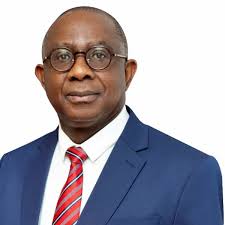
Professor Oyebanji Oyelaran-Oyeyinka is a renowned Development Economist, the first Nigerian Professor of Industrialisation, Innovation, and Technology Policy, and immediate Senior Special Adviser on Industrialisation at the African Development Bank. He was recently appointed Chairman, Ladoke Akintola University of Technology (LAUTECH) Teaching Hospital, Osun State just around the celebrations of his 71st birthday. Yinka Olatunbosun reports.
Africa’s Pioneer Development Economist in Industrialisation, Innovation, and Technology Policy, Prof. Oyebanji Oyelaran-Oyeyinka may have experienced a series of exciting moments in his lifetime but nothing truly compares with the gift of life as he turns the calendar each year. A gratifying feeling that he would only compare with when he graduated from the University of Ife and that day when he defended his PhD thesis.
“The external examiner told me: ‘Banji, this is a great thesis, it deserves to be read by a larger audience, get it published.”
He recalled as the imagery of recollections played in space between us. His mind shifted to the present, reflecting on the celebrations that often come with gifts and best wishes from family and friends.
“Reaching 71 feels both humbling and enlightening,” he continued. “Being alive is by God’s amazing grace. Personally, I am so grateful to God. Also, watching the continent’s youth confidently design, build, and export knowledge-based solutions is deeply gratifying—it represents the culmination of what many of us only dreamed of decades ago. Despite all our troubles, we have several unicorns, mostly fintech, doing remarkably well.”
As a seasoned professional in the fields of economics, innovation, and technology management, his commitment has always been to situate Africa’s transformation in a form that is knowledge-led, innovation-driven, and institutionally grounded. To be sure, his scholarship and advisory roles are geared towards helping to bridge the gap between theory and practice—between policy documents and tangible factories, startups, and research networks. That is a legacy worth leaving.
His journey towards this has been well-paved with outstanding academic performance as he would explain.
“I had First Class in Chemical Engineering as the best graduating student from the best department of Chemical Engineering at the time, I dare say, in Africa. I completed my Master’s in the same subject at the University of Toronto, which Chemical Engineering Department was ranked number three in all of North America. My switch to Development Economist was, I believe, a divinely guided move not out of an inability to continue in engineering. My professional life is a journey of periodic changes and learning new things in leadership but most satisfying. “ He was quick to recognise some of the obstacles to the nation’s development as far back as the 1980s. That period was marked by the collapse of early industrial experiments in Nigeria. He came to a realisation: national autonomous technology capacity—not raw investment dollars—was the missing piece.
“At the Ajaokuta Steel plant where I started my career, the moment the foreign contractors withdrew, construction ceased and ultimately that was the end of the project. Second, my doctoral research, which connected industrial policy to institutional learning, convinced me of the importance of adaptive governance. My thesis looked at technology acquisition in Nigeria and that working through the different factors that shape the trajectory of nations, leadership stood out as an indispensable ingredient for nation building and economic development. And third, working at the United Nations and the African Development Bank (AfDB) revealed how fragile progress can be when finance is unavailable to build infrastructure and innovation capacity; and when these are not aligned with high-skill human capital.”
It was not enough to be discerning and easily spot the challenges in the system. It was crucial to rectify them. But could he have done it alone? He figured out the two major hurdles which include justifying why a nation needs experts with strong roots in engineering and economics and addressing the problem of institutional inertia.
“Many colleagues could not initially see how technological capability building relates to economic structure or how innovation policy differs from industrial policy. Over time, I learned to build coalitions, translate academic frameworks into actionable strategies, and show results that spoke louder than theory. Persistence and patience were indispensable.
“In the early days, a friend asked me: “You are a brilliant fellow, how will you even get a job dabbling into this thing nobody understands.” It was his way of saying that I was wasting my talent. I was fully persuaded of my mission. I ended up encouraging several young people to follow this discipline and I am glad we have several master’s and doctorate level people trained both while I was at NISER and at the United Nations University-Institute for New Technologies (UNU_INTECH), Maastricht, Netherlands.”
Those years of study eventually paid off. He would later take on advisory roles at the African Development Bank and African Continental Free Trade Area (AfCFTA).
“Academia taught me to look for patterns behind problems,” he quipped.
In policy work, that translates into identifying structural constraints rather than chasing symptomatic fixes. His background in research guided him to base recommendations on evidence and comparative learning. He sought to understand why South Korea or Malaysia succeeded and why Africa must chart its own path rather than imitate.
“Industrialisation is the engine of inclusive growth—it creates jobs, diversifies exports, and builds productive capacity. The AfCFTA provides the continental platform to scale industries beyond narrow national markets. By harmonising standards, reducing intra-African tariffs, and aligning infrastructure, AfCFTA can transform Africa’s 1.4 billion people into a coherent industrial market capable of attracting investment and nurturing regional value chains.”
To overcome the barriers to industrialisation in Africa, he prescribed a simple yet complex solution: building an industrial ecosystem. This means coordinated investment in power, transport, skills, and finance around specific sectors.
“No country industrialises by accident; it happens through concerted design. It happens through strong leadership,” he argued. “I will give you an example. Many people erroneously believe that countries like South Korea’s conglomerates like Samsung just evolved as a matter of accident. No. Korea’s industrialisation was built on domestically owned chaebols (small family businesses) that have become global juggernauts. A chaebol often consists of multiple diversified affiliates, controlled by a person or group. Several dozen large South Korean family-controlled corporate groups.”
His expert view is that technology is Africa’s great equaliser—if mastered strategically. Nations must invest in infrastructure, nurture their own companies while attracting FDIs and once they have acquired sufficient technological capacities, invest in applied research that solves national challenges, deepen digital infrastructure, and industrial clusters that connect companies with investors. Equally crucial is rethinking intellectual property regimes to encourage African-created technologies while still drawing on global knowledge.
“The strategic opportunity that Africa missed is to rely almost exclusively on foreign multinationals. This dependency inadvertently supplanted national firms, and the “Technological Learning” process was lost. This is why today, roads, bridges and basic engineering projects are contracted to foreign firms,” he remarked.
For Africa to foster a culture of innovation to drive sustainable economic growth, there must be support for innovation. Oyelaran-Oyeyinka thinks that democratising research will open doors of opportunities as universities would become laboratories for problem-solving, not just degree factories. Governments, in turn, must de-risk experimentation through innovation funds, startup grants, and public-private partnerships. He identified four other enablers to the nation’s economy: affordable and reliable electricity, broadband connectivity, coordinated research funding and commercialisation programmes with urban innovation clusters co-located with universities and manufacturing zones.
“Policies must shift from rhetoric to predictable funding mechanisms, so hubs don’t vanish when donor projects end. By modernising rather than abandoning traditional sectors. Agriculture, for instance, can absorb digital technologies—drones, analytics, and agro-processing—to create new value chains. The Fourth Industrial Revolution does not replace the old economy; it reprograms it. The future will be hybrid—a fusion of digital and physical production. Africa’s competitive strength will lie in agribusiness and resource-based industrialisation, powered by green technology, regional integration, and digital platforms. Innovation will define who moves from consumer to creator. We need to reflect on our past and how we ended up a failed industrial state. A future shaped by Artificial Intelligence (AI) is going to make industrial catching up very difficult.”
Away from the blue-chip conversations, he reflected on how he balances his personal life with professional demands while staying motivated.
“Balance is never perfect, but purpose helps. Family, faith, and the mentorship of young scholars give me strength. Seeing progress—even incremental—reminds me why I began this journey: to prove that Africa’s development narrative can be re-written through intelligence, diligence, and audacity. My faith and family are very central. A strong family foundation rooted in scriptural principles helps steer the journey.”
A man of wit like him has a rich collection of books that have inspired him. Books by Joseph Schumpeter, Albert Hirschman, Chris Freeman, Dr. Pius Okigbo, a great Nigerian economist shaped his understanding of innovation and development while John Kenneth Galbraith influenced his attitude as a public intellectual. He revealed too that his lecturers and supervisors at the Science Policy Research Unit (SPRU), University of Sussex and Prof. Adedotun Philips, NISER, Ibadan taught him to think critically but act pragmatically.
“Philosophically, I’m guided by the idea that nations fail or succeed not because of resources, but because of choices, and leadership. I intend to devote more time to mentorship, public advocacy and writing—perhaps establishing a Pan-African Centre for Innovation Policy, Industrialisation, Technological Change and Development. I also plan to document Africa’s overlooked industrial experiments—less as nostalgia, more as instruction. And of course, I hope to spend more time with family, reminding myself that legacy lives not only in institutions, but in people.”















Leave a comment