



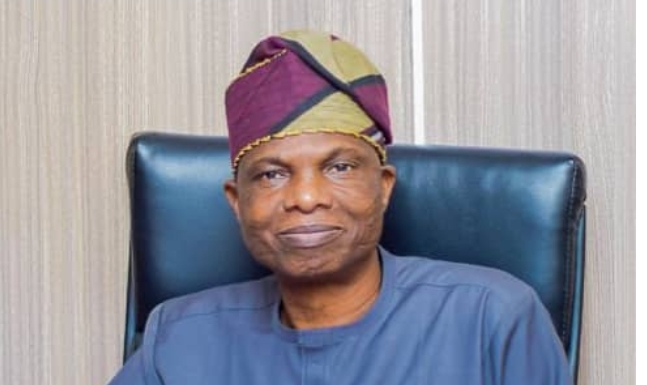

In the evolving story of governance and development in Oyo State, certain individuals distinguish themselves not merely by the offices they occupy but by the enduring impact of their service. Among such figures is Olusegun Olayiwola, a public administrator whose trajectory from grassroots leadership to state-level stewardship reflects a consistent pattern of purposeful action, institutional reform, and people-centred governance. His record, built over years of service across multiple strategic ministries, offers a compelling illustration of what it means to translate public office into measurable progress.
Long before he assumed responsibilities at the state-level, Olayiwola’s imprint was already evident at the grassroots. As chairman of Akinyele Local Government between 2007 and 2011, he confronted development challenges that had lingered for years, particularly in underserved communities where access to basic amenities remained limited. His administration initiated and completed a series of interventions that directly improved the quality of life of residents. Among the most impactful was the large-scale provision of portable water through the drilling and installation of boreholes and deep wells in over thirty communities. In areas such as Ikereku, long associated with acute water scarcity and locally referenced in ways that underscored the severity of the challenge, this intervention marked a turning point. Access to clean water reduced health risks, eased the daily burden on families, and restored a sense of dignity to communities that had long endured hardship.
Complementing this was a deliberate focus on physical infrastructure. The construction of twenty-two asphaltic roads under his leadership improved connectivity across the local government area, linking rural settlements to economic hubs, educational institutions, and healthcare facilities. These roads did more than ease transportation; they facilitated commerce, enhanced mobility, and created new opportunities for local enterprise. In the education sector, the construction of four-block classrooms in 18 schools addressed issues of access and overcrowding, providing more conducive learning environments for pupils and laying a stronger foundation for human capital development. The completion of the Moniya Central Mosque further reflected an appreciation for the social and cultural dimensions of community life, reinforcing cohesion and shared identity.
These early accomplishments established a governance style anchored in responsiveness and execution. They also provided a practical demonstration of how limited resources, when managed with clarity of purpose, can yield significant developmental outcomes. It is therefore unsurprising that his transition into State-level responsibilities came with heightened expectations, expectations he has consistently worked to meet across the various Ministries he has led.
In the Ministry of Lands, Housing and Urban Development, Olayiwola confronted systemic inefficiencies that had long characterised land administration. Recognising the centrality of land ownership to economic activity, investment, and urban development, he spearheaded the digitalisation of the process for issuing Certificates of Occupancy. This reform simplified procedures, reduced processing time, and enhanced transparency, thereby limiting opportunities for administrative bottlenecks and informal practices. By making land documentation more accessible and reliable, the reform strengthened investor confidence and contributed to a more predictable business environment within the state.
In addition, his introduction of land value capture mechanisms represented a forward-looking approach to revenue generation. By ensuring that increases in land value, often driven by public investments in infrastructure, translated into public revenue, the state was better positioned to fund further development initiatives. This approach underscored a broader philosophy of governance that links policy innovation with fiscal sustainability, ensuring that growth is both inclusive and financially grounded.
Olayiwola’s tenure as Commissioner for Local Government and Chieftaincy Matters further demonstrated his capacity to manage complex governance structures that intersect with culture, tradition, and politics. In this role, he played a key part in resolving disputes within traditional institutions, facilitating the installation of over one hundred traditional rulers across the state. These interventions required not only administrative authority but also sensitivity, patience, and a deep understanding of customary systems. By fostering dialogue and building consensus, he helped stabilise traditional leadership structures, thereby reinforcing their role in community governance.
At the same time, his coordination of the Joint Account Committee strengthened intergovernmental relations between the state and local governments. Through regular engagement and structured financial discussions, he contributed to improved allocation processes and accountability in the management of public funds at the grassroots level. The supervision of the completion of the Olubadan Palace also reflected a commitment to preserving cultural heritage while supporting institutional continuity.
In the Ministry of Establishment and Training, his focus shifted to the internal machinery of government, particularly the welfare and efficiency of the civil service. One of the most notable reforms during this period was the automation of gratuity and pension payments.
This initiative addressed longstanding delays and improved transparency, ensuring that retirees received their entitlements in a more timely and predictable manner. By restoring confidence in the system, the reform also reinforced morale within the public service.
Beyond this, efforts to recruit personnel into the lower cadre of the civil service helped strengthen institutional capacity, while training programs contributed to improved service delivery. Collaborations with international partners to support retirees further demonstrated a willingness to leverage external expertise in enhancing welfare outcomes. These initiatives collectively reflected a governance approach that values both efficiency and human dignity.
In the education sector, Olayiwola’s contributions have been equally significant. As Commissioner for Education, Science and Technology, he has overseen reforms aimed at restoring order and consistency within the system. The timely conduct of Basic Entrance Certificate Examination (BECE placement examinations), after years of irregular scheduling, provided much-needed stability for students and parents alike. Policies aimed at reducing distractions within schools, alongside initiatives to encourage greater parental involvement in academic performance, have contributed to a more structured learning environment.
Efforts to improve the physical outlook of educational institutions and administrative offices, including targeted beautification projects such as rejuvenation of the abandoned fountain at the Ministry of Education, have also played a role in enhancing the overall perception of the sector. Such interventions, though sometimes understated, contribute to a culture of pride, discipline, and professionalism that is essential for sustained educational progress.
Across these diverse roles, a consistent pattern emerges. Olayiwola’s approach to governance is defined by a balance between infrastructure development, institutional reform, and social impact. Whether through the provision of water and roads at the local level, the modernisation of land administration systems, the coordination of local government finances, or the restructuring of educational processes, his work reflects a commitment to practical solutions and measurable outcomes.
It is important to note that while political conversations naturally evolve as electoral cycles approach, the significance of leadership is best assessed through the lens of service and impact. In this regard, the body of work accumulated over the years offers valuable insight into capacity, experience, and readiness for higher responsibilities. The breadth of exposure across multiple sectors, combined with a demonstrated ability to deliver within each, positions Olayiwola as a figure whose contributions have had far-reaching implications for governance and development in Oyo State.
Ultimately, the story of his public service is one of continuity, growth, and sustained relevance. It is a narrative built not on isolated achievements, but on a sequence of interventions that have collectively improved lives, strengthened institutions, and advanced the state’s development trajectory. In a governance environment where expectations continue to rise, such a record provides a meaningful reference point for evaluating leadership and its potential to shape the future.
Kazeem Israel writes from Ibadan, Oyo State
















Leave a comment