



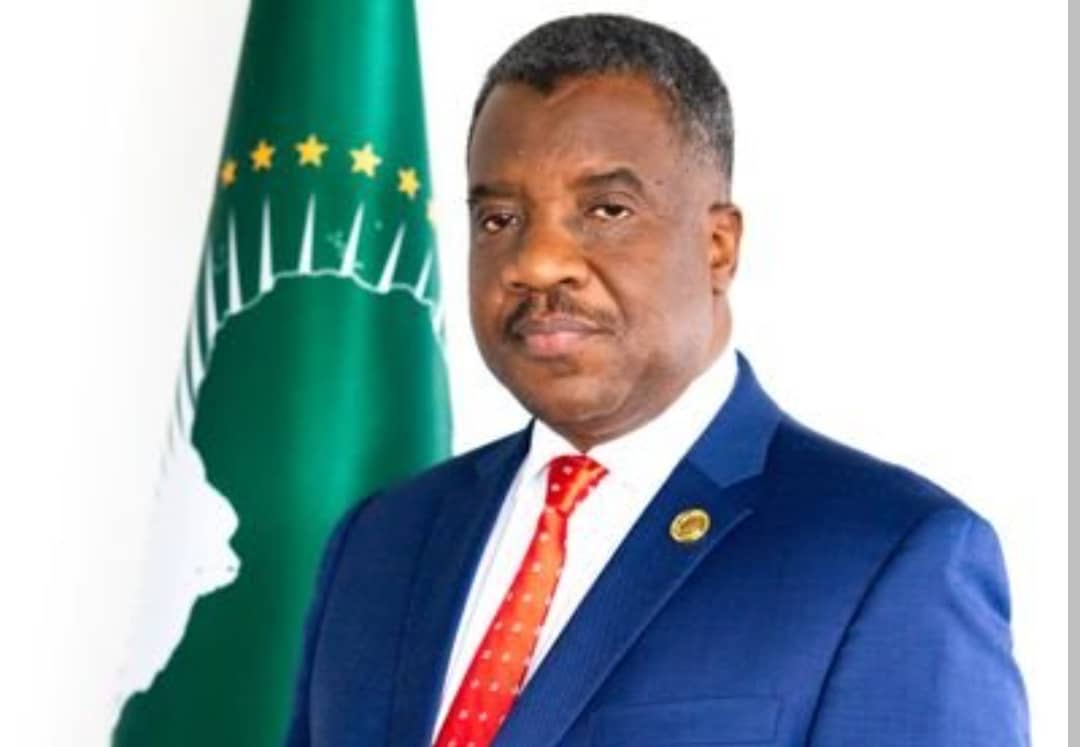
Olajide Abiola
The appointment of Dr Mohamed Sarjoh Bah as the African Union’s Permanent Representative to China comes at a defining moment in global economic realignment. For Africa, it signals more than a diplomatic posting—it represents the emergence of a more confident, coordinated, and self-determined approach to global partnerships, particularly with one of the world’s most influential economies.
It is genuinely exciting to see how strongly Africa’s voice is being represented through such a consummate son of the soil. Dr. Bah brings not only decades of experience in governance and international relations, but also a clarity of vision that is both grounded and forward-looking.
His firm stance against long-standing external narratives that portray Africa as a passive participant in global affairs reflects a broader shift on the continent—one that prioritizes agency, mutual respect, and strategic alignment. His emphasis on partnership over dependency is not just refreshing; it is necessary for the kind of transformation Africa seeks.
This clarity comes at a time when global economic structures are evolving rapidly. As China advances through frameworks like its China’s 15th Five-Year Plan (2026–2030), Africa is simultaneously pursuing its ambitions under Agenda 2063.
The intersection of these two frameworks presents a unique opportunity for synergy. Dr. Bah’s role, therefore, goes beyond diplomacy—he serves as a critical bridge, aligning policy direction with real economic opportunities that African countries can leverage for growth and development.
What stands out most in his engagements is the strong focus on practical sectors—technology, renewable energy, agriculture, mining, and manufacturing. These are not abstract ideas; they are the pillars upon which sustainable economies are built.
Africa’s comparative advantage in natural resources and human capital must now be complemented by technological capability and industrialization. China’s evolution from a manufacturing hub to a leader in innovation offers lessons that, if adapted thoughtfully, could accelerate Africa’s development trajectory.
The importance of technology transfer and local capacity building cannot be overstated. For too long, Africa has remained at the lower end of global value chains, exporting raw materials while importing finished goods.
Dr. Bah’s emphasis on knowledge sharing, local assembly, and industrial partnerships signals a shift toward value creation within the continent. This is where the real transformation lies—not merely in trade, but in the ability to produce, innovate, and compete globally.
Yet, policy direction alone does not drive transformation. The real impact is felt when these ideas are translated into enterprise—when entrepreneurs step in to bridge the gap between vision and execution.
Across Nigeria and the wider African continent, there is a growing wave of business leaders who are not only responding to these opportunities but actively shaping them. Quietly, and often without the spotlight, they are building companies that reflect a new African ambition—globally competitive, locally rooted, and future-focused.
In sectors such as commodity trading, mining, manufacturing and real estate, this new generation is redefining how Africa engages with the world. By focusing on value addition, sustainability, and innovation, they are moving beyond traditional models that have historically limited the continent’s economic potential.
Their work underscores an important reality: that Africa’s development will not be driven by governments alone, but by a dynamic partnership between policy and private enterprise.
Equally important is the ripple effect of such entrepreneurship. As more businesses scale and succeed, they create ecosystems—supporting small enterprises, generating employment, and fostering a culture of innovation. This is particularly significant for young Africans, who represent one of the continent’s greatest assets. With the right opportunities, mentorship, and access to markets, they can become the drivers of a new economic era.
Dr. Bah’s emphasis on coordination among African nations also speaks to this broader vision. Africa’s strength lies in its collective potential. With 53 countries, diverse resources, and a rapidly growing population, the continent has the scale to become a formidable economic bloc. However, this potential can only be realized through collaboration—through shared strategies, regional integration, and a unified approach to global partnerships.
There is also a deeper significance to this moment. Africa is increasingly defining its own narrative—deciding not only how it engages with global powers, but also how it positions itself within the global economy. The confidence reflected in Dr. Bah’s remarks is emblematic of this shift. It signals a continent that is no longer content to react, but is ready to lead, innovate, and negotiate from a position of strength.
Of course, the path ahead is not without challenges. Issues of governance, transparency, and institutional capacity remain critical. For partnerships with China—or any global player—to deliver long-term benefits, they must be underpinned by accountability and a clear focus on inclusive growth. The goal must always be to ensure that the gains of such collaborations are widely distributed and contribute to the overall development of African societies.
Still, there is reason for optimism. The alignment of visionary leadership, strategic policy frameworks, and a rising class of entrepreneurs creates a powerful foundation for progress. Africa is not starting from scratch; it is building on lessons learned, adapting global models to local realities, and charting a course that reflects its unique strengths and aspirations.
Ultimately, the success of this new chapter in China-Africa relations will depend on execution. It will require consistency, collaboration, and a long-term perspective. But with leaders like Dr. Bah providing direction and a growing community of entrepreneurs translating vision into reality, the prospects are encouraging.
For those already engaged in building businesses, supporting innovation, and creating opportunities, the task is clear: to continue laying the groundwork for a continent that is not only prosperous, but also self-reliant and globally competitive. Africa’s future will be shaped not just by policies and agreements, but by the determination of its people to turn potential into progress.
*Mr Abiola, a Multisectoral Entrepreneur is the CEO of Zero Ferro















Leave a comment