



From Adanna Nnamani, Abuja
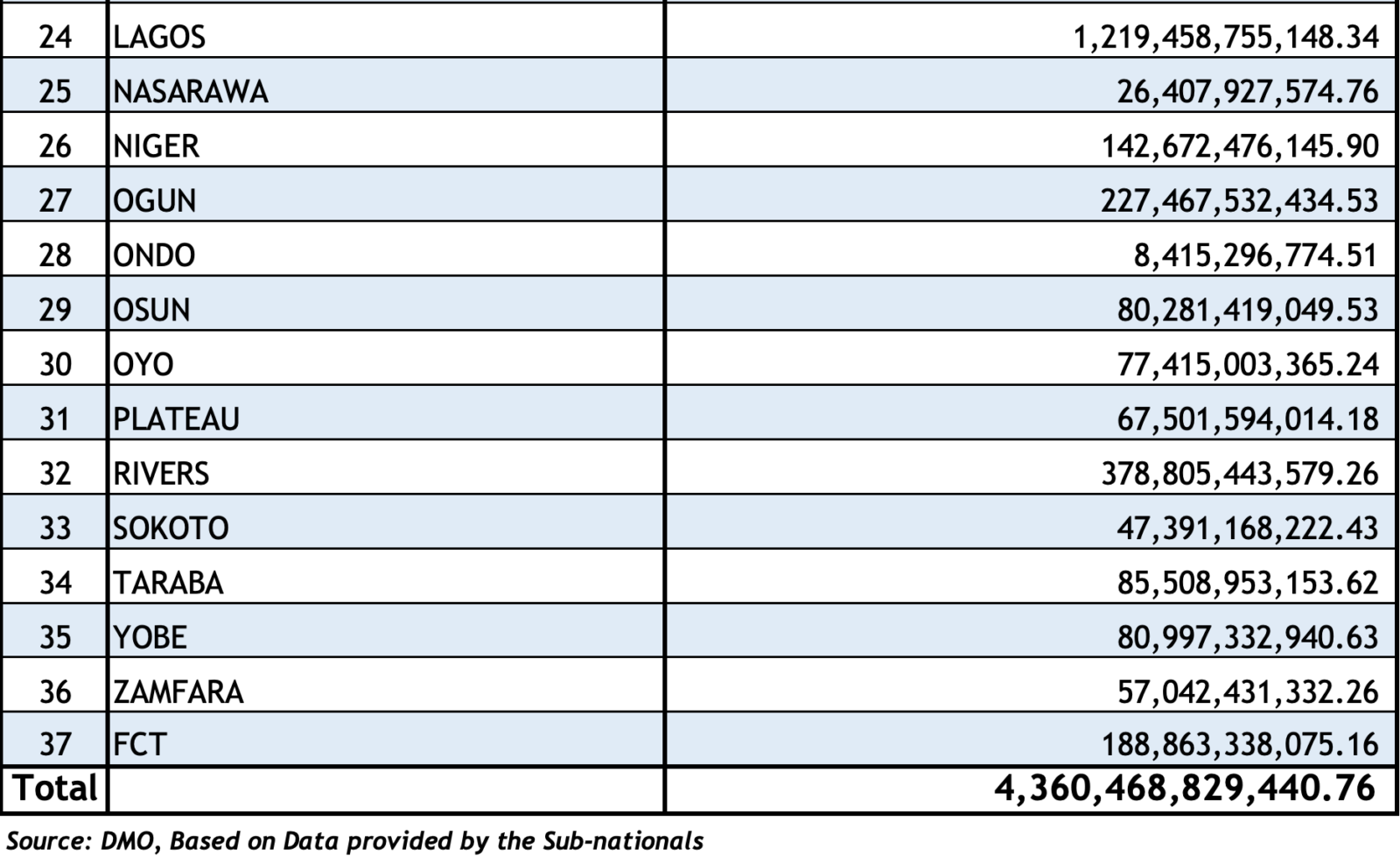
Lagos State has emerged as Nigeria’s most indebted subnational government, with a staggering debt profile of N1.04 trillion, according to fresh data released by the Debt Management Office (DMO).
The figures show that Nigeria’s combined debt stock for the 36 states and the Federal Capital Territory (FCT) rose to N4.36 trillion in 2025, up from N3.97 trillion in 2024, representing a 9.89 per cent increase within one year.
The DMO data underscores Lagos’ dominant position in the subnational borrowing space, with the state accounting for 27.97 per cent of the entire debt stock—more than a quarter of total liabilities owed by states and the FCT.
A breakdown of the figures shows that debt remains heavily concentrated among a few states. The top 10 most indebted states alone account for N2.96 trillion, representing 67.98 per cent of the total subnational debt stock, a trend that highlights widening fiscal disparities across the federation.
Further analysis shows that Lagos, Rivers, Delta, Ogun, and the Federal Capital Territory collectively owe nearly N2.26 trillion, which is more than half of the total debt burden carried by all subnational governments.
The report indicates that many states have continued to rely on borrowing to finance infrastructure projects, plug budget deficits, and manage mounting fiscal pressures amid a challenging economic environment.
However, not all states followed the upward debt trend. Benue State stood out as the only state in the top 10 to reduce its debt stock during the period under review.
Benue’s debt fell by 12.52 per cent to N107.23 billion in 2025 from N122.58 billion in 2024. This decline suggests a combination of debt repayment efforts, reduced new borrowing, or restructuring of existing liabilities, although analysts note it may also reflect tighter fiscal space for capital spending.














Leave a comment