



By Uche Usim
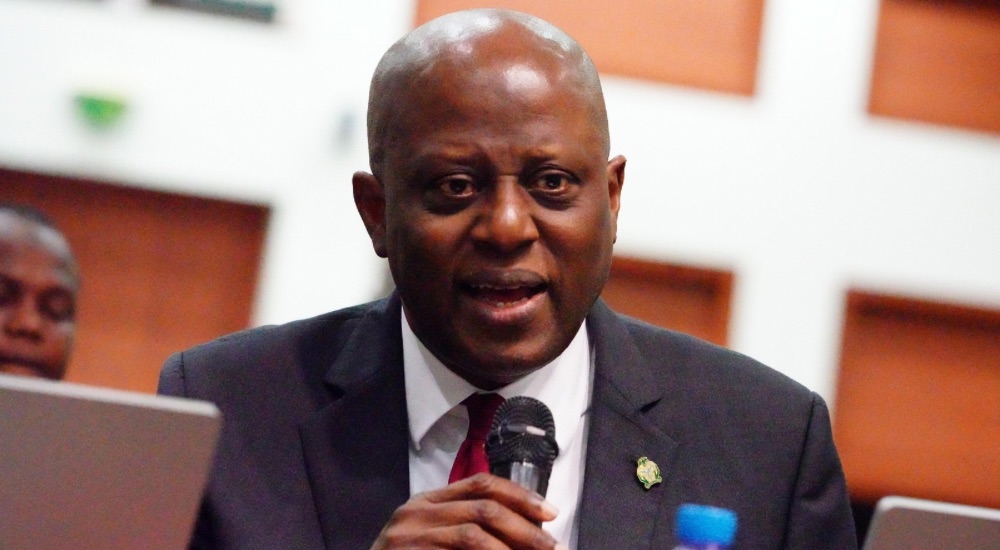
Central Bank of Nigeria (CBN) Governor, Dr Olayemi Cardoso, has recast diaspora remittances as a strategic pillar of Nigeria’s foreign exchange stability, saying the country is now deliberately building its external buffers around sustained inflows from Nigerians abroad.
Speaking recently at a media briefing in Washington DC at the close of the IMF–World Bank Spring Meetings, Cardoso said remittances are no longer being treated as auxiliary inflows, but as a core component of Nigeria’s evolving FX architecture.
He insisted that despite recent fluctuations in external reserves, there is no structural weakness in the economy, stressing that Nigeria’s buffers remain above the International Monetary Fund’s adequacy threshold.
“What worries me is the anxiety in Nigeria, not the fundamentals,” he said, seeking to reframe public concern over reserve movements.
Central to Nigeria’s external stability strategy is a growing stream of remittances from its global diaspora, currently estimated at about $600 million monthly.
Cardoso said the ambition is to significantly expand that flow to $1 billion monthly by the end of the year, describing diaspora inflows as one of the most dependable sources of foreign exchange support in an increasingly volatile global environment.
He explained that the shift reflects a wider policy rethink, one that positions Nigerians abroad not just as contributors to household consumption, but as key participants in national macroeconomic stability.
In his words, the diaspora is becoming “a financial backbone of resilience,” particularly as oil revenue volatility and global liquidity tightening continue to shape emerging market pressures.
The CBN governor said recent reforms are designed to deepen and formalise remittance flows, ensuring that more diaspora funds pass through official financial systems rather than informal networks.
He pointed to improved payment infrastructure and the expansion of International Money Transfer Operators (IMTOs) as key drivers that have widened access and improved transaction efficiency.
According to him, these reforms are gradually reducing friction in cross-border transfers, making it easier for Nigerians abroad to send money home through regulated channels. He also highlighted ongoing efforts to resolve administrative bottlenecks, including challenges linked to Bank Verification Number (BVN) registration, which had previously discouraged full participation in formal remittance systems.
“These are not just technical fixes, they are about capturing value that already exists in the system,” he said.
Cardoso linked the rising importance of diaspora inflows to Nigeria’s broader foreign exchange reforms, which have moved the country toward a more market-driven exchange rate regime.
He said reduced central bank intervention has allowed greater price discovery and improved transparency, even if it has introduced short-term volatility in reserves and market sentiment.
In this new structure, he explained, remittances are playing a stabilising role by providing a steady and predictable inflow of foreign currency that helps smooth FX demand pressures.
Addressing concerns over recent reserve movements, Cardoso maintained that Nigeria’s external position remains fundamentally strong.
He said the observed fluctuations are consistent with a transitioning FX system and broader global financial tightening, not evidence of weakness.
Rather than focusing on short-term dips, he urged attention on the underlying buffers, which he said remain comfortably above international benchmarks for adequacy.
Cardoso also pointed to the ongoing banking sector recapitalisation exercise as a complementary stabiliser, noting that it has strengthened confidence in Nigeria’s financial system.
He said the mix of domestic and foreign capital participation reflects growing trust in Nigeria’s reform trajectory and improves the system’s capacity to absorb and intermediate inflows, including remittances.
Minister of Finance and Coordinating Minister of the Economy, Wale Edun, also highlighted the role of diaspora inflows in Nigeria’s improving macroeconomic outlook.
He said Nigeria is transitioning from stabilisation to a more growth-oriented phase, supported by fiscal discipline, structural reforms, and improving external flows.
Edun added that global conditions remain challenging, but Nigeria has strengthened its resilience through consistent policy adjustments that are now beginning to yield results.
He noted that remittances, alongside improved debt management and fiscal reforms, are helping to stabilise the external environment and support economic recovery.
He also said the government is expanding social safety nets to cushion households while maintaining reform momentum aimed at long-term growth.
The emerging picture from Washington DC is one of a quiet but significant shift: diaspora remittances are being elevated from sentimental lifeline to strategic economic infrastructure.
For Cardoso, Nigeria’s external stability is increasingly being built not only on policy discipline and reserves, but on the financial ties binding millions of Nigerians abroad to the domestic economy.
In that recalibrated framework, the diaspora is no longer just sending money home, it is helping to hold the economy steady.
















Leave a comment