



By Bimbo Oyesola and Adanna Nnamani, Abuja
President Bola Tinubu has disclosed that over 7.5 million Nigerian workers are currently covered under the Employees’ Compensation Scheme (ECS), as part of efforts to protect employees against workplace injuries and economic shocks.
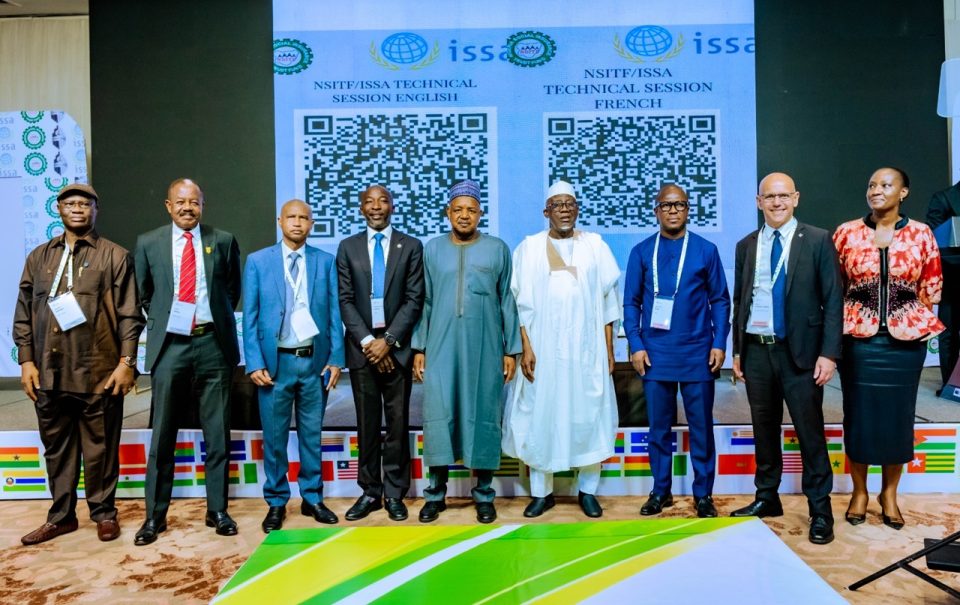
Tinubu made this known on Wednesday at the opening of the 2026 West Africa Seminar of the International Social Security Association (ISSA) held in Abuja, where he reaffirmed the commitment of his administration to strengthening Nigeria’s social protection architecture.
Represented by the Minister of Budget and National Planning, Senator Atiku Bagudu, the President said the scheme, implemented through the Nigeria Social Insurance Trust Fund (NSITF), ensures that workers and their families are not left vulnerable in the event of workplace accidents, disabilities, or death.
“Today, over 7.5 million Nigerian employees are covered under the Employees’ Compensation Scheme, ensuring that when workplace accidents or disabilities occur, families are protected from sudden economic ruin. Every compensation payment sends a clear message: those who serve this nation will not be abandoned,” he said.
Tinubu noted that since assuming office in 2023, his administration has pursued reforms under the Renewed Hope Agenda aimed at restoring economic confidence, protecting livelihoods, and expanding access to social security. He also revealed that more than 10 million Nigerian workers are actively contributing to the Contributory Pension Scheme under the supervision of the National Pension Commission, with total pension assets exceeding N25 trillion.
According to him, the figures reflect growing trust in the nation’s pension system, stressing that the true value lies in guaranteeing dignity and financial security for workers after retirement.
Beyond workplace compensation and pensions, Tinubu highlighted other social protection interventions, including the expansion of health insurance coverage to over 16 million Nigerians through the National Health Insurance Authority.
He added that the National Directorate of Employment (NDE) has empowered more than two million Nigerians through vocational training, entrepreneurship development, and job creation initiatives.
The President further stated that targeted social intervention programmes under the Federal Ministry of Humanitarian Affairs and Poverty Reduction are supporting vulnerable households through cash transfers, food security initiatives, and livelihood support.
On housing, Tinubu said reforms under the National Housing Fund and the Renewed Hope Housing Programme are improving access to affordable housing finance for low- and middle-income earners.
He emphasised that the government is working towards an integrated and digitally enabled social protection system, where pensions, healthcare, employment support, housing, and compensation programmes operate in a coordinated manner.
In his welcome address, the Managing Director/Chief Executive of the Nigeria Social Insurance Trust Fund (NSITF) said the agency remains committed to strengthening social security delivery through innovation and institutional reforms.
He noted that the Fund has embarked on a digital transformation aimed at improving claims processing, enhancing transparency, and boosting public confidence in the system.
According to him, the evolving nature of work, especially the growth of the informal sector, requires more inclusive and responsive social protection systems that can meet the needs of all categories of workers.
He added that the ISSA seminar provides a platform for countries in the West African sub-region to share experiences, address common challenges such as coverage gaps and financing pressures, and develop practical solutions.
“Accessibility, effectiveness and inclusiveness must remain at the core of our systems, while digitisation should be deployed responsibly to improve service delivery and strengthen trust,” he said.
Also speaking, the Minister of Labour and Employment, Dr. Mohammed Dingyadi, reiterated the Federal Government’s commitment to safeguarding workers’ welfare through effective policy implementation and institutional oversight.
He described the NSITF as a critical vehicle for delivering social security, noting that it provides compensation for workplace injuries, disabilities, and death in line with the Employees’ Compensation Act of 2010.
Dingyadi added that the seminar offers an opportunity for stakeholders across West Africa to deepen collaboration and align with global best practices in social security administration.
















Leave a comment