



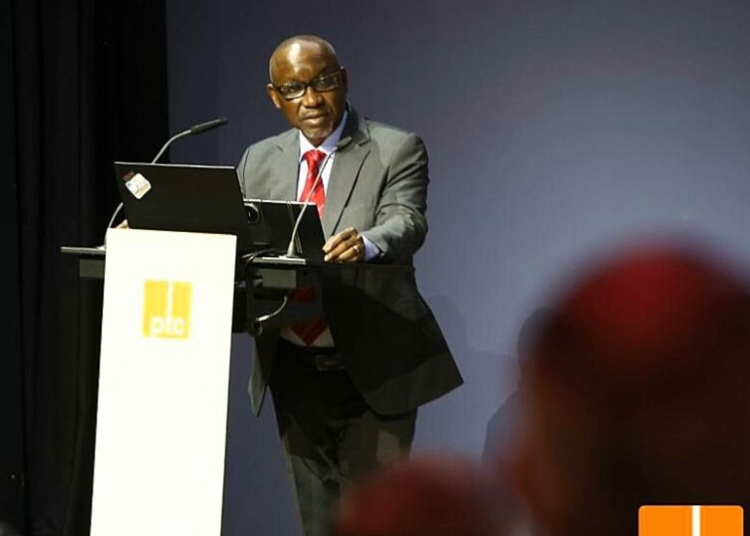
Minister of State for Petroleum Resources (Gas), Mr. Ekperikpe Ekpo
By Adewale Sanyaolu
Nigeria is working to strengthen its position as a dependable gas supplier in the global energy market, while still meeting local energy demands, the Minister of State for Petroleum Resources (Gas), Mr. Ekperikpe Ekpo, has said.
Ekpo stated this in his welcome address at the opening of the 21st Pipeline Technology Conference in Berlin, Germany. The minister outlined the country’s gas development plans against the backdrop of shifting global energy needs.
According to him, Nigeria’s ongoing pipeline expansion projects are aimed at boosting domestic supply and improving its competitiveness in the international market.
He said the country’s strategy is built on ensuring it remains a reliable supplier globally, while also meeting local demand in a sustainable manner.
Ekpo noted that Nigeria is investing heavily in gas infrastructure to tap into its vast reserves, describing natural gas as a key driver of economic growth, industrialisation and energy transition.
He pointed to the West African Gas Pipeline as an important part of Nigeria’s regional plan, noting that it continues to supply gas to neighbouring countries, strengthen economic ties, and support power generation and industrial development across the sub-region.
On current projects, the minister said the Ajaokuta–Kaduna–Kano Gas Pipeline would boost industrial activities and power supply in the northern part of the country, while the OB3 Gas Pipeline would improve supply flexibility and reinforce the domestic gas network.
He also disclosed that Nigeria is pushing ahead with export-oriented projects such as the Trans-Saharan Gas Pipeline and the Trans-Atlantic Gas Pipeline, both designed to link Nigerian gas to European markets and open up new energy routes.
In addition, he said discussions are ongoing on the Nigeria–Equatorial Guinea Gas Pipeline to deepen bilateral cooperation and make better use of cross-border gas resources.
Ekpo stressed the need for strong regulations, policies that attract investment, and international collaboration, noting that infrastructure alone is not enough to achieve success.















Leave a comment