



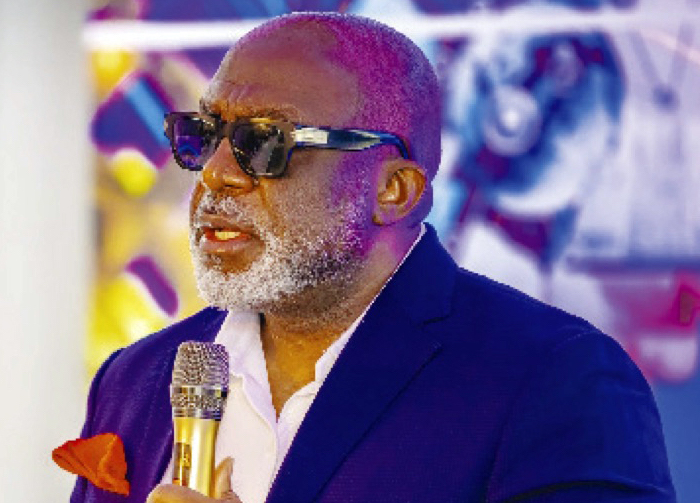
…Says domestic airlines on life support
By Chinelo Obogo
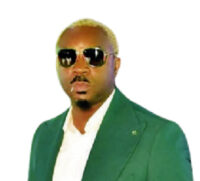
Chairman, United Nigeria Airlines, Prof. Obiora Okonkwo, gave a brutal assessment of Nigeria’s aviation industry at this week’s International Air Transport Association (IATA) conference in Addis Ababa, Ethiopia.
Speaking as a panelist, Okonkwo described the industry as one battling severe structural and economic headwinds, with domestic airlines now operating on the brink of collapse due to prolonged exposure to crisis without protection.
He narrated what Nigerian operators face, from crippling bird strikes and astronomical insurance costs to lack of Maintenance facilities for C-checks and lease conditions that are suffocating.
He argued that everyone in the aviation sector secures their comfort except the airlines, insisting that without protecting operators, everyone will fail.
He speaks more on the burning issues bedeviling the sector.
Airlines have no protection
From the operator’s perspective, I can tell you that I am aware that we are the cash cow of the entire ecosystem. If manufacturers and the lessors pick up their credit and it doesn’t get to the operators to sell the tickets and return the money, they don’t make money from the banks. The banks will lend the capital, whether it’s to the lessors or anybody buying the equipment, but if they can’t get to the operators to sell the tickets, they don’t make money. The ground operators, even IATA , if they don’t get their own cut on every single ticket sold, the entire vision of the ecosystem depends on the operation of the operators.
But what I have seen from my experience in the industry in the last six years is that everything about this policy and growth is skewed against the operators. It is only operators that do not have their own rules in terms of aircraft purchase, conditions for leasing, IATA, whether it is SAATM or anything else. We only sit back and ask: what does the rule say? What conditions is the OEM expecting? What are the rates from the banks? So it makes it very difficult.
If we have this hope and expectation and it does not allow the operators to succeed, then we will all fail. The OEMs are cashing in billions of dollars, while the operators are left with $1.30 per seat. So everything that has been said here about what is going on is choking us. We are not able to breathe.
We need to breathe, specifically when talking about financing. I have seen a whole lot of banks that have been involved. But at the end of the day, if all the big policy frameworks are made and it comes to implementation, the PPPs, they are huge.
Everyone secures their own comfort. The OEMs will spread out every term in the process of buying aircraft and set their own timelines. The lessors will seal all aspects of their protection, layers upon layers. And when they are done, they add risk. I can go on and on. The only person who does not have a say, who must comply, is the operator.
As much as I acknowledge that the operators and the OEMs have done a lot, the support we need must come down to our level. With all sense of appreciation, we would not be where we are in Nigeria today without the support of Boeing. Boeing left their high place, came down to Nigeria, studied the problem, and knew that there must be a change in policy.
The success we have attributed to the minister today, we are just following the road map we worked out together. The minister pursued the Cape Town Convention; we had a lot of breakaway teams, and so on and so forth. Ours was different in Nigeria. There was a total blockade on the leasing of aircraft to Nigeria for the past 15 years through no fault of mine. It was because of things that were done in the past. Thank God we are over it now.
But some of us felt it was like the case in Russia during the Communist regime when liberalisation came and Russians were told they could now fly and go to any part of the world they wished. Some Russians would walk up to the American embassy and say, “We have been allowed to travel to America; we want to travel” with no visa, no passport, and no ticket. They didn’t even know what was required. So, some of us, in the process of implementing all this, came face-to-face with those requirements.
The list is endless. We do not just spend money carelessly. At the end of the day, when we finish doing the economic calculations of a dry lease aircraft, it pays us better to remain, in some cases, on wet leases. What is the point? Because they are still piling on layers and layers of protection. What I am trying to say at this summit is that operators need to be protected throughout this entire process.
Regarding financing, if you look at Boeing, for instance, for new aircraft, the American EXIM Bank takes only a sovereign guarantee from the government and I think that may apply to some of the EXIM Banks here. The government can only give the sovereign guarantee and that excludes us. Today, the appetite of Nigerian bankers is limited. You should look at your policy and find ways to accommodate the involvement of commercial banks in this puzzle. Because when that is done, it might enable some of us with very high ambition and interest to access these aircraft.
Bird strikes
From January to April, we have had seven bird strikes. As we speak, we have two aircraft on AOG. So I am calling on you to help us with the equipment to fight bird strikes. I know you may have done that in other regions, we need that in Nigeria, honestly. We want you to get involved because that will help us. Forty to fifty percent of our downtime is caused by bird strikes, so you can help us in that area. It is a special appeal.
MRO
Also, for the whole country, there is no Maintenance, Repair Organisation (MRO) where we can do our C-check on Embraer, Boeing, or even Airbus. So that again is proof that all the efforts you have enumerated here still have a lot more to be done. We want to be able to fly.
Insurance
I have just acquired six Boeing 737-800s from Southwest, as you know. As we speak, two of them are airborne. They were sourced from the US, taken away just for painting and a C-check. At the high cost of fuel today, can you imagine how much that costs just for ferrying? And because of the frequency of these issues, and for other reasons not entirely known to me, our insurance costs are huge.
For the six aircraft, for instance, my insurance is about $2 million. Somewhere in Europe, that same $2 million can comfortably insure about 20 or 25 aircraft. But here, it is just six aircraft. So these are things that contribute to the high cost. When we are not flying and the aircraft is on dry lease, you are not making money , yet you have to pay your obligations.
If it is on ACMI, you sign minimum work hours. And as always, everyone protects himself, except the operators. They never accept a clause that if there is downtime, they will reduce their minimum hours. At the end of the day, you find yourself paying just to remain a good player in the industry, far more than you actually fly.
It is a big issue. But I know that due to the resilience we have shown in the last few years, we still keep our aircraft flying. We still have, especially in Nigeria, a high rate of operational reliability. It is very high. But when problems do occur, it is also very hard. We want to minimise that as much as possible, especially for issues that are not routine checks. The least distance we fly for a C-check is about five hours away. But we have regional capacity, and that capacity calls for additional support.
For the urgency of this, and for the need for us to benefit from this growth, it would not pay us to have all these aircraft during this growth year and lose those gains to maintenance being carried out outside Africa. Someone has said here that the key to success is cost-saving. We want to save those costs and we need that support. So the special policy goes beyond just technical advice.
Improving corporate governance
We need to improve our corporate governance to ensure that we are financially disciplined, save costs, and become more attractive to banks and financing agencies. Finally, we must stand up for our rights and make it known to all in the aviation ecosystem that we deserve better consideration. We are the last to be considered.
When they put us in a position where they simply tell us what they expect us to do, we need to stand up against that.
I think when that is done, it might force all those setting expectations to amend their terms so that it becomes a win-win situation for all. That is basically what we need to do now. It will help us improve our efficiency, improve our service delivery and customer experience, and hasten the growth of this industry.
We have given a lot of credit to European airlines. Consider the fact that they have been in the market for 80 years with just over 160 aircraft, compared with Southwest, which is just 70 years old and operates about 1,000 aircraft. I believe in the potential of this market, and a lot needs to be done. Like Southwest, we have the same history. Maybe in 70 years, someone will be talking about 1,000 Nigerian aircraft but that will not be possible if we do not do these things and correct them now.







Leave a comment