



… CDHR Slams ‘Disconnect’ Between Funds and Development
… Govs Asked To Publish Full Accounts
Daud Olatunji
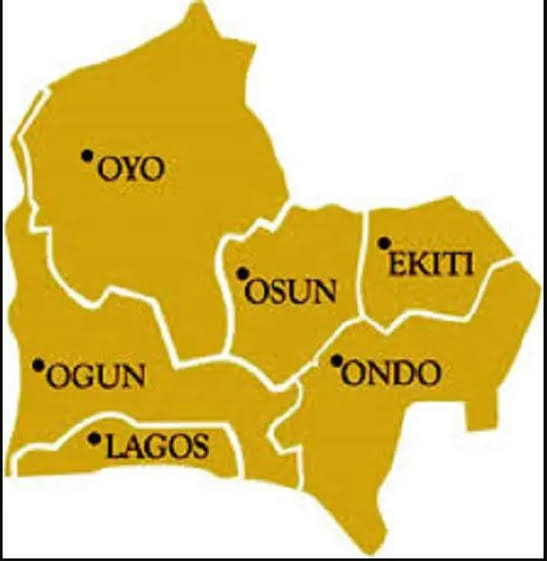
Despite receiving a combined ₦429.85bn in federal allocations within the first three months of 2026, South-West states are facing mounting criticism over poor infrastructure, weak social services, and what observers describe as a troubling disconnect between public spending and citizens’ welfare.
An investigation by civic-tech organisation, BudgIT, obtained by PLATFORM TIMES, showed that six states in the region shared a total of ₦429,850,129,156.84 between January and March 2026.
At the top of the chart is Lagos State, which received ₦200.21bn—nearly half of the entire allocation to the region—while Ekiti State recorded the lowest inflow with ₦30.49bn.
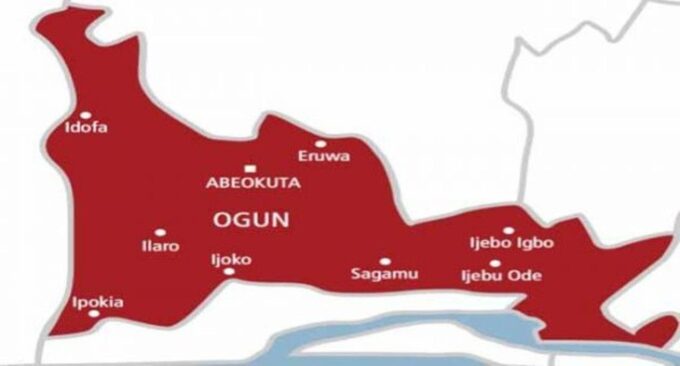
Other states include Oyo State (₦68.98bn), Ondo State (₦53.50bn), Osun State (₦40.54bn), and Ogun State (₦36.13bn).
…Wealth Without Visible Progress?
Ordinarily, such financial inflows are expected to translate into improved infrastructure, quality education, functional healthcare systems, and job creation. However, checks across the region reveal a starkly different reality.
Across major highways and inner roads in states like Ogun, Oyo, and Osun, commuters still battle with pothole-ridden roads described by residents as “death traps.”
Public schools, particularly in rural communities, continue to suffer from inadequate learning materials, overcrowded classrooms, and poor teacher welfare.
Healthcare facilities are not spared. Primary healthcare centres in several communities lack basic equipment, while residents increasingly rely on private hospitals amid rising costs.
Economic indicators further paint a grim picture. Data from the National Bureau of Statistics shows that unemployment and underemployment remain significant challenges in many South-West states, especially among youths, despite rising revenues.
…. Rising Revenue, Rising Debt
Beyond federal allocations, most South-West states have significantly increased their internally generated revenue (IGR) in recent years. Lagos, for instance, consistently ranks as Nigeria’s top IGR-generating state, pulling in hundreds of billions annually.
Yet, questions persist: why do states that receive huge allocations and generate substantial IGR continue to borrow heavily?
Debt profiles released by the Debt Management Office indicate that several states in the region are grappling with rising domestic and external debts, raising concerns about fiscal sustainability and prudent management of public funds.
Analysts say this pattern suggests structural inefficiencies, leakages, and, in some cases, outright mismanagement.
... CDHR Raises The Alarm
Reacting to the findings, the Committee for the Defence of Human Rights (CDHR) described the situation as alarming and unacceptable.
In a strongly worded statement signed by its National President, Yinka Folarin, the group said the “glaring disconnect” between revenues and development outcomes raises serious accountability questions.
“Such enormous inflows of public funds should translate into visible improvements in infrastructure, education, and healthcare. Unfortunately, that is not the case across many parts of the South-West,” the group said.
CDHR warned that anti-corruption agencies must be prepared to investigate any suspected diversion of funds, stressing that governance is a trust, not a privilege.
‘Where Is the Money Going?’
The rights group posed critical questions to state governments:
What specific projects are being funded with these allocations?
Why are states accumulating debts despite huge revenues?
What measurable outcomes can citizens point to as evidence of prudent spending?
It particularly called on governors to publish detailed breakdowns of expenditures, including capital projects, recurrent spending, and project implementation status.
The group also urged citizens and civil society organisations to deploy the Freedom of Information Act 2011 to demand transparency.
Beyond the executive arm, attention is also shifting to State Houses of Assembly, which are constitutionally mandated to provide oversight.
Observers argue that weak legislative scrutiny has enabled a culture of opacity in public finance management, allowing governments to operate with limited accountability.
Public finance experts say the challenge is not necessarily about lack of funds but about how resources are managed.
They point to issues such as inflated contracts, abandoned projects, poor planning, and weak monitoring systems as key factors undermining development.
“There is a systemic problem in how public funds are utilised. Until transparency mechanisms are strengthened and enforced, these allocations will continue to have minimal impact on citizens,” a governance analyst told PLATFORM TIMES.
Nigeria continues to grapple with revenue constraints, debt pressures, and rising public expectations. In this context, the efficient use of available resources becomes even more critical.
For the South-West—often regarded as one of the country’s most economically viable regions—the stakes are even higher.
With over ₦429bn received in just three months, expectations are naturally elevated. Yet, the lived realities of many residents suggest that these funds are not translating into meaningful development.
As scrutiny intensifies, CDHR has vowed to take further steps, including invoking the Freedom of Information Act to compel disclosure of spending details.
“The time for silence is over,” the group declared, urging Nigerians to demand accountability from those entrusted with public resources.
For millions of residents across the South-West, the question remains simple but urgent: how can so much be spent, yet so little be seen?
 ‘
‘ ‘
‘Do you want to share a story with us? Do you want to advertise with us? Do you need publicity for a product, service, or event? Contact us on WhatsApp +2348183319097 Email: platformtimes@gmail.com
We are committed to impactful investigative journalism for human interest and social justice. Your donation will help us tell more stories. Kindly donate any amount HERE








Leave a comment