



• Labour, energy experts express scepticism, marketers endorse partnership
By Wale Sanyaolu, Lagos and Adanna Nnamani, Abuja
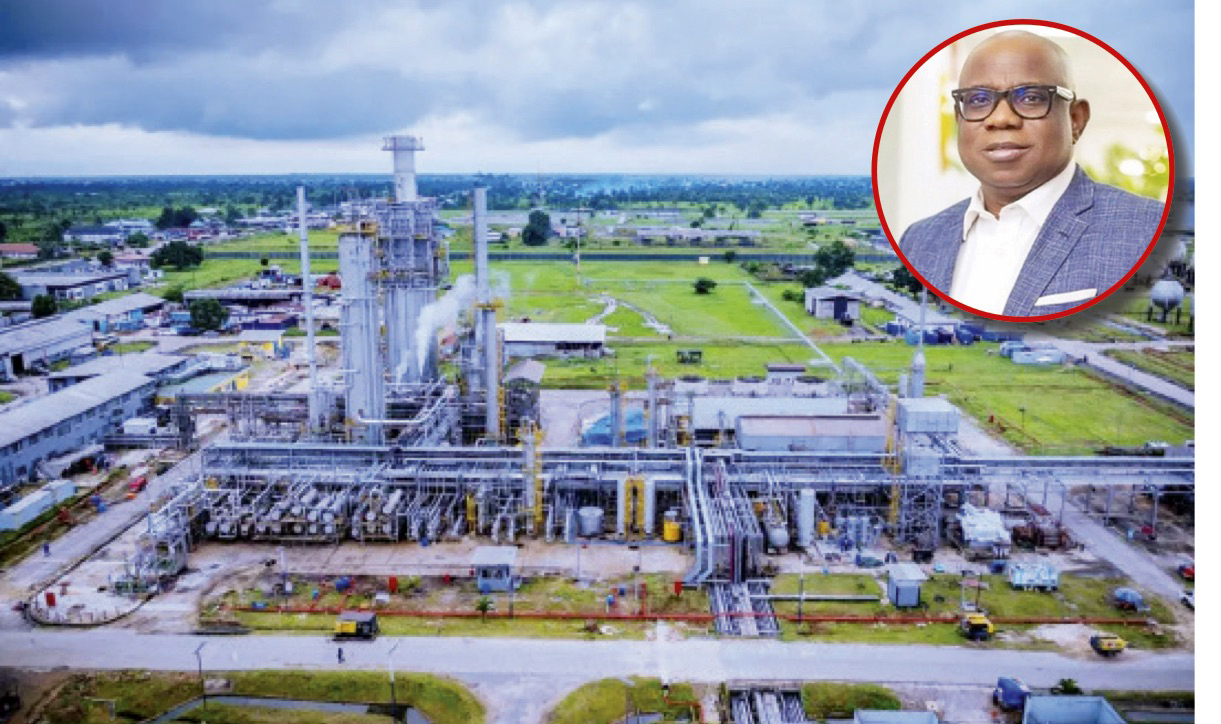
Organised labour and energy experts have expressed scepticism over the recent Memorandum of Understanding (MoU) signed between the Nigerian National Petroleum Company Limited (NNPC Ltd) and two Chinese firms aimed at reviving the Port Harcourt and Warri refineries.
While labour leaders and analysts questioned the transparency, technical competence and credibility of the arrangement due to the billions already spent on refinery rehabilitation in the past, petroleum marketers welcomed the partnership, stating that it could finally restore the nation’s moribund refineries to operation.
NNPC had announced that it signed the MoU with Sanjiang Chemical Company Limited and Xingcheng (Fuzhou) Industrial Park Operation and Management Co. Ltd as part of efforts to restart and expand the Port Harcourt and Warri refineries through a Technical Equity Partnership arrangement.
The agreement, signed in Jiaxing City, China, is expected to focus on completing rehabilitation works, maintaining the facilities and expanding petrochemical and gas-based industrial operations around the refineries.
Reacting to the development, Head of Information and Public Affairs at the Nigeria Labour Congress (NLC), Benson Upah, said the workers’ body remained suspicious of the government’s intentions following the huge sums previously spent on refinery rehabilitation without visible results.
“After the Warri and Port Harcourt refineries gulped over N3.2 trillion in rehabilitation with no result to show and no one in prison, we have every reason to suspect the government’s motives or initiatives,” Upah said.
He, however, noted that the latest arrangement appeared somewhat different from previous efforts, but added that its intentions were still unclear.
“The MoU signed between the NNPCL and the two Chinese companies appears to be significantly different from what was done previously. However, we cannot comment much further as the details and intentions of the parties to this technical equity partnership are still opaque. But we just hope it is not another scam by the government couched in elegant business lingo,” he added.
Another NLC chieftain, who spoke anonymously, described the development as suspicious, insisting that the government must first explain what happened to the billions earlier invested in the refineries before entering another partnership.
According to him, if the refineries were properly rehabilitated with the reported $2.7 billion investment, there should be no need for fresh technical partners to revive them.
He warned against what he described as attempts to privatise the refineries “through the back door,” citing the case of the privatisation of the electricity sector which, according to him, failed to deliver expected results.
“There has to be proper investigation. Why is it that the $2.7 billion invested in that place did not get that place back into operation? What happened to that investment? That is where we are supposed to start from,” he said.
He added: “Let them tell us what happened because we were told that the refineries were working 100 per cent year after year. It was this government, under Mele Kyari, that told all of us that the refineries had come back to full operation, and suddenly they went off. Now, why did they go off? If they went off because the rehabilitation was not properly done, let us understand what the issues are. Let people answer and let there be accountability.
“We do not want them to sell off the refineries through the back door. We do not want them to privatise the refineries through the back door. All of us saw the privatisation in the electricity sector. We saw that the sellers became the buyers, and that is why we are still having challenges in that sector 10 years after privatisation.
“Let that not repeat itself with the public refineries. The refineries must not be privatised through the back door. They must not be sold off cheaply by the government to their cronies. Let the buyers not be the sellers. Let Nigerians get value for the billions of dollars spent on the refineries.”
The labour leader also called on anti-graft agencies including the Economic and Financial Crimes Commission (EFCC) and the Independent Corrupt Practices and Other Related Offences Commission (ICPC) to investigate the failed rehabilitation projects and prosecute anyone found culpable.
Also reacting, Managing Partner at the Energy Consulting Practice, Kelvin Emmanuel, questioned the competence and experience of the Chinese firms involved in the partnership.
He further recalled that the NNPC was currently under investigation by the EFCC over the expenditure of about $3 billion on refinery rehabilitation projects between 2019 and 2024 that failed to restore refining operations.
Emmanuel questioned why the national oil company was still pursuing rehabilitation projects instead of considering alternative investments.
According to him, global supply chain disruptions arising from tensions in the Middle East should compel Nigeria to focus on more sustainable refining solutions rather than continued rehabilitation of ageing facilities.
“The Chinese companies lack cognate experience as both operators in midstream refining or as EPIC contractors in the refining business, to deserve getting any partnership with NNPC.
“Why can’t NNPC abandon this sunk cost fallacy and build a brand new refinery of its own? Why can’t NNPC increase their stake in the existing Dangote refinery by pledging more crude feedstock in a swap deal to acquire shares through rights issue for the coming IPO? Why can’t NNPC encourage BUA to invest in building a new commercial refinery and take a minority stake in the project?” he queried.
Similarly, energy specialist, Chinedu Onyegbula, said the development should be approached cautiously considering the huge funds previously committed to refinery rehabilitation.
Onyegbula added that several technical assessments had consistently shown that the refineries were beyond economic repair.
“Sadly, it is hard for me to comment on this, given the amount of money spent already in the past and the historical knowledge about the state and condition of the refineries.
“My thoughts are that it should be considered with some caution and enough citizen sensitisation and engagement. The facts and evidence should be laid bare for all to see, showing the modelling, the proven knowledge, expertise and experience of the project implementers, and accountability measures to ensure no leakages or wastage.
“From what we know, every assessment shows that the refineries are beyond repair and would be more cost-competitive to build new ones,” he stated.
Meanwhile, the Petroleum and Natural Gas Senior Staff Association of Nigeria (PENGASSAN) said it was still reviewing the details of the MoU before taking an official position.
PENGASSAN General Secretary, Jerry Amah, said the union was carefully studying the contractual obligations embedded in the agreement.
“We are preparing our position after studying the contractual obligations,” Amah stated.
The union had previously advocated the adoption of the Nigeria Liquefied Natural Gas (NLNG) ownership model for the management of the nation’s refineries.
Under the arrangement, private investors would hold majority stakes to ensure operational efficiency while the government retains minority shares to protect national interests.
At an earlier briefing, PENGASSAN President, Festus Osifo, said the NLNG model had delivered consistent operational success and profitability, urging the government to involve credible technical partners rather than political associates in refinery management.
However, the Independent Petroleum Marketers Association of Nigeria (IPMAN) backed the partnership with the Chinese firms, describing it as a positive step toward reviving the nation’s ailing refining sector.
IPMAN spokesperson, Chinedu Ukadike, said marketers were willing to support any initiative capable of restoring local refining capacity and reviving petroleum pipelines.
“It is a welcome development as far as independent marketers are concerned. We are always on the side of any development that can revive our refineries and pipelines.
“The Chinese have done well in terms of technological development in their own country. This should give us some hope because for now there is no hope about these refineries.
“The Italians that handled the turnaround maintenance were not able to sustain the refineries and they became moribund again. It was only when Indorama came to Eleme Petrochemicals that the facility came alive again.
“So, I believe the Chinese can also ensure that our refineries return to life and help drive competition in the oil and gas sector,” Ukadike said.
Partner at Bloomfield Law Practice and energy policy analyst, Mr. Ayodele Oni, said the technical equity model being proposed could represent a shift from past approaches because it appears to tie investors’ returns to actual performance rather than upfront government funding.
He noted that if properly structured, the model could reduce pressure on public finances and improve accountability, but stressed that the arrangement is still only an MoU and not a final binding contract.
Publisher of Africa Oil+Gas Report, Mr. Toyin Akinosho, said the state of the refineries suggests that the rehabilitation effort may require significantly more investment than previously assumed.
He, however, warned that Nigeria may still be confronting deeper technical and financial challenges than officially acknowledged.
Akinosho also raised concerns about the increasing involvement of Chinese firms in critical infrastructure projects, noting that such partnerships often come with broader strategic and economic interests beyond immediate project delivery.
He further pointed to a sensitive issue shaping industry debate which is local content.
According to him, Chinese companies operating in similar environments have often been criticised for limited integration of local labour and supply chains, relying heavily on imported personnel and contractors.
He cautioned that without clear safeguards, the project could fail to deliver meaningful capacity development for Nigerian firms and workers.
For his part, oil and gas policy analyst and Managing Director of AHA Strategies Ltd, Mr. Henry Adigun, said Nigeria cannot continue to commit public funds to refinery rehabilitation without measurable results.
He argued that the only viable model is one where private partners finance and operate the assets commercially, without additional government spending.
He also questioned the transparency of the selection process for the Chinese firms, calling for clearer information on their technical competence and track record in similar projects.
Adigun argued that energy security should not be defined solely by state ownership of refineries but by reliable and affordable supply through a mix of local production, imports and efficient logistics.
The Nigeria Union of Petroleum and Natural Gas Workers (NUPENG) also backed the initiative but warned that Nigerians are tired of repeated refinery promises that do not translate into lasting results.
NUPENG President, Mr. Salimon Akanni Oladiti, said the deal could help reduce dependence on imported fuel, create jobs and ease economic pressure if properly implemented.
However, he stressed that transparency, accountability and strict timelines must guide execution, warning that the project must not become another unfulfilled announcement.
According to him, years of refinery failures have contributed to rising fuel prices, inflation and worsening living conditions for ordinary Nigerians.
Similarly, the Petroleum Products Retail Outlets Owners Association of Nigeria (PETROAN) also expressed support for the partnership, describing it as a shift towards a more performance-driven refinery model. The association said integrating refining operations with petrochemical and gas-based industrial hubs could strengthen industrial growth, create jobs and improve foreign exchange stability.
However, PETROAN warned the Chinese partners to fully comply with the Petroleum Industry Act (PIA) and avoid practices that could undermine local content development or community relations.
It urged inclusive engagement with host communities and prioritisation of Nigerian participation in employment and supply chains.
Speaking after the signing ceremony, NNPC Group Chief Executive Officer, Bashir Ojulari, had described the agreement as a major milestone achieved after months of engagement between both parties.
Ojulari said the partnership was aimed at ensuring the long-term sustainability and profitability of Nigeria’s refining assets while also deepening investments in petrochemicals and gas-based industries. He added that the final arrangements would still be subject to necessary approvals.















Leave a comment