



By Bimbola Oyesola
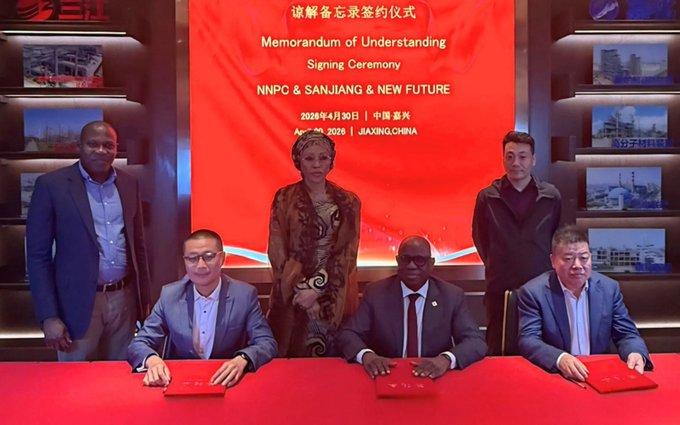
The Nigeria Employers’ Consultative Association (NECA), yesterday, expressed deep concern over the latest Memorandum of Understanding (MOU) signed between the Nigerian National Petroleum Company Limited (NNPC) and Chinese firms for the “restart, completion, and expansion” of the Port Harcourt and Warri refineries.
While the nation urgently requires functional refineries to drive industrial growth and energy security, NECA insists that Nigerians deserve far more than another ceremonial agreement and repeated promises that fail to materialise.
Speaking in Lagos at the weekend, the Director-General of NECA, Adewale-Smatt Oyerinde, warned that the humongous funds wasted on refinery rehabilitation projects must stop as it remains unsustainable.
According to him, “it will be unpatriotic to endorse another opaque deal while questions surrounding past spending remain unanswered.”
NECA noted that over the years, Nigeria has witnessed a disturbing pattern of billion-dollar refinery turnaround maintenance (TAM) projects that produced little or no measurable refining output. The association stressed that the latest agreement risks becoming another chapter in a long history of unfulfilled promises unless transparency and accountability are prioritised from the onset.
“It is on record that the nation cannot afford another trail of wasteful spending,” Oyerinde stated. “Between 2010 and 2023, Nigeria spent more than N11 trillion, approximately $25 billion, on refinery rehabilitation, maintenance, and turnaround programmes, yet the state-owned refineries remain largely unreliable and non-functional.”
The Director-General recalled that Nigerians are still grappling with the disappointing outcome of the over $1.5 billion rehabilitation project approved for the Port Harcourt Refinery in 2021. Despite repeated assurances that the refinery would operate at about 90 per cent of its installed capacity, there has been no sustainable refining output capable of significantly easing the country’s fuel challenges.
NECA further observed that the Port Harcourt Refinery has undergone several rehabilitation cycles since the 1990s, including phases between 2000–2010, 2012–2015, and 2016–2021.
Oyerinde lamented that each phase consumed enormous public funds, yet the facilities reportedly continued to deteriorate while Nigerians remained dependent on imported petroleum products.
“The intention behind the latest MOU may be commendable,” Oyerinde said, “but Nigerians deserve sufficient explanation regarding the status of previous spending, the audits conducted, and the actual condition of the refineries after years of rehabilitation efforts.”
The association questioned the details surrounding the proposed “technical equity partnerships” embedded in the new agreement. NECA demanded clarity on the safeguards that would prevent another cycle of delays, cost overruns, failed timelines, and repeated shutdowns that have characterised previous refinery projects.
NECA also challenged NNPC to explain how the new arrangement would guarantee genuine local participation. According to the association, Nigerians need assurances that the project will create jobs, support indigenous procurement, and facilitate meaningful technology transfer rather than merely generating headlines and political publicity.
“For over three decades, Nigerian businesses have paid heavily for energy insecurity,” Oyerinde lamented. “Manufacturers continue to battle high production costs, scarce foreign exchange is spent on fuel imports, and countless employment opportunities have been lost because the country cannot refine sufficient petroleum products locally.”
The association maintained that public trust can no longer be sustained through announcements and ceremonies alone. NECA argued that the NNPC must now embrace a culture of openness and accountability by publicly disclosing the financial, operational, and technical realities of the refineries before embarking on another ambitious rehabilitation agenda.
NECA reiterated its long-standing position that the solution lies not in endless turnaround maintenance programmes but in a more sustainable governance and operational model. The association once again advocated for the privatisation or concession of the refineries to competent investors with proven technical and commercial expertise.
According to Oyerinde, “Nigeria cannot industrialise on imported fuel, but it also cannot continue burning billions of dollars on refineries that do not work.” He stressed that fixing governance failures within the refinery system is just as important as repairing physical infrastructure.
The association clarified that it is not opposed to the revamping of the Port Harcourt Refinery. Rather, NECA supports any genuine effort capable of boosting domestic refining capacity, creating jobs, reducing supply-chain vulnerabilities, and strengthening Nigeria’s industrial competitiveness — provided such efforts are anchored on transparency, accountability, and a credible business model.
NECA concluded by calling on the Federal Government and the NNPC to move beyond “MOU governance” and deliver measurable results that Nigerians can see and feel. “The era of announcing agreements while citizens continue to buy fuel at extortionate prices must end,” Oyerinde declared. “Nigerians are demanding answers, measurable outcomes, and responsible leadership, not another round of expensive promises.”













Leave a comment