



From Idu Jude, Abuja
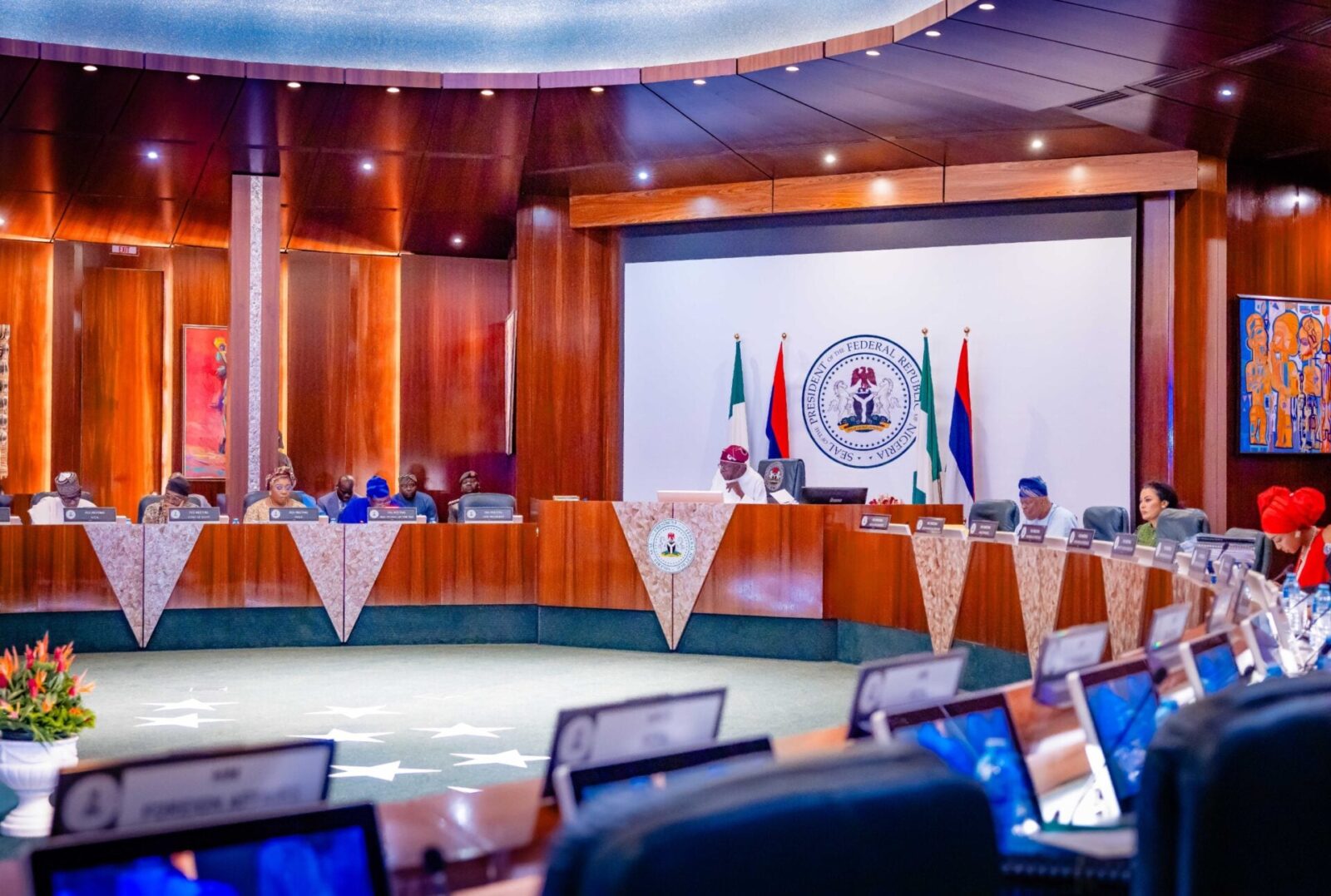
The Federal Executive Council (FEC) has approved three major Public-Private Partnership (PPP) projects aimed at strengthening Nigeria’s infrastructure base and accelerating economic growth across key sectors.
The approvals cover the development of a Smart National Transport Data Bank under the Nigerian Institute of Transport Technology (NITT), alongside two Independent Power Projects (IPPs) at the Onne Port Complex in Rivers State and the Apapa Port Complex in Lagos.
The projects are part of President Bola Tinubu’s push to fast-track infrastructure delivery through private sector participation, improve efficiency in critical sectors, and drive sustainable national development.
The Infrastructure Concession Regulatory Commission (ICRC) supervised the process, carrying out the Outline Business Case review, due diligence, negotiations, and certification of the Full Business Case before the projects were presented for FEC approval.
Speaking on the approvals, the Director-General of the ICRC, Dr. Jobson Ewalefoh, said the interventions reflect a shift toward structured PPPs designed to unlock private capital and deliver measurable economic value.
According to him, “Nigeria’s biggest transport challenge is not just infrastructure, it is the lack of reliable, usable data. What this administration has done with the approval of the National Transport Data Bank is to lay the foundation for a data-driven transport system that improves planning, enforcement, and overall efficiency across the sector.”
He explained that the Smart National Transport Data Bank will serve as a national digital backbone for transport intelligence, integrating real-time data across road, rail, air, and marine systems. It will also deploy technologies such as vehicle tagging and automated number plate recognition to enhance traffic management and enforcement.
Dr. Ewalefoh added that the system will improve infrastructure planning through evidence-based decision-making, reduce inefficiencies, and unlock new revenue opportunities via automation and digital compliance.
On the power projects, he said the Onne and Apapa IPPs are critical interventions to address Nigeria’s long-standing power deficits in key economic corridors.
“At Onne, the development of a 50MW power plant will provide stable electricity to the port and the Oil and Gas Free Zone, significantly reducing operational bottlenecks and supporting industrial activities in that corridor,” he said.
He further noted that the Apapa Port project, which will deliver about 36MW through a hybrid energy mix, is expected to improve power reliability in Nigeria’s busiest port, reduce operating costs, and enhance trade efficiency.
“These are not just power projects; they are productivity enablers. When you fix power in these critical economic zones, you directly impact trade efficiency, reduce the cost of doing business, and strengthen Nigeria’s position as a regional hub,” he added.
Collectively, the projects signal a coordinated effort to close Nigeria’s infrastructure gaps through structured PPP frameworks, with emphasis on power reliability and digital transport systems to drive measurable economic gains.
Dr. Ewalefoh reaffirmed that the ICRC will continue to ensure all PPP projects align with global best practices, prioritising value for money, investor confidence, and protection of public interest.















Leave a comment