



When Steve Jobs unveiled the first iPod in October 2001, he did not lead with engineering specifications or storage capacity. He did not say Apple had built a 5GB MP3 player. Instead, he offered a single, vivid line: “1,000 songs in your pocket.” Then he reached into his jeans and pulled the device out.
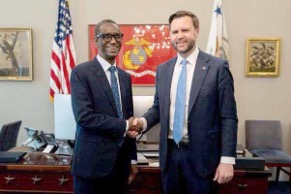
In that m A laundry list of corporate executives travelled in the delegation of President Bola Ahmed Tinubu to Kigali, Rwanda this week. Nigeria’s Minister of Defence, Christopher Musa, led another team of government officials to Monaco, while the National Security Adviser, Nuhu Ribadu, went to the United States to meet Vice President JD Vance, U.S. Secretary of State Marco Rubio, and other high-level American officials. It has been a full diplomatic schedule for the Nigerian government. But are these trips a success for Tinubu and his men?
That question matters because Nigeria is not operating from a position of fiscal comfort. The country is still wrestling with inflation, a fragile naira, deepening poverty, and worsening insecurity. Every presidential delegation, every security shuttle, and every international conference trip now carries an unavoidable political burden: taxpayers want to know whether these expensive diplomatic outings are producing measurable returns or merely generating photo opportunities.
The answer, however, is more complicated than the simplistic outrage that often dominates social media. Diplomacy is not always instantly visible in the way roads, bridges, or power plants are. Sometimes its value lies in relationships quietly built, strategic trust accumulated, and deals negotiated long before citizens see concrete outcomes. Yet, in a democracy under economic pressure, governments must increasingly justify not only why they travel, but what exactly those travels are delivering.
In a fiscal climate this scorched, these trips cannot be written off as “business as usual”; they must be viewed through the unforgiving lens of Return on Investment (ROI). Take Tinubu’s appearance at the Africa CEO Forum in Kigali. The optics were unmistakable: a president surrounded by corporate executives and investors at one of the continent’s most influential gatherings. For Tinubu, whose economic reforms have triggered short-term pain at home, international investor confidence has become almost as important as domestic political approval.
Hypothetically, the cost of such a presidential trip could easily run into hundreds of thousands of dollars once aircraft operations, security logistics, and protocol teams are considered. Nigerian taxpayers may reasonably wonder whether the returns justify the expenditure. But Kigali was never simply about speeches. Tinubu’s broader objective appears to be repositioning Nigeria as an unavoidable investment destination. While Rwanda has aggressively marketed itself as a stable, efficient hub, Nigeria, despite its larger market, often struggles with bureaucratic inconsistency. Tinubu’s presence was a symbolic reminder that Africa’s largest economy still intends to lead the conversation.
The challenge is that symbolism alone cannot stabilize an economy. Investors do not merely listen to speeches; they watch foreign exchange policy and legal predictability. If the government wants these trips to be viewed as successes, it must eventually translate diplomatic engagement into visible capital inflows.
The Monaco trip by Christopher Musa reflects another layer of this statecraft: the growing commercialization of security itself. Musa’s discussions around the proposed Multi-domain Hybrid Intelligence Shield (HIS) project highlight how modern warfare is increasingly driven by intelligence integration and digital threat management rather than conventional troop deployments alone.
The attraction of a digital shield is obvious for a military fighting shadows across the Sahel and the Niger Delta, but the procurement trail is where the sunlight usually dies. Defence procurement in Nigeria has historically operated behind thick layers of secrecy. The cost of a multi-domain intelligence platform could stretch into tens or even hundreds of millions of dollars. Citizens are justified in asking difficult questions about transparency and long-term sustainability. Technology can strengthen national security, but it cannot substitute for governance failure; intelligence systems may detect threats faster, yet they cannot independently solve the unemployment and local distrust that fuel insecurity.
Yet, it is Ribadu’s Washington meetings that perhaps reveal the most strategically important dimension of Nigeria’s current diplomatic offensive. If you want to understand why Washington is suddenly obsessed with Abuja, look no further than Nuhu Ribadu. In a region where coups are becoming the new seasonal trend and the Kremlin is aggressively sliding into DMs, Ribadu is positioning Nigeria as the last, best adult in the room.
Ribadu has spent his career chasing down Nigeria’s most untouchable figures, but his current assignment might be his toughest yet: convincing a distracted Washington that Nigeria isn’t just another “problem to manage,” but actually the most valuable piece of real estate on the West African map. While the U.S. State Department watches the “Coup Belt” with growing dread, Ribadu is offering a different map, one where Abuja isn’t just a partner, but the regional firewall.
Think of West Africa right now as a high-stakes poker game. While other regional players are folding or switching decks, Nigeria’s National Security Adviser is doubling down on the U.S. alliance. The message Ribadu is carrying to Washington is simple: if you lose Nigeria, you lose the neighborhood.
This message resonates because the geopolitical environment has shifted dramatically. The Sahel is unstable, and Russian influence is expanding through military partnerships and information operations. For American policymakers worried about losing influence across the continent, Abuja represents both a risk and an opportunity. Washington’s interest is fundamentally strategic; they understand that a weakened Nigeria would create security consequences extending far beyond its borders.
Of course, these meetings also carry costs. International diplomatic missions involving senior security delegations are expensive. But unlike ceremonial travel, high-level security diplomacy can produce strategic dividends, intelligence partnerships and military cooperation frameworks that are difficult to quantify immediately.
Still, the broader political question remains: how should Nigerians measure success? Not every trip is wasteful, nor is every diplomatic handshake transformational. The real test lies in outcomes. Does investor confidence improve? Does insecurity reduce? Tinubu, Musa, and Ribadu are attempting to market Nigeria simultaneously as an investment destination, a security partner, and a geopolitical stabilizer. That is an ambitious project, but ambition alone is not policy success.
For a government asking citizens to endure painful economic reforms, foreign trips can no longer be defended as routine statecraft. The ultimate success of these missions won’t be found in the marble halls of Kigali or the West Wing of the White House, but in whether the strategic handshakes in Washington can eventually slow the inflation of a food basket in Wuse Market. Diplomacy is no longer judged only by who attended the meetings; it is judged by whether ordinary citizens eventually feel the benefits long after the delegations return home.













Leave a comment