



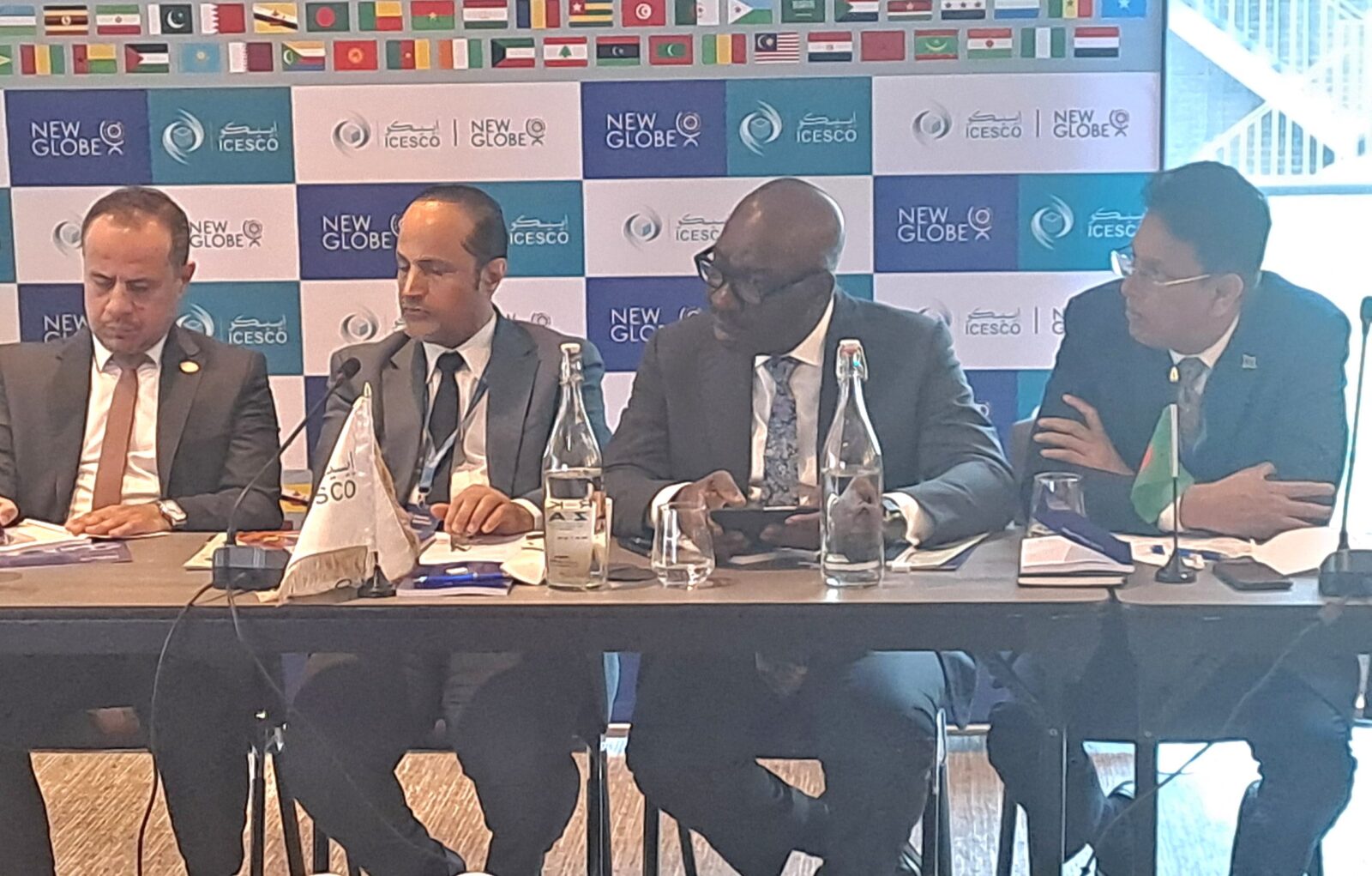
At the third edition of the Islamic World Educational, Scientific and Cultural Organisation (ICESCO) conference in London, Obaseki bequeaths the resounding success of EDOBEST to developing nations in search tangible learning outcomes, Crusoe Osagie writes
For many developing nations, the challenge in education is no longer the absence of policy ideas, but the inability to translate ambitious promises into measurable improvements in classrooms. Across the 53 member states of the Islamic World Educational, Scientific and Cultural Organisation (ICESCO), home to nearly 1.7 billion people, the urgency of fixing foundational learning has become impossible to ignore. Millions of children still lack basic literacy and numeracy skills, while governments continue to search for scalable and evidence-based reforms capable of reversing learning poverty.
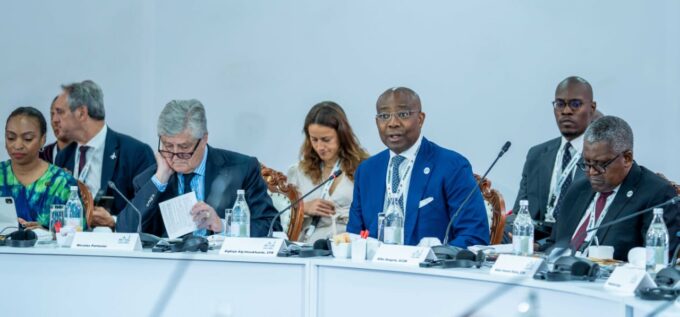
It was against this backdrop that education transformation took centre stage at the third edition of the ICESCO High-Level Ministerial Dialogue held in London, United Kingdom. The summit convened ministers, policymakers, education experts and development partners to examine how countries can move beyond rhetoric and achieve practical gains in K-12 education systems. Central to the discussions was the growing recognition that foundational education remains the bedrock of economic growth, social stability and long-term national development.
One reform model that attracted considerable international attention at the conference was the Edo Basic Education Sector Transformation initiative, popularly known as EDOBEST. Introduced during the administration of former Edo State Governor, Godwin Obaseki, the programme has increasingly emerged as one of Africa’s most closely studied examples of education reform with measurable learning outcomes.
Now serving as a researcher at Boston University, Obaseki was invited as a keynote speaker at the London summit, where he shared firsthand insights into how a political campaign promise evolved into a large-scale education reform programme that produced tangible classroom results.
The significance of EDOBEST to ICESCO’s objectives was difficult to overlook. This year’s conference focused specifically on identifying scalable delivery models capable of strengthening foundational learning across member states. Organisers sought practical reform case studies backed by evidence, especially those demonstrating how technology and data-driven management can improve teaching quality, accountability and student performance. In many respects, EDOBEST represented precisely the kind of reform model the organisation hoped to spotlight.
ICESCO officials noted that member states collectively account for nearly half of the world’s children experiencing learning poverty. In countries such as Nigeria and Pakistan alone, an estimated 44 million children around the age of 10 are unable to read and understand a simple text. These statistics underline the scale of the crisis confronting many developing nations and explain the growing emphasis on foundational learning as a development priority.
According to ICESCO, evidence consistently shows that as much as 75 per cent of long-term economic growth variation among nations can be linked to learning outcomes achieved at the foundational level. This reality has elevated education reform from a social policy concern to a strategic economic imperative.
In his keynote presentation, Obaseki focused on the difficult transition from political declarations to practical implementation. He argued that successful education reform begins with leadership making education the government’s most visible and consistent priority, rather than merely one item among competing agendas.
He stressed the importance of building a compelling public narrative around education reform, one that connects directly to the future prospects of citizens and communities. According to him, reform programmes succeed when governments are able to mobilise public trust and maintain momentum despite bureaucratic resistance, vested interests and the short-term pressures of politics.
Obaseki also emphasised that transformational reforms require active leadership from the highest levels of government. In his view, governors, ministers or heads of state cannot afford to delegate responsibility entirely if they hope to achieve meaningful results. Sustained political ownership, he suggested, is often the difference between reform programmes that survive and those that collapse under administrative inertia.
Another major theme of his presentation was sustainability. Obaseki argued that reforms must outlive the administrations that initiate them. This requires building strong institutions, establishing credible financing mechanisms and creating public expectations that make it difficult for future governments to reverse progress.
The London dialogue also explored how technology and Artificial Intelligence can support education system transformation. Presentations from policymakers and development partners examined how AI-driven tools are already assisting governments in lesson design, learning analytics, system monitoring and accountability. Delegates were encouraged to distinguish between technologies that genuinely improve educational delivery and those promoted without clear evidence of impact.
The summit further provided a platform for ministers and senior officials from ICESCO member states to exchange experiences on reform implementation. Discussions focused on how countries can bridge the persistent gap between policy ambition and classroom realities, while also identifying the practical interventions capable of producing results within the next two to three years.
Beyond the technical discussions, the conference reflected a growing consensus that education reform in the developing world must become increasingly evidence-based, data-driven and implementation-focused. For many delegates, the attraction of EDOBEST lay not merely in its policy design but in its demonstrable outcomes and replicable structure.
As ICESCO advances toward its Education Agenda 2026-2030 and the broader global Education 2030 targets, the organisation appears increasingly focused on practical delivery systems rather than abstract commitments. The challenge facing many member states is no longer understanding what needs to be done, but discovering how to execute reforms effectively at scale.
In that search for workable solutions, the EDOBEST experience has positioned itself as more than a local success story from Edo State. It is increasingly being viewed as a potential template for countries seeking to transform struggling education systems into engines of human capital development.
For the nearly 1.7 billion people living across ICESCO member nations, many of whom continue to grapple with weak foundational learning systems, the lessons from Edo may prove both timely and consequential.














Leave a comment