



By Chinelo Obogo
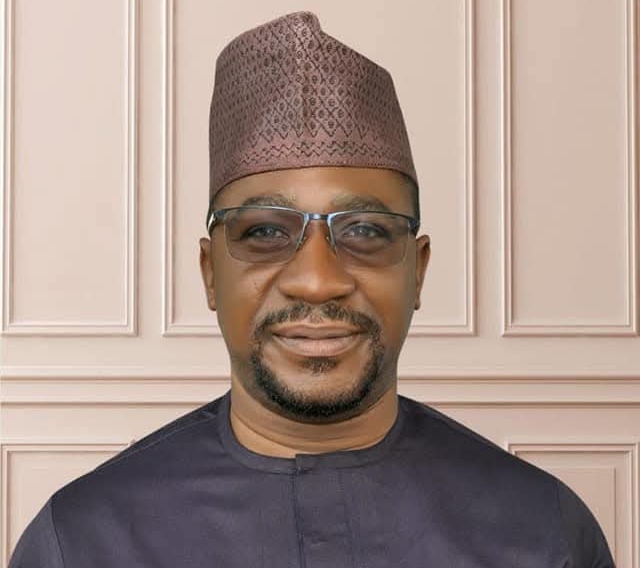
President of the Air Transport Services Senior Staff Association of Nigeria (ATSSSAN), John Ogbe, has urged the Federal Government to provide intervention funds that would help domestic airlines settle the debt they owe the Nigeria Civil Aviation Authority (NCAA) and other agencies.
Speaking to Daily Sun on the ongoing issue between the regulatory agency and domestic airlines over debt accrued from unremitted Ticket Sales Charge (TSC), Ogbe said that while the failure to remit collected charges is indefensible, the financial pressures airlines are facing are enormous, chief among them is the soaring cost of Jet A-1 fuel.
”What has been happening is that the airlines use this money from these agencies to run their operations. Pay some, owe more. Pay more, owe again. Do you understand? Just to keep floating,” he said.
Ogbe said he is not excusing the airlines but that the solution cannot come from them alone. He said the government must step in and must do so urgently.
“We know how critical the airlines are. We know the problems they are having as a result of disruptions due to soaring Jet A-1 prices. The prices and the shortages we are experiencing with Jet A-1 have severely impacted their operational expenses. But that does not justify them owing the agencies this money.
“We are therefore calling for the creation of an intervention fund that some might call a bailout, targeted specifically at helping airlines clear their regulatory debts while also getting back on sound financial footing. In places like the United States and Canada, the government actively supports its airlines. That model exists and it works.
“The intervention fund would provide soft loans or grants that airlines could use to settle their outstanding levies to the NCAA and other agencies. This would immediately restore funding to the agencies that are currently struggling to meet their obligations, while giving airlines a structured, manageable pathway out of their debt.
“They can call it a bailout or they can call it an intervention fund. What matters is the urgency of the action. As we speak, the airlines are going to struggle. The debt is so huge. We encourage the government to quickly and urgently intervene.”
Many airlines, Daily Sun learned are owing the NCAA billions and this is only the naira-denominated portion of the debt as a significant component of the outstanding balance also exists in dollars, making the total liability even more difficult to quantify and settle.
The labour leaders said it is a misnomer to call it airline revenue as it is not the airlines’ money.
It is supposed to be collected on behalf of the agencies, and then remitted, he argues.
”What has happened over time is that this money, which was never meant to be operational funds for the airlines, has been quietly absorbed into their operations. This money is not only meant to service the NCAA alone. You are also quite aware that there is a breakdown of how that money is being spent across four government agencies, each of which depends on this funding to carry out its statutory responsibilities. The NCAA holds the largest share at 56 percent, followed by the Nigerian Airspace Management Agency (NAMA) at 22 percent, the Nigerian Safety Investigation Bureau (NSIB) is six percent, the Nigerian Meteorological Agency (NIMET) is nine percent, and the Nigerian College of Aviation Technology (NCAT) is seven percent.
”You can see that this money is meant for all these agencies to be able to carry out their statutory functions. Each of these institutions plays a critical role in keeping Nigerian airspace safe, functional, and internationally compliant and without adequate funding, their ability to perform these roles is severely compromised.
“The NCAA oversees airport standards, regulates aviation safety, enforces aviation laws and policies, manages economic regulation of the industry, and historically has also carried out functions related to airports and airspace management, as well as meteorological services.
“Executing such a wide-ranging mandate requires constant investment in staff training and retraining, in technology and infrastructure, in welfare packages that attract and retain competent personnel. None of these things can be done without money. And right now, the NCAA is not getting the money it is owed,” he said.
Ogbe also acknowledged that the government has not been helpful and cited several recent policy actions that, if sustained and expanded, could help address the issues that allowed this crisis to develop in the first place.
The Cape Town Convention is one of the most significant of these. Nigeria’s signing of this international treaty has created a new enabling environment for aircraft financing. Among other things, it has enabled Nigerian airlines to access dry lease arrangements.
The Boeing MRO partnership is another encouraging development. For years, the fact that virtually all major aircraft maintenance in Nigeria must be carried out abroad and paid for in dollars has been a significant drain on airline finances.
The recent agreement with Boeing to establish an MRO facility in Nigeria is a step toward addressing this problem. If fully realized, it would allow airlines to carry out critical maintenance domestically, reducing capital flight and easing the forex pressure that has made operations so expensive.
Ogbe said:”These are all steps the government is taking and I encourage the government to still do more. And to look for ways of seeing how they can further support the airlines in the form of creating facilities, waivers, and other mechanisms they can use to support the airlines to operate optimally.”









Leave a comment