



By Chinwendu Obienyi and Adanna Nnamani (Abuja)
The Central Bank of Nigeria (CBN) has launched the Nigeria Payments System Vision 2028 (PSV-2028), describing the country’s payments infrastructure as a strategic pillar for economic growth, financial inclusion, and global competitiveness.
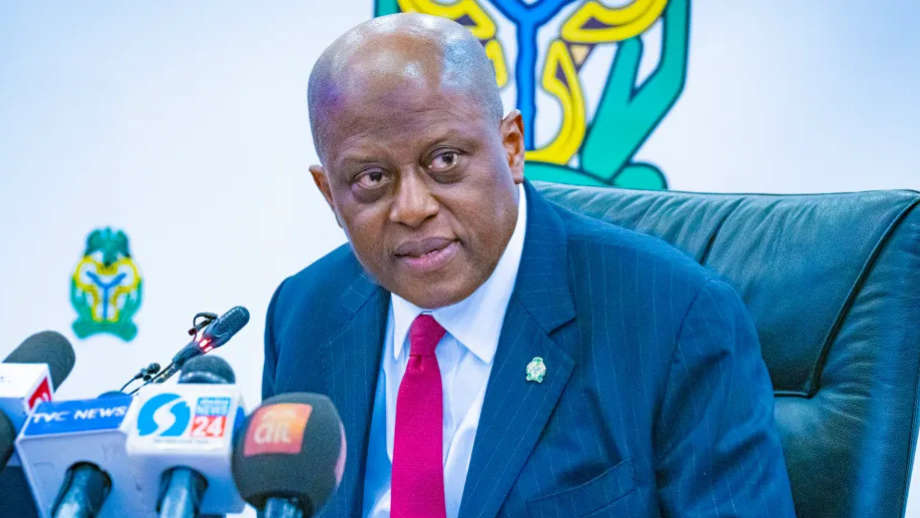
Speaking at the unveiling in Abuja on Monday, CBN Governor Olayemi Cardoso said the new framework is not merely a policy document but a long-term roadmap for how Nigerians will transact, trade, save, invest, and participate in a rapidly digitising economy.
Cardoso noted that Nigeria’s payments system has evolved over the past two decades into one of the most dynamic in the world, driven by instant payments, rising digital adoption, and fintech innovation. However, he stressed that the country must do more to ensure its progress is properly recognised globally.
“We must tell our story better. If we do not, others will tell it for us, and not always in ways we like,” he said.
According to him, PSV-2028 builds on existing reforms to strengthen the resilience, security, and inclusiveness of Nigeria’s financial ecosystem. He said the vision aligns with the Central Bank’s broader reform agenda introduced in 2023, aimed at stabilising the economy and improving investor confidence.
The CBN governor emphasised that modern payment systems are no longer just financial utilities but critical national infrastructure. He said efficient systems reduce the cost of doing business, improve productivity, enhance transparency, and expand participation in economic activity.
“In today’s world, payment infrastructure is a strategic national asset,” Cardoso said, adding that the new framework will support trade, remittance flows, and Nigeria’s external balance position over time.
PSV-2028 also aims to deepen financial inclusion, promote innovation, and improve interoperability across domestic and cross-border payment systems. The initiative is expected to position Nigeria more strongly within the African Continental Free Trade Area (AfCFTA) and global digital commerce networks.
Cardoso highlighted that the success of the initiative will depend not on the quality of the document but on execution, calling for collaboration across government agencies, financial institutions, fintech companies, and development partners.
The success of PSV-2028 will be measured by execution,” he said.
“We must ensure it expands opportunity, strengthens trust, and builds a payments ecosystem that serves every Nigerian.”
Nigeria already ranks among Africa’s most advanced digital payments markets, and the CBN believes the new vision could further consolidate its leadership while unlocking new opportunities for jobs, trade, and economic growth.
Also speaking during the launch, Deputy Governor, Economic Policy Directorate, CBN, Dr. Muhammad Abdullahi, described the framework as a strategic blueprint to redefine how money moves, how businesses operate, and how trade is conducted in Nigeria and across Africa.
He explained that the major pillar of the vision focuses on regulation, cybersecurity, and risk management while no payment system can scale without trust, and trust cannot exist without robust security.
“The framework therefore prioritises the establishment of a National Payment Security Operations Centre, alongside enhanced supervisory technology (SupTech), regulatory technology (RegTech), stronger AML/CFT frameworks, and improved inter-agency coordination”, Abdullahi said.
He added that successful implementation of PSV-2028 will deliver a high-capacity payment system capable of supporting a growing digital economy, reducing transaction costs, expanding access to markets, and enhancing competitiveness for Nigerian businesses globally.
“Ultimately, the success of the vision will not be measured only by transaction speed, but by its impact on trade expansion, investment flows, job creation, and long-term prosperity”, he concluded.
Earlier in his opening remarks, Director, Payment System Policy Department, CBN, Musa Jimoh, described the initiative as the continuation of a reform journey that began nearly two decades ago with the country’s first structured attempt to modernise its payment ecosystem.
Jimoh explained that early reform efforts were driven by three major constraints that kept large segments of the population outside the formal financial system.
“The first was the high cost of banking services. Excessive charges and transaction costs discouraged savings in formal institutions, pushing many Nigerians toward cash-based transactions. In many cases, he said, cash remained the preferred medium simply because it was immediate and free of transaction fees.
The second challenge was limited access to financial touchpoints. Banking infrastructure and agent networks were sparse, particularly in rural areas, making it difficult for citizens to access basic financial services without long and costly travel.
The third was the rigidity of identity requirements, where access to banking services was often restricted to holders of formal identification such as international passports or driver’s licences. This excluded a significant portion of the population from the financial system”, Jimoh said.
To address these barriers, he noted that the apex bank implemented a series of policy reforms designed to expand inclusion and reduce friction in the system.
One of the most significant, he said, was the introduction of the cashless policy in 2012, which promoted electronic payments and reduced dependence on physical cash in circulation.
Jimoh noted that while cash remains the fastest form of payment due to its immediacy, it is inefficient for scaling a modern economy. The cashless policy was therefore designed to reduce the systemic costs associated with cash handling, while improving efficiency across the financial sector.
He also highlighted the transformative impact of agent banking. Starting from about 50,000 agents, Nigeria now boasts over two million agents nationwide. This expansion, he said, has significantly improved access to financial services in underserved communities.















Leave a comment