



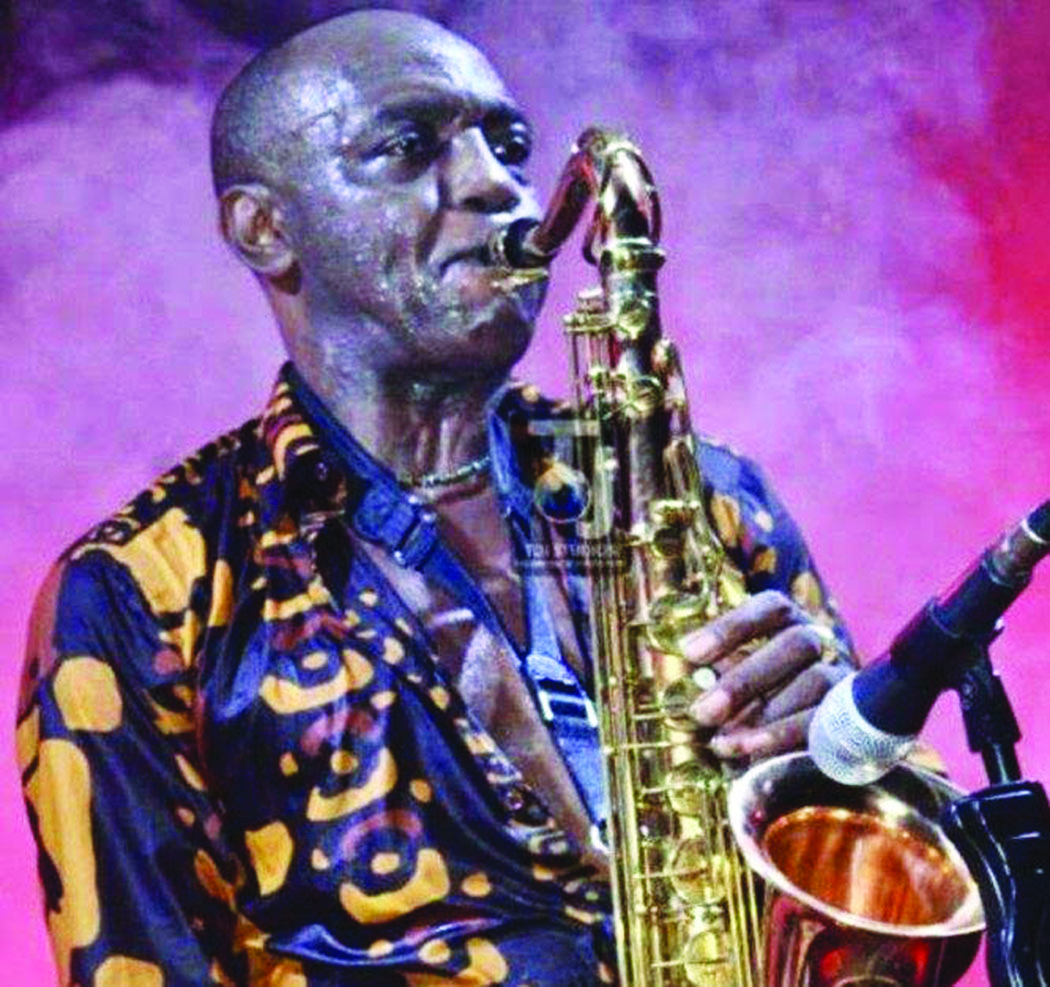
Before Afrobeat, jazz was a defiant art of Black expression—and in today’s algorithmic age, Yinka Olatunbosun explores its evolution in Nigeria through conversations with Dede Mabiakwu, Duro Ikujenyo and Ayoola Shadare
Dede Mabiaku
Dede Mabiaku—actor, jazz–Afrobeat musician and former Egypt 80 band member—embodies the classic “triple threat,” with a career shaped early by music and performance. From his secondary school days as a chorister to his time in university bands at Jos and Benin, where he studied theatre arts, music remained central to his artistic identity. During his National Youth Service in Owerri, he worked with a recording company and formed a band, before moving to Lagos to pursue stage and television acting with the Nigerian Television Authority—despite his parents’ preference for a career in architecture.
His introduction to jazz began at home, where his father played standards on the organ, and deepened through friends with rich collections. But it was Jazz 38, the Ikoyi venue run by Tunde and Fran Kuboye, that proved pivotal. There, Mabiaku encountered live jazz culture and the lingering presence of Fela Kuti, who often performed standard jazz in his early years. Frequent visits led to performances, and eventually to a life-changing meeting with Fela himself.
“That handshake—I still feel it,” Mabiaku recalls of their first encounter, a moment that marked the beginning of his journey into Kalakuta and a deeper commitment to music as a form of resistance and expression.
For Mabiaku, jazz is inherently African—exported, reshaped in America, and later reabsorbed into forms like Afrobeat. Yet he laments the erosion of discipline in today’s music industry. Where earlier generations underwent rigorous training, mentorship and ethical grounding, he argues that social media and technology have prioritised speed and visibility over craft and patience.
Surrounded by images of Fela in his home, Mabiaku remains deeply influenced by the legend. “Fela is not dead. Fela lives on,” he says, holding onto a personal photograph gifted to him—one he guards with quiet reverence.
Duro Ikujenyo
Duro Ikujenyo, jazz–Afrobeat musician and former Egypt 80 band member known for his masterful piano work, traces his musical journey through a long apprenticeship in both jazz and Fela Kuti’s evolving soundscape. He first met Fela in London while still a student, a connection that later developed into a lasting musical association.
Reflecting on Fela’s artistic evolution, Ikujenyo recalls that after returning from London, Fela initially played classical music, then highlife and jazz—partly under the guidance of his mother, who believed highlife was essential for survival in Nigeria. His later exposure to American musicians and Sandra Izsadore, however, reshaped his direction. Realising he could not compete directly within American jazz traditions, and working with limited backing musicians, Fela simplified his approach, eventually creating what became Afrobeat.
In the 1960s and 70s, Ikujenyo notes, jazz exposure in Nigeria was rare but influential. Broadcaster and critic Benson Idonije’s “Just Jazz” programme on FRCN served as a key archive for aspiring musicians like himself, who recorded and studied it diligently. There were also early jazz spaces such as The Floating Boat at Marina, where Fela occasionally took musicians, while Navy Captain Wole Bucknor supported musicianship training that included study abroad.
While working at the Ministry of Petroleum Resources, Ikujenyo pursued formal music studies at the Royal School of Music in London between 1974 and 1978, later joining Fela’s ensemble after the 1978 Berlin tour, where many musicians defected. By 1979, he had become lead pianist in Egypt 80.
He describes Fela’s harmonic language as deeply rooted in jazz, beginning with minor 7th chords that pushed him to study standards by Charlie Parker and Miles Davis. This exploration eventually led him to form his own band and perform at venues like the Sheraton in the 1990s.
For Ikujenyo, jazz originates in the spirituals of enslaved Africans and was later popularised—often by others—though its essence remains intact. In Nigeria today, he sees its decline as tied to limited music education, lack of instrumental training among contemporary artists, and minimal institutional support. To counter this loss, he has begun scoring and archiving over 100 highlife songs to preserve musical memory for future generations. “One of my friends sent me a song Fela did some 45 years ago. Even Yeni (Fela’s daughter) didn’t remember,” he says.
Ayoola Shadare
Ayoola Shadare, music promoter and founder of the Lagos International Jazz Festival, brings a global perspective to Nigeria’s jazz culture, shaped by extensive exposure to jazz scenes in Europe and South Africa, where the genre is institutionally supported and culturally embedded.
In Nigeria, he observes, jazz remains largely a fringe genre—often labelled “elitist” or “matured mind music”—enjoyed when available but not yet structured into a mainstream cultural movement. While the country boasts world-class, highly trained musicians, Shadare argues that jazz here functions more as a passion-driven ecosystem than a fully developed industry.
His early encounters with the genre were shaped by key spaces such as Jazz 38, Jazzville, Jazzhole, Scotch Bonnet and Turaka, as well as the contributions of figures like Ben Ufeli (Bufly), who helped sustain its visibility. Over time, he notes, jazz in Nigeria has begun to evolve beyond purist boundaries, increasingly blending with Afrobeat, Highlife and Soul to reach new audiences. For him, the goal is not to preserve jazz as a static tradition, but to reposition it as a living, adaptive part of Nigeria’s sonic identity.
A turning point came 21 years ago when he attended the Cape Town International Jazz Festival and met its founder, the late Rashid Lombard. Inspired, he created the Lagos International Jazz Festival. Sustaining it, however, has been challenging—particularly due to limited corporate sponsorship, high costs linked to currency fluctuations, inconsistent infrastructure, weak tourism alignment, and the need for long-term audience development for a genre that resists instant gratification.
While acknowledging Afrobeats’ global dominance, Shadare sees opportunity in collaboration rather than competition. Through initiatives like Planet Afrobeats, LIJF and NAIJAZZ, he highlights the shared musical DNA between genres, noting that jazz’s improvisational core permeates Afrobeats and other Nigerian styles.
For him, jazz may not dominate the mainstream, but its influence is foundational—shaping musicianship, enriching hybrid forms, and quietly underpinning much of contemporary Nigerian music, from Highlife and Fuji to Afropop and Afrobeats itself.













Leave a comment