



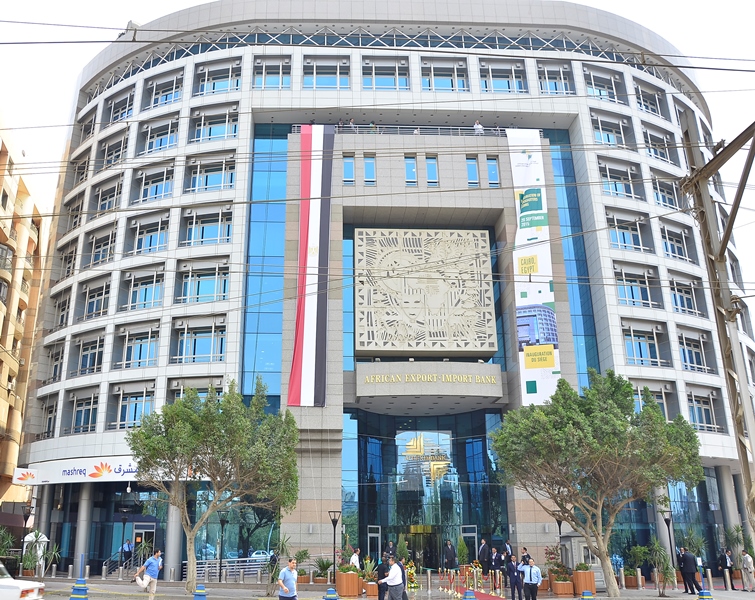
African Export-Import Bank (Afreximbank) has posted a robust financial performance for the 2025 financial year, with total assets and contingencies climbing to $48.5 billion.
This accentuates its growing influence in financing trade and development across Africa and the Caribbean.
The Cairo-based multilateral lender, in its audited results released on April 9, reported a 21 per cent surge in total assets from $40.1 billion in 2024, underscoring sustained balance sheet expansion despite global economic headwinds and rating concerns.
Net loans and advances rose by 16 per cent to $33.5 billion, driven by strong disbursements into critical sectors including manufacturing, infrastructure, food security and climate adaptation, areas seen as pivotal to Africa’s long-term economic resilience.
Profitability remained strong, with net income climbing 19 per cent to $1.2 billion, up from $973.5 million in the previous year. Gross income also edged higher by 6.06 per cent to $3.5 billion, reflecting steady revenue growth supported by the bank’s expanding portfolio of trade finance and advisory services.
Afreximbank maintained solid asset quality, with its non-performing loan (NPL) ratio at 2.43 per cent, broadly stable compared to 2.33 per cent in 2024. This performance highlights disciplined risk management even as lending volumes increased across diverse markets.
Liquidity remained a key strength. Cash and cash equivalents rose significantly to $6.0 billion from $4.6 billion, while liquid assets accounted for 14 per cent of total assets, comfortably above the bank’s internal minimum threshold of 10 per cent.
Shareholders’ funds grew 17 per cent to $8.4 billion, supported by the strong profit outturn and fresh equity inflows of $299.4 million under its General Capital Increase II programme. The bank’s capital adequacy ratio stood at 23 per cent, well above regulatory benchmarks, providing a solid buffer for future growth.
Operating expenses increased to $459.2 million from $367.7 million, reflecting staff expansion and inflationary pressures. However, Afreximbank retained cost discipline, with a cost-to-income ratio of 21 per cent, still significantly below its 30 per cent ceiling.
In a show of investor confidence, the bank successfully tapped international capital markets, raising over $800 million through Samurai and Panda bond issuances in Japan and China during the year. The move helped counter concerns raised by some rating agencies and reaffirmed Afreximbank’s strong funding access and credibility.
Commenting on the results, Senior Executive Vice President, Denys Denya, said the performance reflects resilience and strategic execution amid a challenging global environment.
“Despite continuing global geopolitical challenges and disruptions caused by some rating actions, the Group delivered excellent financial performance in 2025,” Denya said.
He noted that the results cap a decade of transformative leadership under President Prof. Benedict Oramah, with the bank already ahead of most targets under its Sixth Strategic Plan, which runs through 2026.
Denya added that newer subsidiaries, including the Fund for Export Development in Africa (FEDA) and AfrexInsure, are now profitable, contributing to earnings growth and strengthening the group’s diversified structure.
“The Group’s balance sheet is at its strongest level ever, with liquidity levels and capitalisation well above target and good asset quality,” he said.
Afreximbank said it is entering the 2026 financial year with strong momentum, positioning itself to scale impact, deepen trade integration and drive value addition across “Global Africa.”
Return metrics remained stable, with return on average equity at 15 per cent and return on average assets improving slightly to 3.04 per cent, signalling efficient use of capital.
With a fortified balance sheet, rising profitability and sustained investor confidence, Afreximbank said it is firmly on track to consolidate its role as a key engine of trade-led growth across the continent.















Leave a comment