



Liman Abdulaziz
In December 2023, Tudun Biri, a quiet agrarian community in Igabi Local Government Area of Kaduna State, became the setting of one of the most painful chapters in Nigeria’s recent history. An accidental military drone strike cut short innocent lives, injured many, and left families and an entire community traumatised. The tragedy was sudden and devastating, but its emotional aftermath lingered far longer; marked by grief, uncertainty, and a haunting question that often follows national tragedies: would the state remember?
Nearly two years later, that question has been answered with uncommon clarity. Tudun Biri today is no longer defined solely by loss. It has been rebuilt as a living testament to what is possible when governance is driven by empathy, responsibility, and resolve. The restoration of the community stands as a powerful example of cooperative federalism in action, shaped by the compassionate leadership of President Bola Ahmed Tinubu and the determined, hands-on stewardship of Kaduna State Governor, Senator Uba Sani.
From the earliest hours after the incident, Governor Sani approached the crisis not as a political inconvenience, but as a moral obligation. Emergency medical care was mobilised for the injured, psychosocial support was extended to grieving families, and relief materials were coordinated in partnership with community leaders. Yet, even as these immediate steps were taken, the governor was clear-eyed about the scale of what lay ahead. Tudun Biri required far more than sympathy and temporary relief; it needed comprehensive rebuilding, economic restoration, and long-term reintegration.
Recognising that the task exceeded the financial and institutional capacity of a single state, Governor Sani took the matter directly to President Tinubu. What followed was a defining moment in the evolving response. The president listened, reflected, and acted decisively. At the federal level, the response matured from expressions of condolence into a structured, nationwide development intervention. Tudun Biri was adopted as the pilot community for the Resettlement Scheme for Persons Impacted by Conflicts (RSPIC), a framework designed to deliver durable recovery solutions to communities affected by conflict and humanitarian crises.
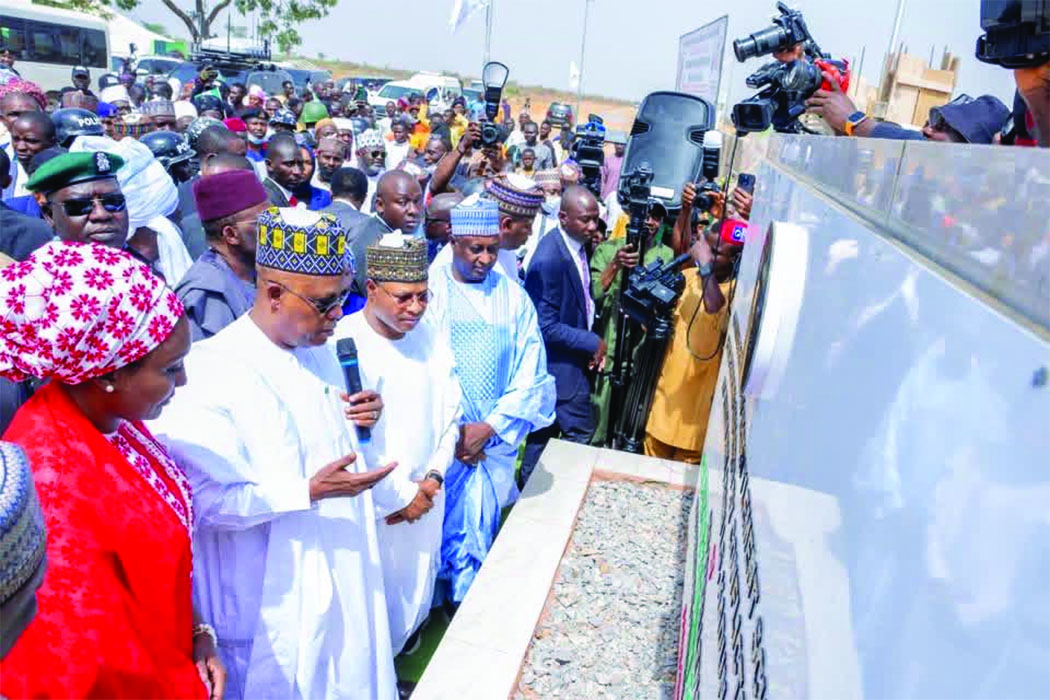
Vice President Kashim Shettima, who would later oversee the implementation of the scheme, described the philosophy behind it as one “anchored on a simple but powerful notion that governance must serve people, heal divisions, and strengthen the foundations of national stability.” Standing in Tudun Biri during the commissioning of the resettlement projects on Friday, January 30, 2026, the Vice President added that “fairness is the glue that holds a nation together, and compassion is not a weakness of the state, but its moral strength.”
Under RSPIC, the focus shifted decisively from short-term relief to long-term restoration. Modern residential homes were planned and constructed to replace those lost, accompanied by essential infrastructure designed to support safe, dignified, and sustainable living. According to the Director-General of the National Emergency Management Agency (NEMA), Mrs. Zubaida Umar, the original project design made provision for 143 housing units. However, she explained that “ten housing units were converted into a befitting school facility to meet the educational needs of the children within the settlement.” As a result, “the site now comprises 133 completed housing units, complemented by educational facilities that invest in the future of the community.”
But the Tudun Biri intervention was never conceived as a housing project alone. Federal planners deliberately integrated social amenities and livelihood-support systems into the resettlement design. Healthcare services, educational infrastructure, renewable energy solutions, livestock and agricultural support structures were incorporated to ensure that affected families were not merely relocated, but fully reintegrated into a functional economic and social ecosystem. As Vice President Shettima put it, “the Tudun Biri Resettlement Scheme is a vehicle for hope for families whose lives were disrupted,” and “a practical assurance that the Nigerian state does not abandon its citizens in times of adversity.”
While the federal government provided the framework and resources, the Kaduna State Government remained deeply embedded in every phase of recovery. From emergency response to long-term planning, Governor Uba Sani’s administration adopted a community-centred approach anchored on a clear policy principle: Kaduna State would not create internally displaced persons’ camps. Recovery would take place within communities, preserving social bonds and restoring economic life where it was disrupted.
One of the most impactful state-led interventions was in healthcare. A fully equipped 25-bed Primary Healthcare Centre was constructed in Tudun Biri by the Kaduna State Government, offering maternal care, minor surgical services, and ophthalmological treatment. For a community that previously depended on distant facilities, the centre has become both a lifeline and a symbol of renewed state presence.
Education was treated with similar urgency. A new primary school replaced facilities that had been lost or rendered inadequate, ensuring continuity of learning for children whose lives had already been deeply unsettled. Beyond formal education, the Kaduna State Government established a Skills Acquisition Centre in the community. The centre equips young people with vocational and entrepreneurial skills, reinforcing the belief that recovery must empower citizens to build sustainable livelihoods.
Infrastructure played a decisive role in reconnecting Tudun Biri to broader economic opportunities. The state government constructed a 5.5-kilometre asphalt road linking the community to the Kaduna International Airport corridor. This single intervention significantly improved mobility, facilitated trade, enhanced access to markets, and increased the community’s attractiveness to investors. It also symbolised a deliberate effort to integrate Tudun Biri into Kaduna State’s wider development trajectory.
Agricultural recovery was another pillar of the intervention. Households received fertiliser, rice, and maize through state social programmes, while continuous support was coordinated by the Kaduna State Emergency Management Agency. These measures addressed immediate food security concerns while enabling households to resume productive activity.
Perhaps the most delicate challenge was the use of portions of farmland for housing and community infrastructure. Rather than impose decisions, the Kaduna State Government engaged in consultations with affected farmers. Governor Sani made it unequivocally clear that rebuilding would not come at the cost of livelihoods. Farmers whose lands were repurposed were allocated alternative and improved farmlands and supported with Certificates of Occupancy and Rights of Occupancy. These documents, handed over through the Vice President, allow beneficiaries to access credit and participate fully in modern agribusiness; an important step as Kaduna positions itself as a regional agricultural hub.
In his address at the commissioning ceremony, Governor Uba Sani reflected on the deeper meaning of the intervention. He recalled the tragedy with solemn restraint, noting that “the pain of that moment remains with us. It must continue to guide our actions, remind us of our duty, and compel us to ensure that sorrow is never followed by silence or neglect.” He praised President Tinubu’s leadership, stating that the President’s directive to rebuild Tudun Biri “reflected a clear belief that the dignity of citizens must remain central to governance.”
The governor also paid tribute to Vice President Shettima, whose oversight was critical to translating commitments into outcomes. He observed that the Vice President’s role exemplified “cooperative federalism at its best, with federal and state institutions working in harmony to serve citizens.” For Vice President Shettima, the Tudun Biri intervention was part of a broader national commitment. He reminded the audience that the scheme was not isolated, noting that similar recovery projects were underway in other states affected by conflict and displacement.
Mrs. Zubaida Umar emphasised the institutional discipline behind the project, describing it as “a significant milestone in the federal government’s commitment to restoring dignity, stability, and opportunity for communities affected by humanitarian crisis.” She underscored that the intervention was firmly rooted in President Tinubu’s Renewed Hope Agenda, which places people-centred recovery, national security, and inclusive development at the core of governance.
For the people of Tudun Biri, the impact is tangible and deeply personal. Speaking on behalf of beneficiaries, community representatives expressed gratitude for a process that restored not just homes, but confidence in the promise of citizenship. The rebuilt Central Mosque and Church now stand as enduring symbols of unity and resilience, reflecting a community determined to heal together rather than fragment along lines of grief.
The peaceful and dignified manner in which the community selected beneficiaries for the new homes offered a quiet but powerful counterpoint to the violence that once defined its story. As Governor Sani observed, Tudun Biri has emerged as “a symbol of resilience, cooperative governance, and renewed national solidarity.”
The restoration of Tudun Biri offers a compelling recovery model for Nigeria; one that balances accountability with compassion, and security with development. It demonstrates that while tragedy may strike without warning, recovery is a choice shaped by leadership. In the words of Vice President Shettima, the commissioning of the resettlement scheme was not merely about buildings, but about “our national commitment to responsibility, empathy, and the protection of human dignity.”
For Tudun Biri, that commitment has translated into restored lives, renewed livelihoods, and a future reclaimed from despair. In doing so, it has reaffirmed a vital truth: when empathy guides power and tenacity drives action, even the most desolate communities can rise again.
• Abdulaziz, a freelance journalist, resides in Mando, Kaduna State














Leave a comment