



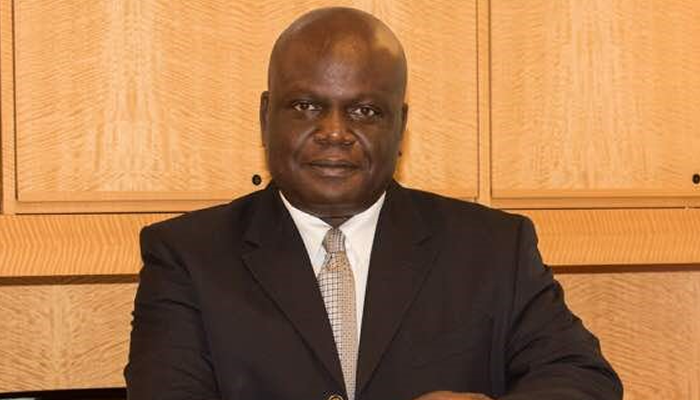

Former Director-General of the Nigeria Civil Aviation Authority, Musa Nuhu, has projected that the global Unmanned Aerial Vehicle industry could exceed $160bn by 2034 as rapid technological advancements continue to transform the future of civil aviation across the world.
Nuhu made the projection through a paper he delivered at the 6th Drone Technology Conference and Exhibition (DRONETECX 2026) held in Lagos.
The paper obtained by our correspondent showed that emerging technologies such as artificial intelligence, autonomous navigation systems, Beyond Visual Line of Sight operations, Unmanned Traffic Management systems and Advanced Air Mobility are fundamentally changing the architecture of global aviation.
The ex-NCAA boss said, “The UAV industry has evolved from military reconnaissance applications into one of the most disruptive technologies in modern civil aviation.
“The industry is projected to exceed $160bn globally by 2034 due to rapid advancements in AI, battery technology, edge computing, autonomous navigation, and sensor integration.”
He explained that modern drone ecosystems had evolved far beyond manual piloting and conventional Visual Line of Sight operations, noting that aviation systems were increasingly embracing AI-driven autonomy, intelligent traffic coordination, predictive maintenance and integrated digital airspace systems.
Nuhu noted that UAV technologies were already reshaping industries such as logistics, agriculture, infrastructure inspection, environmental monitoring, emergency response and surveillance operations across several countries.
According to him, drones are now being deployed for the inspection of airports, oil and gas pipelines, power transmission facilities, railway corridors, bridges, telecommunication towers, wind turbines and solar farms using advanced technologies including LiDAR, thermal imaging and hyperspectral sensors.
“According to the International Civil Aviation Organisation, the integration of unmanned aircraft into conventional airspace requires harmonised global frameworks for safety, interoperability, communication, surveillance, and airspace management,” he stated.
On healthcare delivery, the former NCAA boss said drone technology was becoming increasingly important in transporting vaccines, blood products, laboratory samples and emergency medical supplies to underserved communities where traditional transportation systems remain difficult.
“Drone-as-a-Service models are helping to reduce emergency response time, transportation costs, and carbon emissions while improving healthcare accessibility,” Nuhu said.
He also mentioned the growing use of AI-enabled drones in agriculture, describing them as “flying intelligent tractors” capable of carrying out crop monitoring, precision spraying, irrigation analytics, soil assessment and yield prediction while reducing chemical wastage and environmental impact.
Speaking on future mobility systems, Nuhu said Urban Air Mobility and Electric Vertical Take-Off and Landing aircraft were gradually emerging as part of next-generation transportation systems, with global aviation regulators already developing certification frameworks for passenger mobility, cargo transportation and emergency evacuation operations.
Despite the opportunities within the sector, he warned that challenges such as cybersecurity threats, GPS spoofing, ransomware attacks, data hijacking, airspace congestion and hostile drone operations could undermine the growth of the industry if not properly managed.
He therefore urged Nigeria to strengthen regulatory frameworks, establish national Unmanned Traffic Management systems, invest in indigenous drone manufacturing, expand university programmes in autonomous aviation systems and create UAV pilot licensing academies in order to position the country as Africa’s leading drone innovation hub.









Leave a comment