



By Steve Agbota
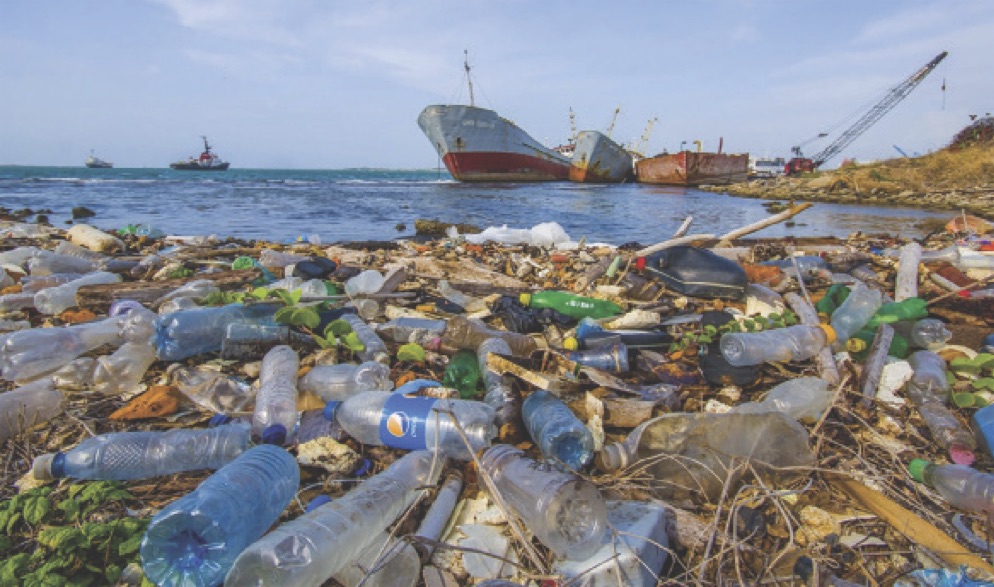
Beneath the surface of Nigeria’s vast and resource-rich coastal waters lies growing marine debris.
Stakeholders describe it as a troubling scenario where trash hurts trade and have called on the federal government to hurriedly address the challenge that is fast eroding the country’s maritime reputation.
From abandoned fishing nets and oil-soaked plastics to heaps of refuse clogging inland waterways, the unchecked pollution is suffocating the vital arteries of trade and tourism.
As the nation pushes for economic diversification through its blue economy, stakeholders warn that failing to tackle this environmental crisis could jeopardise billions in potential revenue and critical global partnerships.
In most littoral communities, fishermen report dwindling catches, fish with plastic content in their stomachs and plastic-related deformities or toxic odour undermining food security and marketability.
At the same time, industrial trawlers face more constant dry docking and fuel diversion.
Ironically, fish, seabirds, turtles and mammals are entangled by ghost nets, ingesting plastics, or suffocated by debris.
Daily Sun gathered that Nigeria’s coastal waters are increasingly turning into dumping grounds for plastic waste and other environmental pollutants, posing a serious threat to maritime activities and coastal livelihoods.
Experts warn that millions of tonnes of plastic are produced annually, much of which ends up littering the country’s beaches, clogging ports, delaying vessel movement, disrupting fishing activities, and endangering marine wildlife.
While the marine and blue economy holds immense promise for Nigeria’s economic growth, this rising tide of marine debris threatens to erode its gains. Globally, pollution-related damage to marine ecosystems is estimated to cost between $500 billion and $2.5 trillion in lost services. If Nigeria remains among the world’s top contributors to ocean pollution, its waterways risk becoming less competitive, increasingly unnavigable, and incapable of supporting the very communities that depend on them.
In Nigeria today, marine debris is no longer a distant future concern; it is already crippling maritime transport, polluting coastlines, and eroding public health.
Experts who spoke to Daily Sun said that beyond the environmental toll, marine debris is damaging Nigeria’s international maritime reputation, with foreign operators raising concerns about the state of the nation’s ports.
Stakeholders suggested that governments at all levels must rise up to tackle this issue through legislation, enforcement, technology, education, and community engagement, but action must move from policy documents to real implementation.
A marine engineer, Mr. Samson Adegbite, has raised concerns that beyond environmental pollution, marine debris poses a growing threat to navigational safety, vessel integrity, and even human lives. He explained that fishing boats and ferries are increasingly plagued by debris entangling their propellers or being sucked into their cooling systems, leading to engine failures. The incidents, he noted, often result in costly dry-docking, prolonged service disruptions, and significant income losses for operators.
“It is a sad situation that we still find ourselves in this kind of mess in the 21st century. This thing is sometimes responsible for some of the boat accidents and ferry delays. In 2024 alone, over 380 ferry delays were recorded on Lagos’ inland waterways due to debris-related propeller entanglements. This is only Lagos alone, we are not talking about other states now,” he said.
He said there is a need for the enactment of a National Marine Debris Act and the implementation of comprehensive debris management plans across all ports and offshore facilities.
He also urged the government to invest in research and infrastructure, and meaningful regulation, including the looming single-use plastic ban, saying that with this, Nigeria can reclaim clean seas, safe shipping lanes, healthy fisheries, and thriving coastal economies.
Meanwhile, at a recent executive course on the blue economy for media practitioners, Rear Admiral FD Akpan (Rtd), decried the heavy pollution of the nation’s waterways and the chronic under-utilisation of its marine assets.
According to him, Nigeria’s lagoons and beaches have increasingly become marine dumpsites, with Tarkwa Bay beach in Lagos described as the world’s largest recipient of refuse.
“Tarkwa Bay is the recipient of the highest marine dumpsite for refuse on earth. You can quote me. Bonny comes close as second. If you stand by the Seine River in Paris, you’ll count more than 50 ferries operating actively. Meanwhile, our own lagoons are virtually deserted,” Akpan lamented.
The former naval officer and current Chairman, Board of Trustees of the Maritime Security Providers Association of Nigeria (MASPAN), also cited sea blindness as a major impediment, describing it as a widespread ignorance among policymakers, the public, and academia about the economic and strategic importance of Nigeria’s maritime domain.
“There is a widespread ignorance of the importance of maritime space and naval power. It leads to poor investment, weak policy implementation, and missed economic opportunities,” he said.
He also warned that marine debris was increasingly clogging navigational channels, damaging vessels, and raising operational costs across Nigeria’s ports and inland waterways, further slowing trade and discouraging maritime investments.
He linked this directly to the inefficiencies in cargo clearance, which currently takes a minimum of four weeks in Nigeria compared to as little as six hours in countries like Singapore.
He stressed that a clean and navigable marine environment was critical to achieving the targets of the 10-year Blue Economy Policy (2025–2034), which aims to attract billions of dollars in investment and create three million jobs. “The obstruction caused by marine debris is a silent threat to maritime trade flow. It clogs navigation routes, damages vessels, and increases port inefficiencies,” he said.
He called for the establishment of a clearly defined maritime strategy backed by a capable navy and coast guard, describing these as essential prerequisites for global maritime relevance.
Also speaking at the event, Dr. Obiora Madu, Founder of Multimix Academy, recalled that Nigeria once had a thriving fishing industry supported by large-scale trawlers.
He lamented the sector’s decline and called for urgent reforms to reposition Nigeria as a leading maritime player in West and Central Africa.
He pointed to the recent classification of the Lome seaport in Togo as the shipping hub of the region as a wake-up call, warning that Nigeria’s dominance in maritime trade is slipping away due to environmental neglect, outdated infrastructure, and weak policy execution.
Meanwhile, the President of the Nigerian Maritime Law Association (NMLA), Funke Agbor (SAN), described the recently concluded National Policy on Blue Economy as a beautiful document but warned that implementation has always been Nigeria’s problem.
“Nigeria is a beautiful coastal country that is taking for granted the opportunities for maritime tourism, transportation and other benefits derivable from the oceans.
“We can’t afford to be discouraged because we don’t have clean and safe waters. There are other countries that are locked, but we are privileged to have waters,” Agbor said.









Leave a comment