



By Chinwendu Obienyi
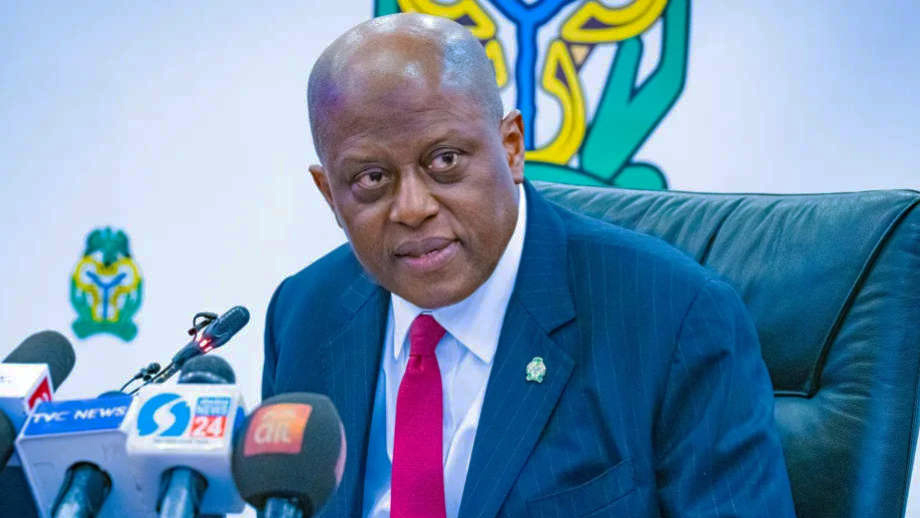
Governor of the Central Bank of Nigeria, Olayemi Cardoso, has declared that the fight against inflation and the push for foreign exchange stability remain non-negotiable policy priorities, as authorities intensify reforms to restore macroeconomic balance.
Speaking after the latest Monetary Policy Committee meeting, he outlined measures to deepen FX market transparency, strengthen banking sector resilience, expand credit access to SMEs, and address customer concerns, while expressing cautious optimism about Nigeria’s near-term economic outlook.
Excerpts:
What additional steps is the CBN taking to bring inflation down?
It is important to remember where we are coming from. As highlighted in the communiqué, Nigeria experienced 11 consecutive months of disinflation before the recent uptick. We believe the current increase in inflation has largely resulted from external shocks.
That notwithstanding, we have been able to build buffers that have helped protect the economy during this period. The recent upgrade by S&P is further evidence that the policies we have adopted are moving the economy in the right direction.
Our position is clear: we will stay the course. We will continue to implement policies that have consistently placed us on a path of disinflation. We believe the current pressure is temporary and that inflation will gradually return to the downward trajectory we had established through the monetary policy tools already in place.
A critical part of our strategy remains exchange-rate stability. Maintaining a stable foreign exchange market is central to our inflation-management framework, and we remain committed to that objective. Equally important is continued collaboration with the fiscal authorities. This is because monetary policy alone cannot achieve all the desired outcomes. This is another area where we will ensure strong coordination between the monetary and fiscal sides which is essential to minimise inflationary pass-through effects and sustain macroeconomic stability.
What does the appointment of Deputy Governor Lamido Yuguda bring to the CBN?
Mr. Yuguda joined us recently, but he is certainly not a new face to those who have followed MPC activities over the past two years. He has served as a member of the Committee throughout this administration and has consistently made thoughtful and insightful contributions to our deliberations.
Beyond that, he brings more than 32 years of experience at the Central Bank of Nigeria. So while those of us here are familiar with him from recent MPC meetings, many others across the country have known him throughout his long and distinguished career at the Bank. He also served as Director-General of the Securities and Exchange Commission (SEC), and we are delighted to have him on the leadership team. His experience at the SEC gives him a broader perspective on the financial system, which is particularly valuable as Nigeria transitions towards a stronger and more sophisticated financial ecosystem.
He brings insights gained from viewing the same industry through a different lens, and I believe that combination of regulatory, capital market and central banking experience adds tremendous value to the CBN at this critical stage.
What is the status of banks that have not yet met the recapitalisation requirements?
This question also came up during the IMF/World Bank Spring Meetings in Washington, D.C.
First, we should acknowledge how far we have come. The banking recapitalisation exercise has demonstrated the resilience of Nigerian investors and the confidence that both domestic and foreign investors have in the Nigerian economy.
Thirty-three banks have already met the recapitalisation requirements. The level of investor participation has been impressive. Domestic investors accounted for roughly 74 per cent of subscriptions, while foreign investors accounted for about 26 per cent. That is a strong vote of confidence in Nigeria’s future.
The recapitalisation process has also progressed relatively seamlessly. The few banks that are yet to meet the requirements have been dealing with various legal, regulatory and judicial issues. We believe that, in time, they will be able to continue along the recapitalisation path.
It is also important to recognise that some of these institutions were subject to regulatory interventions, which effectively reduced the amount of time available to them compared with other banks. It would therefore be unfair to compare their timelines directly with those of institutions that did not face similar constraints.
We remain fully engaged with all banks that are still on that journey. Business continues as usual, and we support their efforts to resolve outstanding legal and regulatory challenges so they can meet the required standards.
Many SMEs still complain about limited access to credit. What is the CBN doing to address this?
The effort to increase credit to SMEs is not the exclusive responsibility of the Central Bank. It requires collaboration across government institutions.
That is why agencies such as the Federal Ministry of Industry, Trade and Investment, the Bank of Industry (BOI), and various fiscal intervention programmes all have important roles to play in supporting sectors that require financing and protection.
From the CBN’s perspective, we increasingly see ourselves as a catalyst. We use our convening power and policy tools to make SME lending more attractive to financial institutions that may previously have been reluctant to serve the sector.
I am pleased to report that recent data show a significant increase in new credit extended to SMEs. The volume of fresh lending to the sector has risen noticeably.
This may be due to several factors. Commercial banks may be recalibrating their strategies and seeking to diversify their lending portfolios. Some may also be reassessing their exposure to large-ticket loans and identifying opportunities in the SME segment, which remains critical to Nigeria’s economic development.
For example, in April 2026, new credit to SMEs increased by approximately N199 billion, up from about N153 billion in March. The increase was particularly evident in retail lending and in the number of facilities granted.
Lending remains heavily concentrated in the general category, accounting for roughly 94.73 per cent of new facilities, while general commerce represented about 2.46 per cent. This highlights the growing importance of retail SME and short-term credit facilities.
The CBN has also introduced several initiatives aimed at improving the lending environment. We recently signed a Memorandum of Understanding with the Nigerian Communications Commission (NCC) to address issues such as fraud and system connectivity, which disproportionately affect SMEs.
In addition, the Global Standing Instruction (GSI) framework enables lending institutions to recover funds from defaulting borrowers through balances held across the banking system. This strengthens credit discipline and reduces lending risks.
We have also increased the single obligor limits for Development Finance Institutions (DFIs), allowing them to provide larger volumes of credit to SMEs. We continue to engage both domestic and international DFIs to identify ways they can play a more impactful role in financing the sector. This remains a work in progress. We are not where we want to be yet, but there is a growing commitment across the financial system to channel more credit to SMEs, and that commitment is increasing significantly.
What informed the release of the new foreign exchange trading manual?
The new FX Manual is a continuation of reforms already introduced through the FX Code and the electronic trading platform, both of which have significantly improved transparency and stability in the foreign exchange market. If you compare where we were before these reforms with where we are today, the progress has been remarkable.
The previous manual was last revised in 2017. Given the substantial changes that have occurred since then, an update was both necessary and timely. The revised manual, which takes effect from June 1, will be available on the CBN website and in printed form at no cost. We want all stakeholders to have unrestricted access to it because transparency is critical to market confidence.
The manual will promote consistency and transparency while reflecting the realities of today’s market environment. One important improvement is that it will make it easier for exporters to repatriate their foreign exchange earnings. In the past, some exporters were discouraged by cumbersome procedures or chose alternative channels. The new framework provides easier access to funds and aligns with the broader evolution of the market.
As reforms continue and market conditions evolve, we will continue to make adjustments where necessary to improve efficiency and reduce bottlenecks. The same philosophy that has enabled Nigerians to use their naira cards for foreign exchange transactions without preloading funds is guiding our approach to the continued development of the FX market.
Nigerians continue to complain about excessive bank charges. What is the CBN doing about this?
This is an issue that is very important to me personally. I recall that during my Senate screening over two years ago, concerns about banking charges were raised repeatedly by lawmakers. It was clear then that this was an issue of significant public interest.
First, it is important to clarify that stamp duties are not imposed by banks. They originate from the relevant tax authorities. Banks merely facilitate collection and remittance, so it would be inaccurate to attribute those charges directly to the banking system.
On other charges that customers may consider unfair, the first step is always to engage the bank involved. Every bank has a process for handling complaints and escalating unresolved issues.
Where customers remain dissatisfied, the CBN’s Consumer Protection Department is available to intervene.
Given the concerns raised over the years, we established a committee led by the Consumer Protection Department. It meets quarterly with Consumer Experience Executives from all deposit money banks and the top microfinance banks to identify recurring issues and develop solutions.
One area receiving attention is the large volume of transaction alerts customers receive. There may be opportunities to consolidate notifications so that customers can more easily understand the purpose of each debit or charge, rather than receiving multiple fragmented alerts that create confusion. We are also strengthening oversight through our compliance and market conduct framework. The CBN now has dedicated structures that assess how banks manage customer complaints, whether they follow appropriate procedures, and whether they have adequate systems to compensate customers when necessary. These initiatives are aimed at improving customer experience and ensuring greater accountability across the banking industry.
Is the CBN aggressively intervening in the foreign exchange market to defend the naira?
No, that is not true. I believe much of this perception stems from legacy assumptions about how the foreign exchange market used to operate. The market has changed significantly.
When this administration came in, daily FX turnover was roughly $100 million. Today, average daily turnover is around $550 million, and on some occasions it has reached as much as $1 billion in a single day.
Our objective is to achieve that level of liquidity consistently, and we are confident that ongoing reforms and measures contained in the new FX Manual will help us get there.
As the market deepens and liquidity improves, the need for central bank intervention naturally diminishes. A well-functioning market should be able to determine prices through willing-buyer, willing-seller transactions.
In fact, relative to total market turnover in 2025, CBN interventions accounted for only about 1.2 to 1.3 per cent of transactions. That is extremely small which is not enough to drive the market.
The reforms we have implemented have enabled the market to function more independently through improved transparency, stronger market conduct standards, better information symmetry and greater confidence among participants.
Of course, there are occasions when the CBN must meet legitimate foreign exchange obligations on behalf of government or service external commitments. Those transactions are routine and should not be confused with market intervention. So to answer your question, no, what we have done and which is normal is that in the course of daily activities there may be need to meet the requirements of various arms of government or loans outstanding obligations due, they have to be paid, and so they are paid, but believe me, as they are paid, so does new money come in.
As for external reserves, they are dynamic. While reserves may fluctuate, inflows also continue to come in. In fact, reserve levels have already returned to approximately where they were before the outbreak of the recent Iran-related conflict, and we expect them to continue improving.
What is the MPC’s outlook for the economy?
The Committee expects economic growth to remain resilient in 2026 despite emerging downside risks associated with the conflict in the Middle East.
Current projections suggest a moderate increase in inflation in the near term. However, the cumulative impact of previous monetary tightening measures, exchange-rate stability and improving food supply conditions should support a gradual return to disinflation.
Given evolving domestic and global uncertainties, the MPC remains committed to a forward-looking and evidence-based policy framework anchored on its primary mandate of maintaining price stability while safeguarding the soundness and resilience of Nigeria’s financial system.















Leave a comment