



From Uche Usim, Washington DC
The 2026 Spring Meetings of the International Monetary Fund and the World Bank Group ended on an exhilarating note for Nigeria and codified in a simple message to onshore and offshore investors: “Nigeria is ready for global engagement leveraging her potent fiscal and monetary reforms that have birthed a stabilising economy better cemented to withstand global shocks.
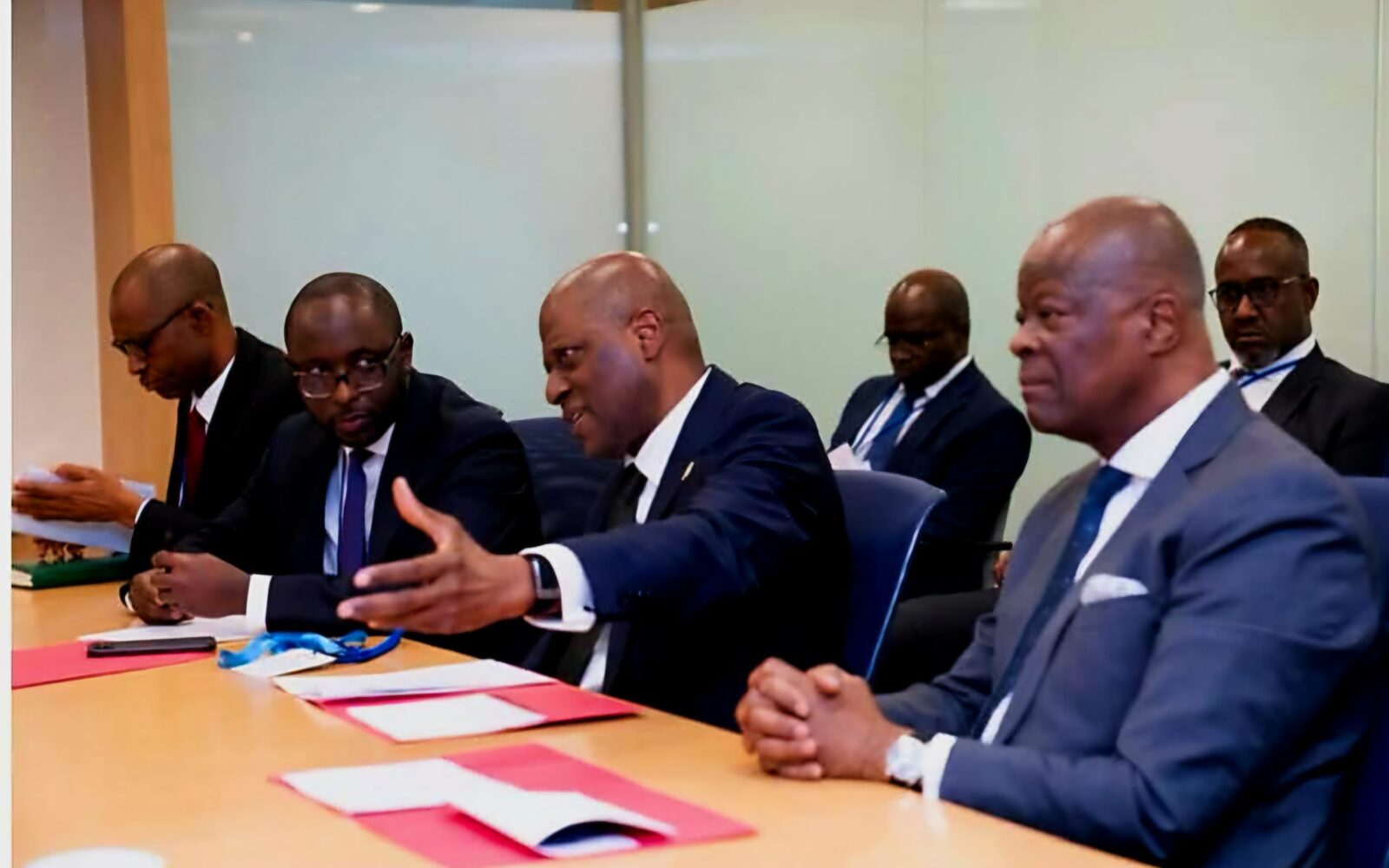
The Nigerian delegation was led by the Minister of Finance and Coordinating Minister of the Economy, Mr Wale Edun. On the team was the Central Bank Governor Olayemi Cardoso and other top government officials.
Cardoso laid out a confident, data-backed case for Nigeria’s economic direction, pointing to improving fundamentals despite a turbulent global backdrop.
From geopolitical tensions to tight financial conditions and sluggish global growth, the international environment remains fragile.
Yet, Cardoso argued that Nigeria has managed to contain external shocks through disciplined reforms, a more credible monetary framework and renewed policy coordination.
The delegation participated in key sessions, including the G-24, African Consultative Group Meeting, IMFC discussions and bilateral engagements.
As Chair of the G-24, Nigeria, through Edun, coordinated the Group’s affairs and advanced discussions on job-rich growth, mobilising development finance, reforming the global financial architecture, and fostering sustainable, employment-generating growth.
Another key outcome was Nigeria’s participation in advancing the operationalisation of the African Monetary Institute (AMI), to be headquartered in Abuja. Nigeria reaffirmed its strong institutional, political, and operational commitment to the AMI, which is a critical step toward establishing an African Central Bank and advancing monetary cooperation and macroeconomic convergence across Africa.
Additional engagements aimed at deepening partnerships included a Leadership Dialogue on Capacity Development in Africa, focused on strengthening institutional capacity and policy implementation.
The CBN also signed an agreement acknowledging Nigeria’s contribution to AFRITAC West 2, reinforcing the country’s commitment to workforce capacity building.
Nigeria held bilateral engagements, including with the United States Chamber of Commerce’s U.S.-Africa Business Centre, enabling candid private-sector discussions on monetary and financial priorities, FX management, financial stability, and steps to deepen trade and investment ties.
These initiatives align with the country’s wider objective of improving policy execution, institutional capacity, and long-term economic resilience.
In his remarks, Cardoso said: “We return home encouraged by the quality of engagements, the confidence of our partners and progress in implementing our reform agenda.
“Our commitment remains unwavering: to deliver a stable monetary environment, safeguard financial system resilience, and position the economy for sustainable, inclusive growth – anchored in rigorous, data-driven decision-making”.
The CBN boss also spoke on the overhaul of the banking sector. In March 2026, Nigeria concluded a major recapitalisation exercise that raised N4.65 trillion, one of the largest capital injections into the financial system in recent years.
The outcome, according to Cardoso, is a stronger, more shock-resistant banking industry. Thirty-three banks met the revised capital thresholds, with capital adequacy ratios surpassing international Basel standards. Notably, participation reflected a healthy mix of confidence, 72.55 percent domestic and 27.45 percent foreign investment.
“This positions our financial system to better support growth, deepen intermediation, and withstand volatility,” he said.
As the meetings wrapped up, the tone from Nigeria’s delegation was one of cautious confidence, not triumphalism, but steady progress built on deliberate policy choices.








Leave a comment