



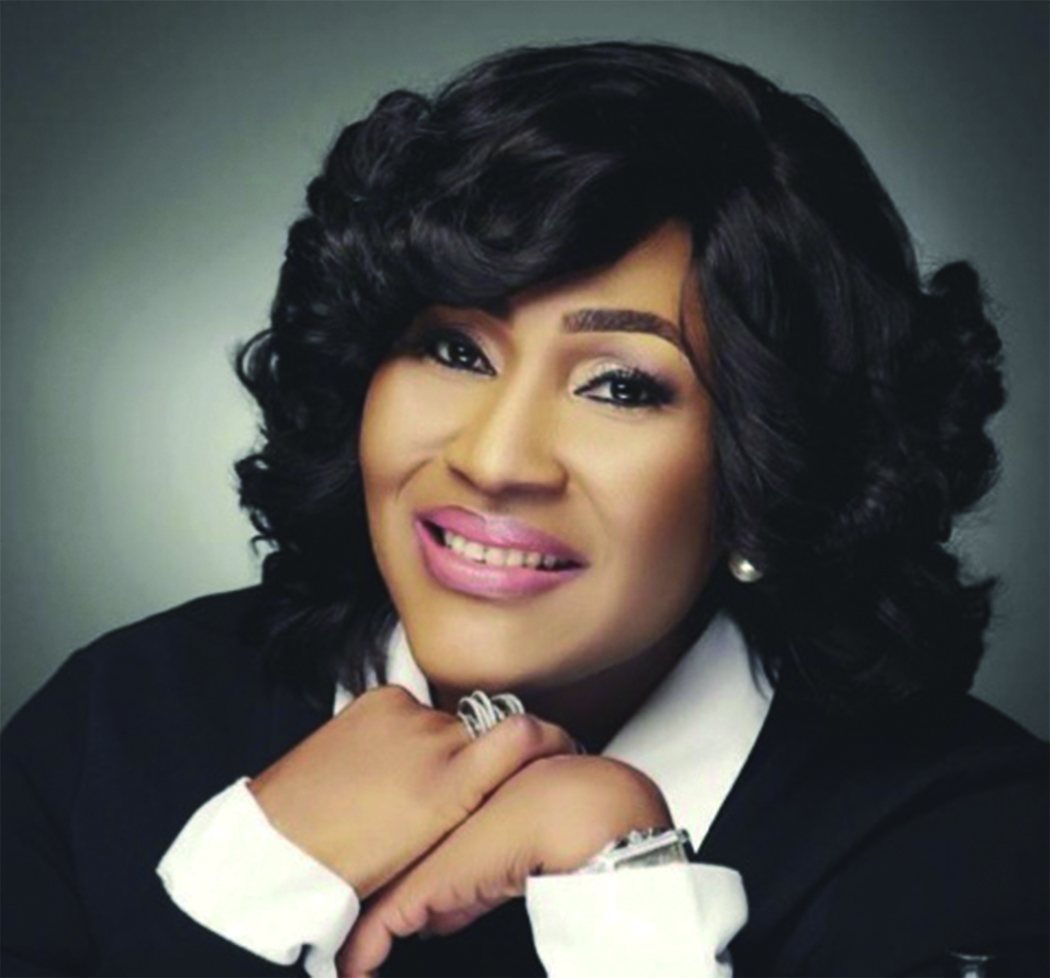
At 54, Ngozi Ekeoma does not simply mark time, she defines it. In boardrooms and beyond, her influence moves with quiet authority, shaping enterprise, nurturing vision, and reimagining what wealth and leadership can mean, writes Adedayo Adejobi
At 54, Ngozi Ekeoma stands not merely as a figure of accomplishment, but as an institution of influence, a woman whose presence carries the calm authority of one who has not only built success, but refined it into legacy. There is, about her, an air that resists noise and spectacle, preferring the measured cadence of substance instead.
In a world often enamoured with fleeting triumphs, she represents something rarer, a sustained philosophy of impact. To encounter her story is to engage with a portrait of discipline shaped by vision. Her leadership at Nepal Group has become a reference point in contemporary African enterprise, not because it shouts, but because it delivers.
Under her stewardship, the organisation has evolved into a platform where business is not treated as a narrow pursuit of profit, but as a broader instrument of transformation.
She has cultivated an ecosystem that respects innovation, rewards diligence, and insists on integrity as a non-negotiable currency.
Her ascent has never been accidental. It is the product of deliberate choices, each one anchored in foresight. Those who observe her closely often remark on her ability to read beyond the present moment. She possesses a strategic instinct that allows her to anticipate shifts in markets, policy, and human behaviour. This instinct has enabled her to navigate sectors that many would consider complex, if not forbidding, and yet she moves through them with a quiet certainty, turning challenges into platforms for expansion.
Yet, it is not only her command of enterprise that defines her. At the heart of her work lies a deeply held belief about wealth. For Ngozi, wealth is neither ornamental nor abstract. It is purposeful. It must circulate, uplift, and endure. Her philosophy rejects the notion of accumulation without consequence. Instead, she advocates for a model of wealth creation that is inclusive, sustainable, and anchored in value. It is a philosophy that resonates strongly in a continent where the question is no longer whether wealth can be created, but how it can be made meaningful.
This clarity of thought has allowed her to operate across sectors with unusual coherence. Whether engaging with business leaders, policymakers, or emerging innovators, she brings a perspective that bridges divides. She understands the language of commerce, yet she is equally fluent in the imperatives of governance and the urgency of social development. It is this ability to move seamlessly between worlds that has elevated her from executive to stateswoman of industry.
There is, however, another dimension to her story, one that reveals the depth beneath the distinction. Beyond boardrooms and strategy sessions lies a life shaped by relationships, by the quiet negotiations of partnership, and by a commitment to values that cannot be quantified.
Her marriage to Ekeoma Eme Ekeoma, often spoken of with admiration, is not presented as a spectacle, but as a study in balance. It is a partnership built on mutual respect, shared purpose, and an understanding that strength is often found in complementarity rather than competition.
In this, her husband emerges not as a central figure in her narrative, but as a steady presence, a reminder that even the most formidable individuals draw from wells of support that are both intimate and enduring. Their union offers a subtle yet powerful counterpoint to her public achievements, suggesting that the architecture of success is rarely solitary. It is, instead, a carefully tended collaboration.
Those who know her speak of a woman who listens as intently as she leads. It is an understated quality, yet it may well be one of her greatest strengths. In listening, she gathers insight. In reflection, she sharpens judgement. And in action, she demonstrates a consistency that commands respect. She does not chase relevance; she embodies it.
Her influence extends into the realm of human development, where she has quietly invested in people, ideas, and possibilities. She recognises that institutions are only as strong as the individuals who sustain them. As such, she has devoted time and resources to nurturing talent, particularly among young professionals who might otherwise be excluded from opportunity. It is a commitment that aligns with her broader philosophy, that progress must be shared if it is to be sustained.
At 54, the temptation might be to frame her story as one approaching its summit. That would be a misreading. If anything, this moment feels like a point of refinement, a stage at which experience and vision converge with even greater clarity. She is no longer simply building, she is shaping. She is not only leading, she is defining what leadership can look like in an era that demands both competence and conscience.
There is a certain elegance in the way she carries her influence. It does not overwhelm. It does not insist. It simply exists, undeniable and effective.
This is perhaps what gives her story its broader appeal. For business leaders, she represents strategic excellence. For technocrats, she embodies disciplined thinking. For innovators, she offers a model of how ideas can be translated into lasting structures. For government actors, she provides a case study in how private enterprise can align with public good. And for the wider public, she stands as proof that ambition, when guided by principle, can yield results that transcend the individual.
As she marks her 54th year, there is a sense that her legacy is still in motion. It is not confined to what she has achieved, but extends into what she continues to influence. The institutions she has strengthened, the people she has empowered, and the ideas she has advanced all form part of a continuum that will outlast any single moment of recognition.
In the final measure, Ngozi Ekeoma is best understood not through the scale of her accomplishments, but through the coherence of her character. She is a woman who has aligned her values with her actions, her vision with her execution, and her ambition with a sense of responsibility that reaches beyond herself. It is this alignment that gives her story its enduring power.
And so, at 54, she is not simply celebrated. She is studied. Not merely admired, but understood as a blueprint of what is possible when intellect, discipline, and humanity are brought into deliberate harmony. The years ahead will no doubt add further chapters to her journey. Yet even now, her life offers a compelling narrative, one that speaks not only to success, but to significance.
In a time that often rewards immediacy, Ngozi Ekeoma reminds us of the virtue of patience, of the quiet dignity of building something that lasts. Her story, still unfolding, stands as an invitation to think more deeply about leadership, about wealth, and about the kind of legacy that truly endures.














Leave a comment