



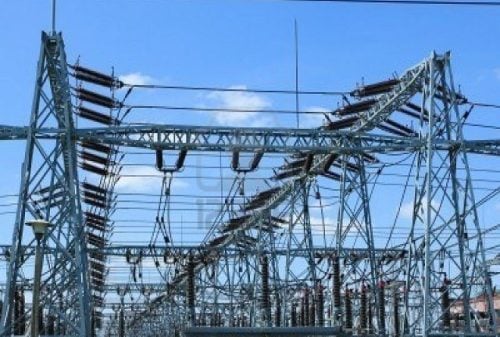

NIGERIA’S national grid again crumbled twice in four days as of January 27, plunging millions into darkness and exposing the deep rot that defines the power sector.
Power generation had collapsed from 3,825MW to a miserable 39MW within minutes, with Eko Electricity Distribution Company confirming the disruption.
Predictably, the Nigerian Independent System Operator sought to play down the incident, describing it as a “system-wide disturbance” that caused a total outage across the interconnected network.
This was the third grid collapse in less than a month, after similar incidents on December 29, 2025, and January 23.
Grid failures have become a defining feature of Nigeria’s electricity sector. NERC data showed that between 2010 and 2022, the country suffered at least 222 partial and total collapses, while reports document 12 more across 2024 and 2025.
Nigerians deserve far better than this endless cycle of frustration. Businesses are crippled, while households rely on noisy, polluting generators just to keep the lights on.
Electricity was first generated in Nigeria in 1896; 130 years later, the country still gropes in darkness.
Despite an installed capacity of about 13,000MW, the antiquated national grid can barely wheel 5,000MW; any additional load triggers a system collapse.
The causes of Nigeria’s power deficit are well known and surmountable. What is lacking is vision, political will and accountability, compounded by entrenched corruption.
Why have ageing infrastructure, some over 50 years old, and near-dead transformers not been replaced? Why does the system repeatedly suffer frequency imbalances whenever supply and demand stray beyond the safe 49.5–50.5Hz band? Why do gas shortages routinely cripple gas-fired plants, and why does sabotage of transmission lines, such as the recent 330kV Shiroro–Mando incident, persist unchecked?
Nigeria’s grid lacks spinning reserves for rapid response to outages, while distribution companies frequently reject load allocations due to their own decrepit networks.
Generation companies cite a crippling liquidity crisis. As of 2024, NBET owed GenCos about N4 trillion, with another N762 billion outstanding by mid-2025. Starved of funds for maintenance and gas, they say their plants keep tripping, triggering nationwide blackouts.
Although the Federal Government recently raised N501 billion in bonds to offset part of the debt, liabilities continue to mount. Systemic failure has become endemic.
Aggregate Technical, Commercial and Collection losses, driven by ageing infrastructure, energy theft, poor billing and payment non-compliance, were estimated at $1 billion in 2024, with over N200 billion lost in the first quarter of 2025 alone. NERC data put these losses at roughly 50 per cent.
Successive governments have failed to invest adequately in power generation, a critical input for industrialisation, innovation and modern research.
The 2013 power sector privatisation promised renewal through private investment and efficiency, but instead delivered more misery.
Many DisCos and GenCos, backed by retired generals, obtained licences without the capital, capacity or intent to transform the sector. They even had to borrow licence fees from local banks. Their focus was bill collection, not infrastructure.
The result of such folly is no surprise. Consumers are now burdened with inflated bills and opaque tariff structures designed to mask inefficiencies, investment failures and weak regulation. This is a travesty.
Since the return to democracy in 1999, Nigerians have endured between 190 and 240 days of power outages annually.
Former President Olusegun Obasanjo’s $12 billion to $16 billion power sector spend between 1999 and 2007 vanished into corruption, yielding little beyond power plants disconnected from gas supply.
The Mambilla Hydropower, a 3,050MW project, first touted in the 1980s, remains stalled amid scandals. Its $5.8 billion Chinese financing deal is still mired in probes and the corruption trial of a former power minister.
The Buhari administration made little progress, with the much-publicised Siemens grid revamp deal producing little beyond photo opportunities.
The Tinubu administration has so far followed a similar path: more photos, more talk. Even the 624MW Abuja power project, reportedly 91 per cent complete, remains stalled over right-of-way issues.
While the administration promotes legislative reforms empowering states to generate and regulate electricity, the N10 billion Aso Villa solar project guarantees uninterrupted power for the Presidency, while ordinary Nigerians remain in darkness. This disparity is indefensible.
The economic toll is severe. Nigeria’s per capita electricity consumption stands at just 144kWh annually, among the lowest globally.
This compares poorly with Egypt’s 1,700kWh, South Africa’s 3,800kWh and even Tanzania’s 180kWh, despite its smaller economy.
Ethiopia, with a per capita consumption of about 150kWh, is poised for a major boost with its 6,000MW Grand Ethiopian Renaissance Dam. Nigeria, by contrast, continues to squander opportunity.
Businesses have been badly hit. Major firms such as Dangote Industries, Nigerian Breweries, Honeywell and MTN have exited the grid entirely, installing over 6,500MW of captive power at huge cost.
In 2025 alone, more than 20 firms left the grid, adding 1,045MW of off-grid capacity, including BUA Cement’s 161MW plant.
Adetayo Adegbemle, Executive Director of PowerUp Nigeria, in a BusinessDay interview, warned that residential consumers are now propping up a grid designed for industrial players.
Poor power supply also cuts production time, with manufacturers losing an estimated N10.1 trillion annually, including over N1.2 trillion in unsold inventory due to production flow disruptions.
For MSMEs, reliance on diesel and petrol generators, combined with a more than 200 per cent hike in Band A tariffs, has raised input costs by about 40 per cent, eroding competitiveness and forcing closures.
In 2023 alone, 767 manufacturing firms shut down, costing 18,000 jobs, while 335 others became distressed per MAN. More followed in 2024, and many now operate on the brink.
Nigeria’s ambition of a $1 trillion economy by 2030 will remain illusory without reliable, affordable electricity. The World Bank estimates that outages cost Nigeria $29 billion annually, around 10 per cent of the 2025 GDP estimates.
Egypt powers its $400 billion economy with a stable grid and sustained upgrades by the same Siemens that Nigeria has been unable to pin down. Ethiopia’s hydropower expansion is attracting new investments. Nigeria must wake up.
The decentralisation of power generation and regulation, as enabled by the 2023 Electricity Act, offers some hope.
Enugu, Ekiti, Ondo, Imo, Edo, Kogi, Oyo and Lagos states have already established electricity regulators, while Ogun, Niger, Plateau and Anambra are following suit.
Aba Power’s 141MW gas plant serving Abia’s industrial hub demonstrates how private investment, backed by state support, can deliver reliable power.
This model should be replicated nationwide. Industrial clusters in Kano, Ogun and Rivers, for example, would benefit immensely from state-level grids isolated from the vagaries of the dysfunctional national grid.
For sure, the national grid urgently requires decentralisation into regional clusters equipped with smart technologies to isolate faults and prevent nationwide blackouts.
Regulators must mandate spinning reserves, automated under-frequency load shedding and phasor measurement unit relays at critical nodes such as Ikeja West.
Policy must support competitive tariffs to draw industries back to the grid, while closing the metering gap.
The government should compel DisCos to deploy World Bank-funded meters free of charge. DisCos insisting on selling these meters must not be allowed to get away with that.
Finally, the Federal Government must use its 40 per cent equity in DisCos to enforce accountability. Licences of operators unwilling or unable to invest in last-mile infrastructure, or those rejecting load while chasing tariffs, should be reviewed.
Nigeria cannot afford another decade of darkness while the rest of the world turns the corner of development and innovation.












Leave a comment