



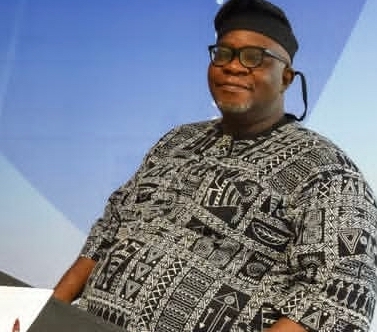
As Nigeria’s media industry confronts the realities of artificial intelligence, changing audience behaviour and mounting economic pressure, media executives across the country are gathering in Abeokuta for a crucial conversation on survival and reinvention. Under the theme, Reset, Restart, Restore, Chiemelie Ezeobi writes that the fourth edition of the Nigerian Media Leaders’ Summit is expected to chart fresh pathways for innovation, sustainability and renewed relevance within the nation’s rapidly evolving media landscape
As Nigeria’s media industry grapples with shrinking revenues, audience fragmentation, digital disruption and the sweeping influence of artificial intelligence, media leaders across the country are preparing for a crucial conversation on survival, reinvention and sustainability at the fourth edition of the Nigerian Media Leaders’ Summit (NMLS 4.0).
Set to hold in Abeokuta, Ogun State, starting from today, Monday, May 11 to Tuesday, May 12, 2026, under the theme: Reset, Restart, Restore, the summit, organised by The Journalism Clinic, comes at a defining moment for the nation’s media ecosystem, where newsroom leaders, publishers, broadcasters and media entrepreneurs are increasingly confronted with the urgent need to rethink business models, reconnect with audiences and reposition journalism for relevance in a rapidly evolving digital age.
At Academy Suites in Abeokuta, venue of the summit, 60 media executives will engage on a purpose-driven engagement aimed at shaping a new direction for the industry.
A Gathering for Industry Renewal
Since its inception four years ago, the Nigerian Media Leaders’ Summit has steadily evolved into one of the country’s most important gatherings for media executives and decision-makers.
This year’s edition is expected to host about 60 media leaders, including newspaper publishers, editors-in-chief, television and radio chief executives, general managers, programme directors and editors.
The summit is designed not merely as another industry conference, but as a strategic platform for reflection, innovation and collaboration.
Resetting the Media Landscape
The choice of theme for this year’s summit underscores the urgency of the moment.
According to the organiser, Founder and Director of The Journalism Clinic, Mr. Taiwo Obe, the theme, RESET. RESTART. RESTORE., is focused on “sustainable business models and navigating industry challenges without pressing lamentations”.
Essentially, the summit seeks to unlock all the possibilities that could drive shared prosperity for media owners, employees, advertisers, suppliers, customers and audiences.
It is a recognition that the future of Nigerian media cannot depend solely on old structures or traditional business practices. Instead, there is growing consensus that survival will require innovation, deeper audience engagement and a willingness to embrace technological disruption.
This is why the summit postulates that the Nigeria’s media industry is ripe for reinvigoration as this reality has become increasingly evident in recent years as more consumers migrate to digital platforms for news and entertainment, forcing legacy media institutions to rethink their operational strategies.
For many participants, therefore, the summit presents an opportunity not only to diagnose the industry’s challenges but also to chart practical pathways for transformation.
This and more are what Obe, a Fellow of the Nigerian Guild of Editors and Founder of The Journalism Clinic, intends to unpack in his keynote titled 1,001 Things.
This is expected to provide a broad examination of opportunities capable of driving a resurgence within the Nigerian media industry.
“We will unpack all the possibilities that could lead to a resurgence of the media, and spark delegates’ robust discussions to produce an Agenda for Renewal: a concise roadmap of actionable commitments for industry transformation.
Expectations
The emphasis on actionable commitments is particularly significant at a time when many industry conversations have often ended without practical implementation.
Thus, participants are expected to engage in discussions around sustainability, newsroom innovation, revenue diversification, technology integration and audience trust and also seeks to deepen collaboration among competing organisations in recognition of the fact that many of the challenges confronting the media industry are collective rather than individual.
Building on Previous Conversations
Last year’s edition of the summit focused extensively on collaborative innovation and sustainable business models as traditional media organisations battled rapid technological changes and monetisation difficulties.
Those conversations reflected growing concerns about how Nigerian media organisations can remain financially viable while maintaining editorial independence and public trust.
Thus, this year’s summit aims to build on those discussions by introducing a stronger emphasis on artificial intelligence and audience-centred strategies.
NMLS as a Bridge in Nigeria’s Fragmented Media Landscape
For many, what NMLS is doing is bringing key players in the fragmented media space together for honest conversations about industry realities.
Since its inception, the Nigerian Media Leaders’ Summit has served as a platform for knowledge exchange, policy dialogue and leadership networking within the country’s complex media ecosystem.
This is why the summit’s growing profile has also attracted support from both public and private sector through sponsorships and partnerships from organisations such as Nigeria LNG (NLNG), the Lagos and Ogun State Governments, the Central Bank of Nigeria (CBN), the Nigerian Railway Corporation, Fidelity Bank and Polaris Bank.
The wide range of institutional support reflects the broader recognition that a vibrant and sustainable media industry remains critical to democratic governance, economic development and national discourse.
The Future at Stake
Beyond discussions about technology and business sustainability, the summit also raises deeper questions about the future role of journalism in Nigeria’s democracy.
As misinformation, disinformation and audience distrust continue to challenge the credibility of news institutions globally, Nigerian media leaders are under pressure to redefine how journalism serves the public interest in the digital era.
Many industry stakeholders believe the future of the media will depend largely on rebuilding audience trust, investing in quality journalism and developing innovative models capable of sustaining newsroom operations.
The rise of artificial intelligence has further complicated that conversation, introducing concerns about automation, ethical journalism and the changing nature of content creation.
Yet organisers of NMLS 4.0 insist that the future remains full of possibilities if industry players are willing to embrace change collectively.
The summit’s message is ultimately one of cautious optimism — that despite economic pressure, digital disruption and audience fragmentation, Nigerian media can still reinvent itself for a stronger future.
However, as media executives gather in Abeokuta, the expectation is that the conversations will move beyond rhetoric towards practical solutions capable of restoring confidence, relevance and sustainability within the industry.
For an industry standing at a crossroads, the summit may well become more than just another annual gathering.
It could serve as the beginning of a renewed agenda for transformation — one that seeks to reset old structures, restart innovation and restore the Nigerian media’s place as a powerful force in national development.













Leave a comment