




As demographic pressures and technological shifts intensify, coordinated investments in education, health, and human capital development are emerging as the clearest pathway to unlocking the nation’s potential, writes Dike Onwuamaeze
Human capital is fast becoming the most decisive currency in a nation’s quest for sustainable development, competitiveness, and inclusive growth. As Nigeria grapples with demographic pressures, technological disruption, and economic uncertainty, the quality of its people — educated, healthy, and skilled—will determine whether it thrives or falters in the decades ahead.
Across government and the private sector, a renewed push is underway to transform policy conversations into concrete investments that can unlock the full potential of Nigeria’s greatest asset: its people.
Indeed, in a country where the quality of tomorrow depends largely on the investments made today in people, Nigeria’s Human Capital Development (HCD) agenda continues to gain renewed urgency and structure.
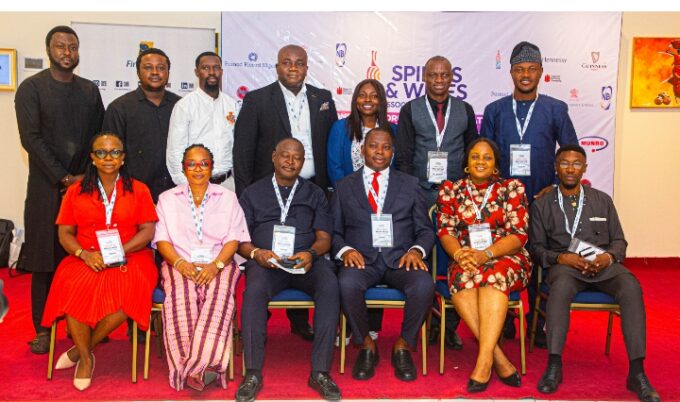
That urgency was evident at the Fourth Quarter 2025 meeting of the HCD Co-Working Group, convened in Abuja under the chairmanship of the Deputy Chief of Staff.
The meeting brought together a broad and influential coalition of development partners, private sector leaders, philanthropic foundations, and key government ministries, departments, and agencies.
Beyond routine updates, the gathering reflected a deeper shift in how Nigeria is approaching human capital, with stronger coordination, clearer roles, and a shared resolve to translate policy into measurable outcomes for citizens. At the heart of the meeting was a progress update from the HCD Secretariat, delivered by the National Coordinator. The presentation outlined milestones achieved over the year, emerging priorities, and strategic next steps, particularly around improving delivery at the state level.
Participants were briefed on how ongoing reforms are gradually aligning education, health, nutrition, and social protection interventions under a more coherent national framework.
Progress Report
The HCD National Coordinator, Ms. Rukaiya El-Rufai, delivered an overview of ongoing implementation efforts across the HCD 2.0 Strategy. Her update highlighted the transition of technical support from the Nigeria Governors’ Forum (NGF) to DAI, the need for full-time staffing at the HCD Secretariat, and the importance of capacity strengthening to enable effective support to states.
Under governance, the Steering Committee has been reconstituted, and membership of the Core Working Group expanded. Notably, the Vice President approved a partnership with the Hertie School of Governance in Berlin to advance leadership and governance capacity.
Ekiti and Oyo States formally requested technical assistance from the Secretariat to develop their state-level HCD plans. In addition, plans are underway to adopt a data-driven design approach for the national Early Childhood Development (ECD) programme, strengthen visibility through active social media engagement, build HCD experts, and hold monthly meetings over the next six months to sustain advocacy momentum.
Presenting on behalf of the World Bank Nigeria Office, Dr. Ritgak Tilley-Gyado underscored the urgency of prioritising early childhood development, noting that 90 percent of brain development occurs before the age of five. Despite this, Nigeria faces significant constraints, including 40 percent of children under five are stunted, affecting cognitive and physical development; only 43 percent of children aged 3–4 meet basic developmental milestonesm, and only 24 percent of children aged 4–6 can write a simple word, indicating poor early literacy.
Tilley-Gyado highlighted the long-term consequences of inadequate early development, which extend to reduced productivity, limited job opportunities, and lower national GDP. Stunting, in particular, undermines school completion rates and future labor force participation.
To address these gaps, she proposed a multi-sectoral approach integrating nutrition, health education, social protection, and WASH interventions. Key recommendations included stronger governance systems, coordinated sectoral action, costed investment plans, and the implementation of an integrated early years framework.
Other development partners provided detailed grant and programme updates, highlighting both progress and lessons learned. DAI shared insights from its ongoing support for HCD-focused interventions, while the Nigerian Economic Summit Group (NESG) also gave an update on efforts to mobilise and coordinate private sector participation through its Private Sector Partners Group.
The Ama Dubello Foundation used the platform to present plans for the upcoming Northern HCD Conference. The conference is expected to focus attention on region-specific challenges and opportunities, particularly in education access, maternal and child health, and skills development across Northern Nigeria. Participants welcomed the initiative as a critical step toward ensuring that national HCD strategies remain inclusive and context-sensitive.
Dr. Joe Abah, Country Director of DAI Nigeria, provided an overview of the Secretariat Support Grant for HCD 2.0, highlighting its objectives and expected outcomes. The grant aims to strengthen the design and delivery of the HCD 2.0 Roadmap by establishing an accountability framework for coordinated national and sub-national action; enhancing knowledge management and facilitating action learning, and supporting multi-stakeholder platforms and advancing operational plans in partnership with NESG and NGF.
Expected outcomes include stronger multi-stakeholder collaboration, increased advocacy for investments in HCD, enhanced capacity of state focal persons and HCD champions, development of policy briefs, research publications, and training workshops, and deployment of regional consultants and establishment of a national HCD database and dashboard.
Equally notable was the strong private sector presence, underscored by the NESG’s update on the Private Sector Partners Group. Representing the NESG, Seun Ojo provided an update on the PSPG, an innovative platform mobilising private sector resources to complement public sector efforts in advancing HCD, by recognising the private sector’s vast financial and technical capabilities, the PSPG positions itself as a key complement to public sector efforts, driving growth in critical HCD sectors like health, education, and skills development.
The PSPG leverages private sector financial and technical expertise to strengthen health, education, and skills development. The group collaborates with major companies, including UAC Foods and Oando, and works closely with NESG to promote coordinated investments aligned with national HCD priorities. A notable achievement is the onboarding of the Health Thematic Area Council and the Private Sector Partners Group, now housed within NESG.
The next steps include surveying CSR initiatives, hosting visioning workshops, and developing co-created thematic HCD initiatives and a PSPG database, all aimed at aligning with the 2026 strategy and driving Nigeria’s HCD agenda forward.
The group was designed to deepen coordination among businesses, foundations, and investors committed to supporting human capital outcomes, not as corporate social responsibility alone, but as a strategic investment in Nigeria’s long-term productivity and stability. The discussion reflected a growing consensus that human capital is not just a social issue, but an economic imperative.
The meeting drew participation from an impressive array of stakeholders, including the Gates Foundation, the United Kingdom’s Foreign, Commonwealth and Development Office, the World Bank, the Tony Elumelu Foundation, the Japan International Cooperation Agency, the Aliquot-Ongote Foundation, ECOWAS, and several Federal MDAs.
Key ministries represented included the Ministry of Budget and Economic Planning and the Ministry of Education, reinforcing the cross-government nature of the agenda.
A central theme that ran through the discussions was donor coordination. Participants openly acknowledged that while Nigeria has benefited from substantial development support, fragmentation and misalignment have sometimes limited overall impact.
The Co-Working Group devoted time to examining how partners can better align priorities, reduce duplication, and sequence interventions in ways that strengthen systems rather than create parallel structures.
According to participants, improved coordination is not only about efficiency. It is also about accountability, shared metrics, and the ability to tell a coherent national story about progress in human capital. With multiple actors operating across federal, state, and local levels, the need for clear leadership and structured collaboration was repeatedly emphasised.
It was against this backdrop that the meeting marked a significant institutional milestone, the onboarding and appointment of a Federal HCD Coordinator. The new role is expected to strengthen coordination across Federal Ministries, Departments, and Agencies (MDAs), ensuring that human capital considerations are embedded more consistently in planning, budgeting, and implementation processes.
Stakeholders described the appointment as a major step forward. By taking on day-to-day coordination at the federal level, the Federal HCD Coordinator will allow the National Coordinator to focus more strategically on state-level engagement, intergovernmental platforms, and broader system reform. The move signals a recognition that effective human capital delivery requires both strong central coordination and deep engagement where services are actually delivered.
Throughout the meeting, there was a clear sense that HCD is no longer being treated as an abstract policy goal, but as a shared responsibility that cuts across sectors and institutions.
Discussions were practical, forward-looking, and grounded in the realities of implementation. Participants spoke candidly about challenges, from data gaps to capacity constraints, while also highlighting areas of real progress.
Conclusion
The meeting concluded with clear next steps aimed at strengthening coordination and accelerating Nigeria’s human capital development agenda. DAI Nigeria will develop a uniform template for tracking HCD interventions, a move expected to improve data consistency, enhance coordination among stakeholders, and ensure more efficient use of resources.
The HCD Secretariat will also convene monthly Co-Working Group meetings for the first six months of 2026 to sustain momentum and monitor progress on agreed priorities. In his closing remarks, the Deputy Chief of Staff expressed gratitude to participants for their insights and continued commitment to advancing Nigeria’s HCD targets.
Clearly, as Nigeria navigates economic reforms, demographic pressures, and global uncertainty, the importance of building a healthier, more educated, and more productive population has never been clearer. The Q4 HCD Co-Working Group meeting serves as both a stock-taking exercise and a statement of intent, that partnerships, when properly aligned, can move the needle on outcomes that matter most to Nigerians.
In reaffirming the power of collaboration, the meeting underscored a simple truth. Human capital is built over time, through consistent investment, coordination, and trust. The work is complex, but the direction is becoming clearer. For Nigeria, the future is being shaped not only by policies and programmes, but by the strength of the partnerships committed to making them work.












Leave a comment