



By Onuoha Ukeh
(Continued from yesterday)
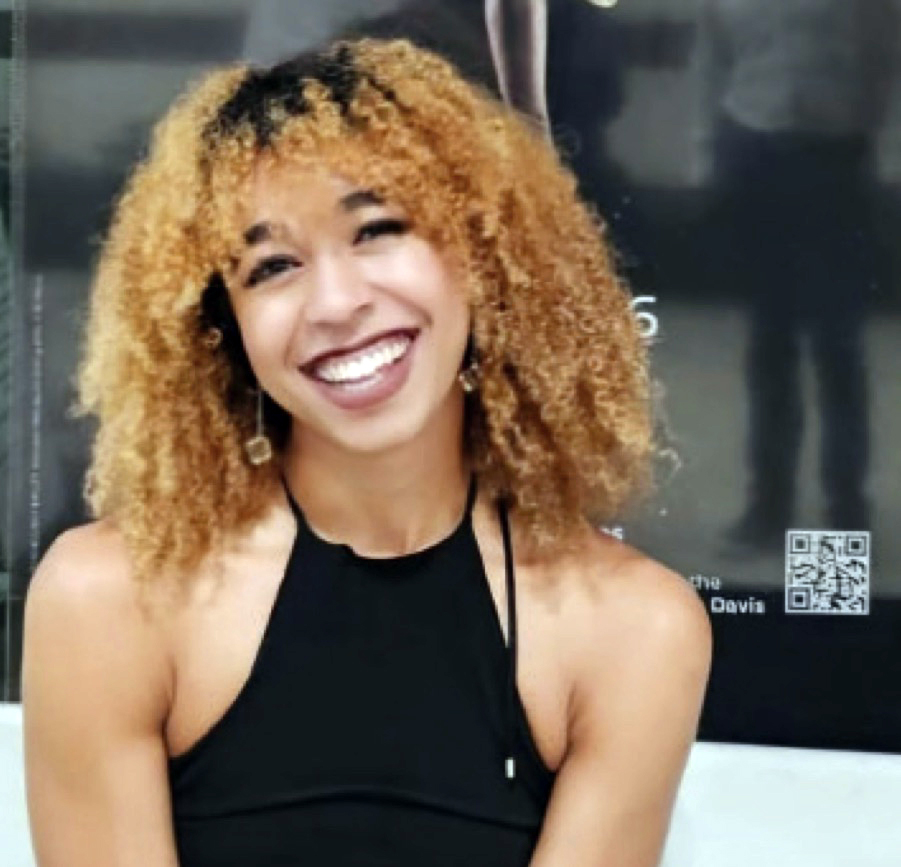
Marusya Ifeoma Madubuko is an American-Nigerian artist and professional ballet dancer whose craft and sterling stage presence have earned her an enviable reputation in the United States and, indeed, across the globe.
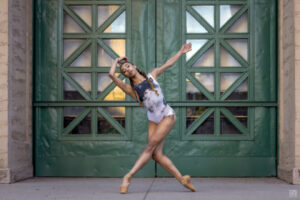
In the concluding part of this interview, which was started in yesterday’s Saturday Sun, she addresses issues of stereotypes as it concerns professional dancers, asserting that those who see dancers and other artists as unserious are only judging something they have little knowledge of, which merely showcases sheer ignorance and close-mindedness. She also speaks about her unique Nigerian and Russian heritage, which she is quite proud of.
There are people who believe that artists, like dancers etc, are not serious people, compared to professionals like doctors or scientists. What would you say to such people?
Many people don’t know much about ballet or what it takes to be a professional ballet dancer. We devote such a big part of our lives to the craft, always pushing to be the best we can be. How is that unserious? It’s not a job we just “clock in and clock out” of. Our career requires huge amounts of discipline, effort, and we do it all with the intention of serving the public — to make people feel, make them think, reflect, inspire them. We use our efforts not to give to ourselves, but to contribute to humanity. We don’t get paid the salary of engineers or doctors or lawyers, but we get fulfilled by the work. And just because we chose fulfilment over lots of money doesn’t mean we’re unserious.
If anything, it shows generosity of the soul, humbleness; it shows valuing something more than the material things, putting the ego aside…all the while, working HARD to better yourself and your work. Not because someone is asking you to, not because you’ll get paid more, but because you hold integrity in your work and won’t settle for subpar. That sounds quite serious to me, don’t you think?
Another point: people don’t seem to have the same stance on professional athletes. Football players will get more respect than professional dancers, despite dancers pushing their bodies and working just as hard, if not harder, than pro athletes. One of my physical therapists, with over 40 years of experience, told me that ballet dancers will come to him with more injuries, and more serious ones, than football players. We are pushing through pain way more often. There is no “bench” to sit on and watch from the sideliners as you rest. Not in my line of work! We’re putting our body through pain way more than these highly respected athletes, yet we don’t get the recognition.
It shows that people will feel free to judge something they don’t know enough about, it shows ignorance and close-mindedness. That’s okay…. some people prefer to live like that, and some cultures simply don’t allow for much exposure of ballet, but I would suggest that more people look into what they are judging, and truly ask themselves: why do they think pro dancers are unserious?
And why would people think artists are unserious? Do they not appreciate art? Art is the reflection of life, and it is an integral part of most culture. It’s been around for centuries, for millennia, and it will continue to be a form of expression, entertainment, beauty, inspiration. Without art, where would humanity be? Even if you’re not someone who goes to museums, or you don’t see live dance performances, don’t attend music concerts, art is all around you! Do you have a favourite piece of clothing? An artist designed it! Do you like the house you’re living in? An architect helped create that. Do you have a favourite song? That’s coming from an artist, a musician who put time and effort and vulnerability into that song.
Do you see that you are valuing the created but not respecting the creator? The world needs a balance of science and art, just as we each must balance emotion and logic within ourselves. Without such balance there would be chaos, and I do believe the world would be a very sad, empty place to live in without art.
What would you say life has taught you?
I’ve learned so many valuable lessons from life already! Surely too many to name them all. I also strongly believe that learning in life never stops! And that’s what makes it so exciting— the potential that everyday holds to aid in learning and growing.
To name just a few important lessons that I’ve learned: Gratitude is the antidote to any negative emotion; Growth is never linear— it moves with ebbs and flows; People who lack kindness are usually just unhappy with themselves… it has less to do with you than you think; For true confidence and sustained self assurance, you must be your biggest cheerleader and not rely on other’s reassurance or approval; You are the only person standing in your way— fear is simply an opportunity to be courageous, falling down is an opportunity to stand up taller than before…the ability of being able to shift perspectives is a powerful tool that can change your whole experience of life. Example; If you believe you are a victim, you will turn into one…if you believe you live in abundance, you will suddenly see that you have everything you need… if you 100 per cent genuinely believe you have what it takes to achieve your goals, YOU WILL!
What are the things that make you happy?
Of course, one of the things that makes me happy is dancing, but I also enjoy other creative outlets such as writing, drawing, and singing, although I’m not at a level to be performing any songs for anyone anytime soon. I also find a lot of joy in caring for people— I love cooking for my loved ones, doing small acts of service, and just being there for them in any capacity they need to feel supported and loved. It really does bring me so much joy making other people happy.
In addition to that, spending quality time with my family is an irreplaceable experience and I’m grateful for every second I get to spend with them. Spending time in the sun, in nature, always has a positive impact on my mood and makes me feel more grounded. Challenging myself with ambitious goals, building new skills, exploring new activities, is enjoyable to me as well. I love the feeling of working really hard at something and feeling myself improve. I welcome those kind of challenges and actually find them fun— not just the result, but I’ve learned to enjoy the process/journey as well!
Do you have anybody you look up to? If yes, why? If not, why?
My parents have definitely inspired me in a lot of ways— I think growing up seeing their work ethic and how committed they are to their goals has definitely affected the way I work. Anyone who knows me would say that once I set my mind on something, there is no stopping me— I’ll work endlessly until I reach the finish line. Then find a new, even higher goal, and do that process all over again.
I don’t have many figures I would say I “look up to” because I feel that that line of thinking can lead me to comparing myself to someone else. For some, that can even mean idolisation, which in the end, takes away from seeing them as humans, who are all flawed; and that causes them to feel like they need to be just as perfect as this person they are imagining. Comparing myself to another has never been productive, nor would I want to be like anyone else. That would not only be much harder to achieve, but it also wouldn’t be as honest, and it would take away from all the unique things that I can potentially offer the world.
However, I do still allow myself to be inspired by people and then use that inspiration to create, do something of my own. I admire a lot of my friends and have the people that I go to for advice; so maybe in that way I do “look up” to them. But I’m quite intentional with keeping that balanced because it took a lot of internal work to trust my gut feelings, to trust my own choices, and I think staying on that path means I allow myself to admire, but never copy. I take in what I see around me, and let that help inform my own choices. At the end of the day, I’m only competing with yesterday’s version of myself, seeing how I can grow in my own way every day. That has lead me to approach the hunger for growth in a calmer, more patient manner.
I’m not trying to emulate anybody else because I’ve found the value in what I have to give to the world, and I wish more people saw that in themselves. I wish more people genuinely acknowledged within themselves that there is NO ONE like them, and that that’s good! Leaning into the things that make you you might initially be uncomfortable for some, but it is so freeing, more fun, and so valuable.
Your mother is Russian and your father is Nigerian. How do you cope caught, more or less, in-between two different cultures?
I find being a part of two different cultures a gift in a lot of ways. When I visited Nigeria for the first time not too long ago, I felt so welcomed… feeling very grateful and empowered being able to strengthen the connection with that side of myself. My Russian side has been a big part of my upbringing. I grew up in a Russian-speaking household, eating Russian foods, enjoying different forms of Russian media. I feel that being a part of two cultures that are so different has given me a unique perspective and set of values. Both Nigerians and Russians are known for their strength, and I always joke that that is what makes me so strong and resilient. But all jokes aside, it probably has some truth to it. One would think I would feel out of place since my identity and upbringing is split between both sides, but luckily I have not encountered people who would exclude me because of this, and I am proud to have such a unique ethnicity.
Between your mother and father, who has the greatest influence on you?
Both of my parents have had a great influence on me. I couldn’t tell you who has had more of one. Both parents are very different, not only culturally, but personality-wise, so their advice or perspective may differ, but I view having access to different perspectives as a good thing! The more views I have to consider, the more informed I am when making a decision of my own.
Russia is your first language even though you didn’t grow up there. How was this possible? Could you share your Russian memories with us?
Russian was indeed my first language. My mother is from Moscow, Russia. She spoke Russian in the house to us, and then there was my babushka, my mother’s mum. She was present for a big part of our childhood and can only speak Russian, so I believe that also played a part in how the language engrained in me. She taught my sister and I how to read and write in Russian, read us Russian bedtime stories, sung us Russian lullabies, made us Russian foods. And because my father went to university in Russia, he also spoke the language, so I didn’t have any communication barriers with him at all. I eventually learned English when I started going to school, and because I was young, my brain didn’t have much trouble learning the new language.
Your father is Nigerian by origin. What is your relationship with Nigeria and how Nigerian are you?
My father is from Nigeria, and even though I grew up in New York, my father still did his best to teach me and my siblings about the Nigerian culture and values. He not only spoke about them, but would also do things, like make Nigerian foods for me and my siblings, told us Nigerian bedtime stories that I still remember to this day, took us to Nigerian conventions, etc. Some of my dad’s siblings, my aunties and uncles, lived just one borough away and I remember visiting them for holidays. There, I was exposed to even more parts of the Nigerian heritage and traditions.
Yes, it’s still not the same as growing up in Nigeria, but I’m grateful my dad exposed me to as much as he did.
When introducing yourself, which do you feel more comfortable with – an American or Nigerian and why?
In America, I introduce myself as Marusya. Marusya is a Russian name, but the way Russians pronounce that is too difficult for Americans, so even that name I have adjusted, pronunciation-wise, to make it a little easier for Americans to say and remember. I am completely comfortable with the name Ifeoma, but I do believe it would be difficult for Americans to say and remember as well. I think I use the name Marusya here because I would be more often called by that name growing up, or my nickname Manya, so I’ve gotten used to that name more.
What is your greatest dream?
I’m living it! My biggest, most ambitious dream, was becoming a professional dancer. Now, I’m dancing with my dream company, performing all around the world for so many different audiences. I have a great group of friends, a family who loves and supports me, I have my health…. I have everything I may need in this life already. With all of that, I live my life with extreme gratitude, as much as I can.
Currently, my dream, every day, is to just keep growing; as an artist, as a human…. Continue discovering more things about life, and bettering myself along the way. I do of course have more specific goals for my future; like diving deeper into my love for writing, helping with family businesses, coaching the next generation of dancers even more than I already do, and it’s definitely a dream, to be able to spend time with my family more often. But a lot of those can only realistically come towards the end of my career as a dancer.
Professional ballet dancing is tied to age. At what age would you retire?
Yes, professional ballet dancers do retire at a relatively early age. The average retirement age for a ballet dancer is around 35-40 years old, but there are some few that dance till they’re 45-50 years old! A famous ballerina from decades ago even danced until she was 70 years old. But I don’t think I’d want to go that far. The longevity of a dancers career highly depends on how well they take care of their bodies, pushing through pains they might be tempted to ignore for the sake of the work, learning how to adapt and work smartly around any injuries they’re enduring, taking care of their mental health, etc… I’m trying to take care of my body and mind as much as I can, and move with a technique that is informed and supports the body the way it should be. Only time will tell how long my body will be able to keep dancing at this calibre, but if I had to give an answer now, I’d say I’d want to keep dancing till at least the age of 40.
What would you want to be remembered for?
I haven’t had a concrete answer to this in my mind because I don’t think anyone has control over how they will be remembered. Everyone experiences you differently— your actions, behaviours, mannerisms, accomplishments. There’s not much you can do about that. I don’t focus too much on how people will remember me because then I’d be living based on other people’s values rather than my own.
Constantly looking for approval from others around you, checking to see if you’re doing what they think is “right” would be quite an exhausting way to live, don’t you think? However, if I had to give an answer — I would hope that people remember me as someone kind, genuine, generous, humorous, caring, wise, and hard-working. I know that people already see me in this light, but I hope that those qualities of mine, in addition to my dance career, would make a lasting positive impact.









Leave a comment