



•Shake-up signals new fiscal direction -Experts
From Juliana Taiwo-Obalonye, Abuja and Chinwendu Obienyi
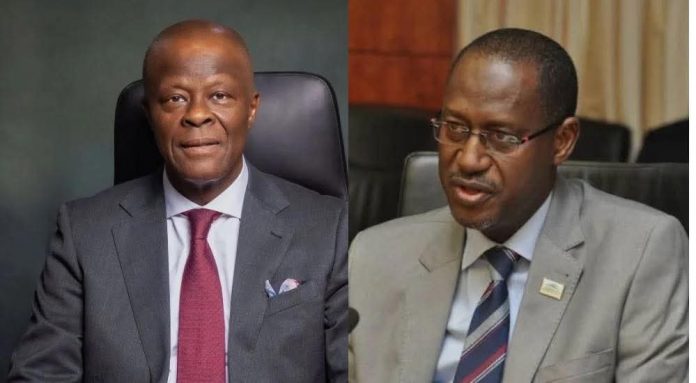
President Bola Tinubu has effected a major shake-up in his economic team, sacking Finance Minister Wale Edun and Housing Minister Ahmed Dangiwa, while appointing tax expert Taiwo Oyedele as the new Minister of Finance.
The President Bola Tinubu, yesterday, effected a minor reshuffle in the Federal Executive Council (FEC), sacking the Minister of Finance and Coordinating Minister of the Economy, Wale Edun and Housing Minister, Ahmed Musa Dangiwa.
This was contained in a memo signed by Secretary to the Government of the Federation, Senator George Akume.
The shake-up saw Mr Taiwo Oyedele, previously Minister of State for Finance, elevated to Minister of Finance and Coordinating Minister for the Economy. He takes over from Edun, who has been directed to hand over immediately.
Dr. Muttaqha Rabe Darma emerges as the new ministerial nominee and minister-designate for the Ministry of Housing and Urban Development, replacing Dangiwa.
The outgoing minister is to hand over to the current Minister of State in the ministry.
The memo mandates completion of all handing and taking over processes by close of business on Thursday, April 23, 2026.
Akume explained the changes as efforts to “strengthen cohesion, synergy in governance as well as achieving more impactful delivery on the economy to Nigerians, through the Renewed Hope Agenda.”
He affirmed that President Tinubu exercised powers under Sections 147 and 148 of the 1999 Constitution (as amended).
Tinubu thanked Edun and Dangiwa for their service, wishing them success ahead, and assured cabinet members of ongoing reinvigoration, according to a statement issued by Special Adviser, Media and Publicity to the Secretary to the Government of the Federation, Yomi Odunuga.
Meanwhile, economic experts have said the move by President Bola Tinubu to replace Wale Edun with Taiwo Oyedele as the new finance minister, signals a strategic recalibration of the country’s economic management as pressure mounts over inflation, currency volatility and sluggish household relief.
The presidency announced the change on Tuesday, confirming that Oyedele, who previously served as minister of state for finance, will now take over as the country’s top fiscal authority. Edun, a key architect of the administration’s early economic reforms, has been directed to step down with immediate effect.
The reshuffle, though limited in scope, underscores growing urgency within the government to accelerate the impact of reforms introduced since 2023.
Those measures, including fuel subsidy removal and foreign exchange liberalisation, have been praised by investors but have also contributed to a sharp rise in living costs, testing public tolerance.
Oyedele’s elevation is widely interpreted by analysts as a pivot toward more aggressive domestic revenue mobilisation. A former tax policy adviser and private-sector consultant, he has been closely associated with efforts to overhaul Nigeria’s fragmented tax system, broaden the revenue base and improve compliance.
According to experts, his appointment suggests that the administration is doubling down on structural fiscal reforms, particularly at a time when government revenues remain under pressure and debt servicing continues to absorb a large share of earnings.
Nigeria’s tax-to-GDP ratio remains among the lowest globally, leaving limited fiscal space despite the removal of costly subsidies.
A stockbroker who spoke to Daily Sun on the condition of anonymity said investors are likely to focus on policy continuity in the near term.
“Edun had played a central role in coordinating economic policy and maintaining engagement with international financial institutions. “While Oyedele is viewed as a technocrat with strong reform credentials, questions remain over how quickly he can translate tax policy expertise into broader macroeconomic stability.
“Market participants will also be watching for signs of alignment between fiscal and monetary authorities. Coordination has been a recurring concern as the central bank pursues tighter monetary policy to contain inflation, while the government seeks to stimulate growth and ease social pressures”, he said.
Head, Research, FSL Securities, Chiazor Victor, argued that a sharper focus on tax reform could improve revenue predictability and reduce reliance on borrowing, strengthening Nigeria’s fiscal position over time.
He, however, warned that implementation risks remain high, particularly given institutional bottlenecks and resistance to new tax measures.
“The President’s decision to replace his finance minister less than three years into his term points to a willingness to adjust course in pursuit of economic stability. Whether the shift delivers quicker results will depend on execution, policy coordination and the government’s ability to balance reform with social protection”, he said.
The leadership change comes at a delicate moment for Africa’s largest economy. Inflation remains elevated, the naira has experienced significant volatility, and businesses continue to grapple with high operating costs. For many Nigerians, the benefits of recent reforms have yet to materialise in tangible improvements in living standards.
For now, the appointment of Oyedele signals a clear message that fiscal reform, particularly tax reform, will be central to Nigeria’s next phase of economic policy.
Meanwhile, tension has deepened within the FEC after the sudden dismissal of Wale Edun and Ahmed Dangiwa, with many ministers reportedly bracing for possible changes. Insiders say the move has unsettled federal appointees, as it signals a tougher stance on performance, delivery and those with political ambitions.
The development has triggered quiet recalibration among ministers, with renewed urgency around policy execution and public results.
Observers believe the shake-up highlights the administration’s readiness to make difficult decisions, even as it injects a sense of caution across the government’s top ranks.











Leave a comment