



[ad_1]

Stakeholders in Nigeria’s health sector have raised alarm over inadequate funding, weak institutional capacity and poor coordination undermining the country’s response to non-communicable diseases.
They warned that the situation could worsen without urgent intervention.
The concerns were raised on Thursday in Nasarawa State, during a two-day capacity strengthening workshop for government ministries, departments and agencies on public financing for NCD prevention and control, and the implementation of a multisectoral action plan.
The workshop was organised by the Federal Ministry of Health and Social Welfare, in partnership with the Legislative Initiative for Sustainable Development and the Global Health Advocacy Incubator.
Speaking at the event, Vice President of LISDEL, Muhammed Usman, said the engagement was designed to galvanise support from key stakeholders whose roles are critical to addressing Nigeria’s growing NCD burden.
“This meeting… is aimed at galvanising support from all relevant stakeholders within the health sector.
“We have representatives from the Ministry of Health, the Ministry of Finance and Budget, the National Assembly, and civil society organisations.
“These groups are critical when it comes to addressing health issues in Nigeria,” he said.
Usman stressed that NCDs had become a major public health concern, yet they continued to receive insufficient attention and funding.
“The goal is to mobilise these stakeholders to better understand that non-communicable diseases are a major public health concern in Nigeria today.
“Globally, significant priority is given to tackling NCDs, and we want to see the same level of attention in Nigeria.
“If you look at the current budget, the allocation to NCDs is very low and grossly inadequate. Funding remains a major challenge,” he said.
He added that the widespread impact of the diseases underscored the urgency for action.
“As I mentioned earlier, there is hardly any family that is not affected by NCDs, particularly hypertension. This underscores the urgency of addressing the issue,” he added.
Usman further urged policymakers and legislators to take concrete steps.
“Those involved in budgeting should ensure adequate allocation to agencies like the NCDC.
“Members of the National Assembly should recognise the importance of this issue and advocate for increased funding. There must also be strong oversight,” he said.
Also speaking, Country Director of GHAI, Prof Emmanuel Alhassan, said the workshop was convened to identify critical gaps in Nigeria’s response and build the capacity of MDAs to address them.
“This gathering is aimed at identifying the gaps in Nigeria’s response to non-communicable diseases.
“At present, NCDs pose a significant and growing challenge in the country,” he said.
Highlighting the scale of the problem, Alhassan noted that many Nigerians were already living with NCDs, often without knowing.
“If you speak to 10 people, you can imagine how many may be living with hypertension. Many men and women are also affected by conditions such as prostate cancer, cervical cancer, breast cancer, and others,” he said.
He revealed that a recent assessment exposed serious deficiencies, particularly in financing.
“Prior to this workshop, an assessment was conducted… the results clearly showed significant gaps. For instance, last year, there was no funding release at all for NCDs, which is deeply concerning,” he added.
Alhassan also pointed to weak capacity among non-health MDAs.
“There are gaps in the capacity of non-health MDAs to effectively design and present programmes in ways that can attract funding for NCD-related interventions. Strengthening this capacity is essential,” he said.
He added that the expiration of the previous NCD multisectoral action plan made the development of a new framework urgent.
“Another key objective of this gathering is to catalyse the development of a new action plan in collaboration with all relevant stakeholders,” he said.
Alhassan noted that participants recommended adopting political economy analysis to strengthen advocacy.
“This is not just for budget appropriations, but also for the actual release and efficient utilisation of funds for NCD programmes,” he added.
Providing further insight, the National Coordinator for NCDs at the Federal Ministry of Health and Social Welfare, Dr Alayo Sopekan, described NCDs as chronic conditions largely driven by lifestyle factors.
“As you are aware, non-communicable diseases are illnesses that are not transmitted from one person to another. They are often referred to as lifestyle diseases.
“Once a person develops them, they typically have no cure, but they can be managed,” he said.
He attributed the rising prevalence to changing lifestyles and unhealthy habits.
“Many people no longer maintain healthy habits—we do not eat as naturally as we used to… These factors are contributing significantly to the growing burden of NCDs,” he said.
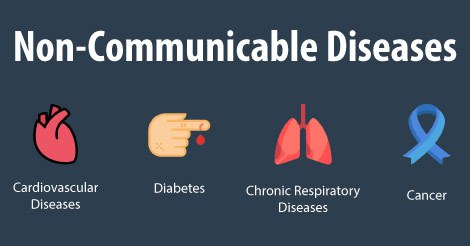
Sopekan listed common NCDs to include hypertension, diabetes, asthma, chronic obstructive pulmonary disease, and cancers, noting that their incidence continued to rise.
“The first national survey… in 1990 showed relatively low prevalence rates.
“Today, about 15 per cent of our population is living with hypertension—at least among those diagnosed,” he said.
He added that many Nigerians remained unaware of their health status.
“About 25 per cent of people have never had their blood sugar checked. In many cases, diagnosis is incidental,” she said.
The NCD coordinator also highlighted the burden of sickle cell disease.
“About two per cent of our population… are living with sickle cell disease, while approximately 25 per cent carry the gene as healthy carriers,” he said.
He emphasised the financial strain on patients managing chronic conditions.
“Their management is often expensive, forcing many patients to make difficult choices between basic needs like food and purchasing medication.
“The burden of out-of-pocket expenses is significant,” she said.
Sopekan stressed that tackling NCDs required a whole-of-government approach.
“NCDs are not just a health sector issue—they are linked to lifestyle and require a multisectoral approach. Other ministries and agencies have important roles to play,” he said.
He added that the workshop was already yielding useful outcomes.
“So far, the discussions have yielded valuable insights… participants will return to their respective institutions better equipped to improve current approaches and deliver more effective interventions,” he added.
Non-communicable diseases are responsible for an increasing share of deaths globally, accounting for over 70 per cent of all deaths, according to the World Health Organisation.
In Nigeria, the burden has grown steadily due to urbanisation, unhealthy diets, physical inactivity, tobacco use and harmful alcohol consumption, leading to around 29 per cent of deaths.
Unlike infectious diseases, NCDs are long-term conditions that often require lifelong treatment and management.
This places a heavy financial burden on households, particularly in Nigeria, where out-of-pocket health expenditure remains high.
Experts warn that without sustained investment, stronger policies and coordinated action across sectors, Nigeria may face a worsening public health crisis driven by NCDs.
[ad_2]
Source link














Leave a comment