



From Okwe Obi, Abuja
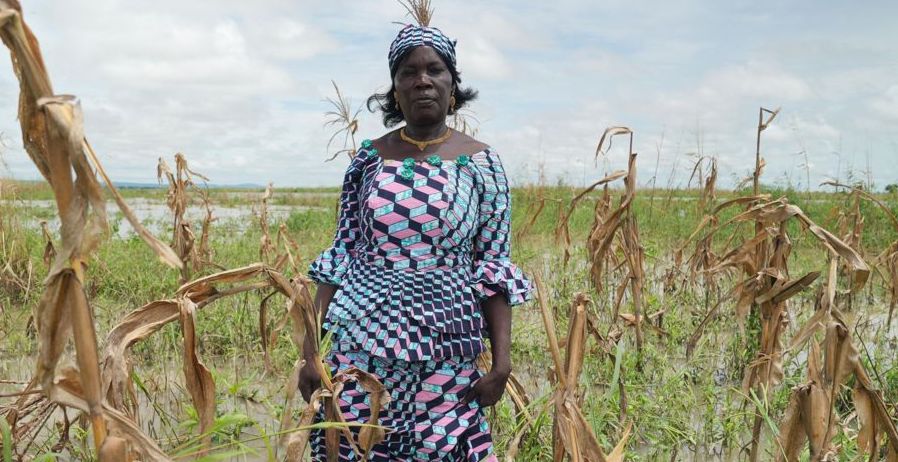
West African nations, led by Nigeria, Ghana and Togo, have amplified calls for climate justice, warning that without urgent global action, the region’s fragile agricultural systems could collapse and trigger a food crisis that will throw affecting millions into the pit of desolation.
Food sovereignty in Nigeria and across much of Africa, remains under siege, driven by the twin crises of climate change and the aggressive encroachment of global agribusiness interests.
From the forced penetration of genetically modified (GMO) crops into local food systems to the devastating oil spills caused by foreign companies, often without meaningful compensation, the continent’s ability to control its own food future is being systematically eroded.”
To address the challenges, stakeholders drawn from Nigeria, Ghana, Cameroon, Togo among others assembled at the Nigeria Socio-Ecological Alternatives Convergence conference in Abuja, to X-ray and dissect the way forward.
Nigeria’s Director, Health of Mother Earth Foundation (HOMEF), Dr. Nnimmo Bassey, who spoke on “Building Consensus for National Alternative,” interrogated the usefulness of the Conference of Parties on Climate Change (COP) and its impact on the continent in terms of food sovereignty.
For him, the participation of most West African countries at COPs has not yielded any fruit.
He said: “Now, in 2025, we are going to have the 30th edition of the Conference of Parties in Brazil.
“For 30 years, the world has been on a treadmill. Initially, the COPs had real consequences for our countries because then, maybe up to 2009, we still had a system where the big polluting countries were required to cut emissions at a measurable, binding level.
“But right from 2009, when we had the Copenhagen Accord, the so-called Copenhagen Accord, which was the grandmother of the Paris Agreement, the world is now working on voluntary emission reduction.
“So, no matter how big a polluter you are, you are expected to cut emissions at your own pleasure. And no matter how small you pollute, you are required to take action at the same level.
“So we have a situation where countries who are not even polluting at all are looking for pollution to cut. And so they are now seeing a higher level of pollution reduction than those who are wrecking the planet, those who are creating global warming. So it’s really a big challenge.
“We have a system that is very hypocritical. That is what the Conference of Parties is. They do know they’re not solving the problem
“They would not even agree openly that fossil fuel is driving global warming. They wouldn’t agree to provide climate financing because they don’t feel that they are responsible.
“In fact, one of the top negotiators in the past has said that they would never accept a sense of responsibility or accountability when it comes to global warming and the crisis that is engulfing the world.
“Now, when countries are so powerful to say that to the face of everyone, it just means that, look, the game is off. Going to the Conference of Parties these days would only be meaningful if our countries go there to actually negotiate, to require that they go back to the Kyoto Protocol, that they go back to a regime where there is a binding emission reduction requirement for the big polluters.
“If we are happy to write our nationally determined contributions, and that NDC, when it was first brought up, it was called Intended Nationally Determined Contributions, which really showed that it wasn’t anything serious.
“And now we are very clear, going by the Emissions Gap Report of UNEP, which has been issued for the past two years, that if countries do what they are proposing to do, the world is going to be on fire.”
On the performance of Nigeria in terms of climate justice, he said: “Nigeria is playing along with the United Nations Framework Convention on Climate Change. Whatever all the hypocrites are saying should be done, that is what the Nigerian government is happy to do.
“They talk about carbon trading, carbon offsetting, all the false solutions. Nigeria is happy to do that. But, you know, if we really want to talk about climate justice, there is no climate justice in Nigeria.
“If there is climate justice in Nigeria, there will be no gas flaring. If there is climate justice in Nigeria, oil spills would stop, and there will be an audit of the entire oil belt.
“If there were climate justice in Nigeria, how can a rural oil well be burning for five years, and government is doing nothing about it? There’s no climate justice in Nigeria.
“So we are demanding climate justice in Nigeria, just like we are demanding in the whole West African region and the entire African continent.
“The African continent, when they talk about global temperature increases, that does not really say exactly what is happening in Africa. If there is a two-degree temperature increase globally on average, Nigeria will be suffering about three degrees.
“We have a higher temperature increase than the global average. So we need to really see that the crisis is more on us. So it’s not enough for Nigeria to, whatever structures we have set up, go to the Conference of Parties and just participate and come back with nothing.
“At the last COP, we had the closing statement of the Nigerian leader, head of delegation, which was very encouraging, really calling the system out for what it is, hypocritical, do-nothing, just backslapping and nothing more than that.”
On what Nigeria should demand at this COP30, he said: “The number one thing the African continent should demand is for the recognition and payment of climate debt. Because we have been raped for hundreds of years, it is time for someone to pay for it.
“Climate finance would never do it. It is a debt that is being owed, it is a pre-colonial debt, it’s an ongoing climate debt. It should be recognized for what it is, and we should demand it.”
Also, Team Lead, Centre for Environmental Justice in Togo, Kwami Kpondzo, argued that no African country was immune from the destruction of climate change.
Kpondzo said it was expedient for climate change advocates to unify the fight against the negative effects of climate change for the common good.
“We have noticed that in West Africa, we have so many similar challenges from one country to another. For instance, from Nigeria to Togo, we have pollution, either pollution by oil and gas extraction, or mining, like phosphate, gold, or manganese mining.
“And everywhere in West Africa, in Niger, uranium; in Guinea-Conakry, we have bauxite. And everywhere, either we have mining, or oil and gas extraction, or other activities that are polluting air, soil, or water, that are destroying the environment.
“So we have seen plantations in West Africa, either palm oil plantations or eucalyptus plantations, destroying communities’ livelihoods, and also destroying the biodiversity.
“So we say enough is enough, because we cannot stand seeing all those things impacting and affecting us. And apart from that, climate change also came. And of course, from the industries, from oil extractions, from energy productions, we have put so much CO2 in the air.
“And climate change also affects us. And in the coastal countries, we have coastal erosion because of climate change, because the sea-level rise is evident and trivial, and it’s affecting communities, affecting fisherfolk communities.
“And also, we have seen that in the discourse of climate change, they are pushing more plantations into West Africa to have carbon markets, to help themselves, not communities, because we believe that it’s a business for them if they are talking of carbon markets.
“The nature itself is doing sequestration of carbon through trees, through biodiversity. Why put it in markets? Why put money or value on nature? We say no.
“In West Africa, it is happening. So for us, it’s very important not to fight in isolation, but to come together to strengthen our fight.
“That is why it is very important for us today to rethink how we are going to continue the fight against climate change, because we have understood that it is not all about climate alone.
“All is linked. Because of climate change, they are pushing monoculture plantations, they are pushing biomass, affecting agriculture, affecting our soils. Because of climate change, coastal erosion—all those things are linked.
“That is why we want also to link our fight. Those who are working on agroecology, on agriculture, practices that are in harmony with nature—we want them. Those who are fighting against women injustices, against oil and gas.
“We need all those organizations to be in the movement in West Africa, to speak in one voice, because we say and we know that speaking in one voice or speaking together is stronger than fighting in isolation,” he said.
Speaking on the approaches they will use, he said: “We have two strategies in terms of advocacy. The first one is to make sure what we are saying, we dialogue with governments at local level.
“The dialogue should be in the way that government understands what we are saying. For instance, in terms of mining, in terms of plantations, we have been clear that plantations need more land.
“And if the government is going for plantation projects, it means the land will be taken from communities. In some of the countries, the land belongs to communities. So if this is the case, then those lands need to be taken from them.
“So we discuss with government and we do advocacy at national level. And we also bring the community voices to international level, because at international level, there are decisions that are taken to implement some of the conventions at international level.
“So we also bring community voices, for instance, at UNFCCC Conference of Parties spaces, just to make sure the consequences that we are having on the ground, the impact on indigenous people and local communities on the ground, are known.
“And the voice of communities is heard at international level. Yes, we are doing it at national and international level. But also at regional level, with ECOWAS, we are building that relationship, especially with AFSA.
“AFSA is the African Food Sovereignty Alliance in Africa. And we have many organizations in West Africa, part of AFSA. And with AFSA, we are also pushing the agroecology practices into ECOWAS agriculture decisions, and also into EU and African Union decision processes.
“We have been pushing that. We know it’s not easy. But you know, you can’t keep quiet in the face of the impact.
“You can’t keep quiet in the face of oppression. If you do, then you are not going to get anything. So that is why we believe that keeping on fighting will bring us victory. Because the change is near.”
On the most affected countries, he declared: “All the countries. All the countries are affected in one way or another. By oil, or by mining, or by any means of activity.
“They are all affected. So in Togo, we have manganese mining, we have phosphate mining, we have iron mining, destroying forests, destroying biodiversity. In Nigeria here, you have gas flaring, you have oil everywhere.
“And in Niger, you have uranium, and you have oil. They started drilling oil. And in Sierra Leone, you have plantations all over.
“In Liberia, you have plantations all over. And everywhere, affecting. Look, taking the West African gas pipeline alone, from Nigeria to Ghana, it affects fisherfolk.
“Because you know where the pipelines are, and if it is a restricted area. So fisherfolk cannot go. But fish, they love where it is cooler.
“So they are under the pipeline. But it is a restricted area. And if you come to Togo for this, then you see the boats.”





Leave a comment