



By Tunji Olaopa
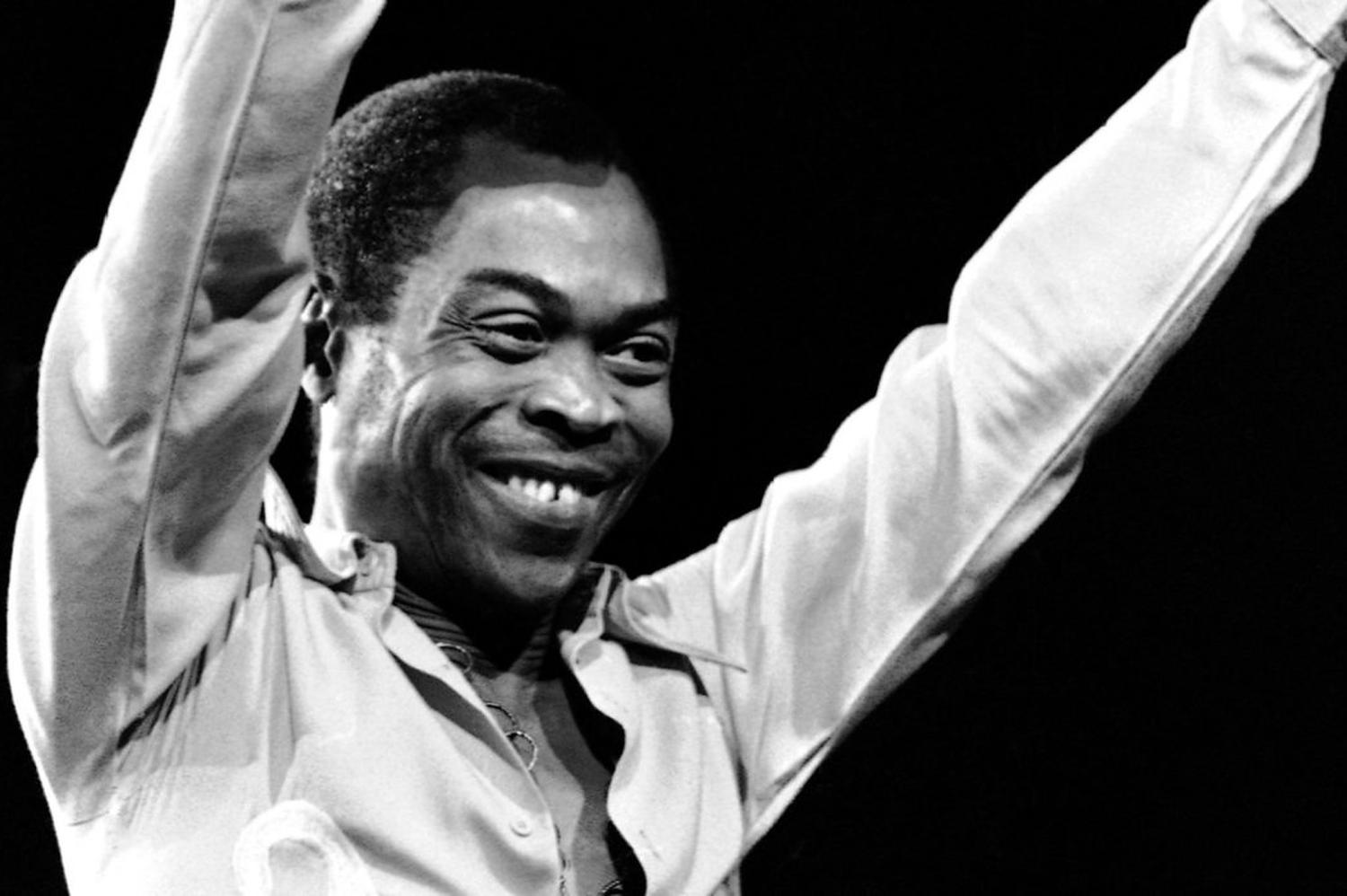
The Abàmì Ẹ̀dá himself—Fela Anikulapo Kuti—never fails to reprise the notoriety that defined his entire life and reputation. From his school days at Abeokuta Grammar School to his choice of studying music rather than medicine as his parents demanded, and finally his radical transformation into a rebellious irritant, Fela lived a life that was never devoid of excitement, dangers and consequences. In the words of Nietzsche, the German philosopher, Fela lived his life dangerously. And even in death, he had never stopped defining the terms of engagement with himself. Two recent and consecutive events gave us pause to revisit what Fela means to us, means to Nigeria and Africa.
The first event was an online scuffle between Seun Kuti and Wizkid (Ayodeji Ibrahim Balogun). Seun Kuti has always been defending the status of his father. In his reckoning, Fela is sacrosanct; Fela is Fela: a legend beyond all legendary figures. And no one has the right, the audacity, to smear that name and legendary profile. And then he went on the onslaught against Wizkid and his fandom. Wizkid responded by insisting that he is greater than Fela. And the Internet erupted. And just a week or so as the social media war, the Recording Academy of the United States honored Fela with a Lifetime Achievement Award, and “Zombie”—that irreverent sonic rebellion against authoritarian governments—got inducted into the Grammys Hall of Fame.
Without mincing words, Fela does not need Seun Kuti or the Grammys to protect his legacy or recognize his world-historic significance. And Wizkid’s petty rejoinder to Seun Kuti was too blind to the significance of the person he considers himself to be an heir to. In the hullabaloo concerning his influence and significance, we cannot escape putting those legacies, or the sum of them, under constant scrutiny, if only to keep assessing them in the light of the circumstances and predicaments that gave rise to them in the first place. But we first have to be clear about what the legacy consists of. We lose insights and lessons when we get into conflict over what we are not clear about. A legacy is not a fossil that is kept in ice or mummified into irrelevance as a museum piece that reminds us of time past. This is exactly the point David Lowery, the American filmmaker, makes in his film, A Ghost Story (2017): “We build our legacy piece by piece, and maybe the whole world will remember you or maybe just a couple of people, but you do what you can to make sure you’re still around after you’re gone.”
A legacy is incremental but it is also consequential. First, that legacy goes beyond any form of bantering on social media; goes beyond what can be kept wrapped and defended against all comers; transcends what could be ridiculed anywhere. And that is because Fela’s sonic rebellion constitutes a formidable contribution to the national and global stock of emancipation that range as far back as the anticolonial struggles across the continent and specifically in Nigeria, and connect with every ongoing attempt to make Nigeria better for posterity. Fela’s claim to legacy is consequential for our understanding of Nigeria’s current democratic experiment that makes it possible for those who are flippantly ignorant enough to think his name can be rubbished.
I am a political theorist, and the issues of iconoclasm and rebellion have significant political implications, especially when they connect with power variables around which the well-being of nations revolve. Let us all agree: Fela was a genius. He was a very eccentric genius. And I doubt there is any genius who is not eccentric. It is within Fela’s eccentric personality that we can begin to understand the very essence of his influence. We could go the route of genetic inheritance, and interrogate how he was already predisposed to being the rebel he was given the radical orientations of his parents. More than his father, Fela’s mother—Funmilayo Ransome Kuti—embodied the very rebellious spirit that incarnated in Fela.
But a sociocultural analysis is better. Fela was raised by very stern and highly critical parents whose reactions to injustices and social dynamics left a huge impression on the young Fela whose rebellious temperament was already flaring significantly, starting with his own father! And so, the context of his growing up was a microcosm of the larger postcolonial context he would soon have to confront. But he had to first find his way to a transformed consciousness and articulate the best means by which to make the postcolonial society feel the full extent of his just wrath. When he met Sandra Isidore and then through her The Autobiography of Malcolm X that gave her the insight into the black struggle in the United States, Fela was ready for his fight against the system and the generation of oppressors on the continent—from the political to the clerical class.
When his musical experimentation finally yielded “Afrobeat,” Fela had given himself an instrument for confronting the guns and the bayonets of authoritarianism. His saxophone was specifically fashioned as a political and ideological sonic means of x-raying power in the postcolony. Indeed, we can say that Fela was born for his time—the immediate post-independence period when Nigeria was not getting it right as a result of the sedimentation of colonial landmines and postcolonial ideological cluelessness. With 145 songs spread over about fifty-two albums, Fela was a consummate musical rebel—unrelenting, unpacifiable, irritant, always on the offensive, always stinging badly. And the oppressive military governments in Nigeria felt the sting quite all right. Or else, they would not mount the series of onslaught against one man who had the radical, the progressives, the so-called dregs of the society, and even the avant-garde all together under the same umbrella. It was the flowering of a mass movement.
Fela, like Bob Marley, Miriam Makeba, Lucky Dube, Hugh Masekela, etc., became a significant part of the constellation of musical arm of the anticolonial and postcolonial search for freedom that will loosen the bands of subjugation and dehumanization that had been wrapped around Africans. In “Zombie,” “Beast of No Nation,” “Shuffering and Shmiling,” “Army Arrangement,” “International Thief Thief,” “Sorrow, Tears and Blood,” Fela’s basket mouth ranges loudly against those who oppress from the global to the national and the local. Even the people on whose behalf he was fighting were not spared the sting of his fury. “Shuffering and Shmiling” condemns the sheepish attitude of Africans that enables their own oppression:
My people dem go dey follow Bishop
Dem go follow Pope
Dem go follow Imam
Dem go go for London
Dem go go for Rome
Dem go go for Mecca
Dem go carry all the money
Dem go juba Bishop
Juba Pope
Juba Imam
This musical constellation, from Fela to Bob Marley, constitutes the sonic and voluble undertone to the more visible and institutional and pan-African rallying cry across the continent for African identity, unity and liberation. From Bob Marley’s “Africa Unite” to Fela’s “Colonial Mentality,” there are arrays of critical and political songs that ground the political rhetoric of Kwame Nkrumah, Sekou Toure, Julius Nyerere, Jomo Kenyatta, Patrice Lumumba, Nelson Mandela, Nnamdi Azikiwe, and many others. While the nationalists were rallying the minds through politically conscious speeches and strategies, the musicians were rallying the hearts of Africans with emotionally and politically charged tunes that are too evocative to have been swallowed by time.
Of course, even the time has not been good to the continent in terms of her political and governance fortunes. And this has made forlorn prophets of Fela and his cohorts. The lyrics of “Colonial Mentality” and “Shuffering and Shmiling” are still as true close to fifty years ago when they were penned as they are now. Fela is still relevant today because Nigeria’s democratic experiment and Africa’s governance fortunes are still tied to global neocolonial frameworks as they were when he was still stridently alive. So, legacy: Fela is gone but he is still around—his timeless lyrics still constantly remind us about where the rains began to beat us, to quote Chinua Achebe; we are still suffering and smiling and clueless as to how we need to be alive to our responsibilities as citizens.
It is a grievous sin to think that kind of legacy can be diminished in comparison. Such comparison must respect contexts and circumstances. Even Bob Marley and Fela cannot be compared. To compare them is to fragment the unity of purpose and energies that stipulate the necessity of emancipation to which they dedicated their lives and crafts. But who says it cannot be surpassed? To surpass them is to bring forward the trajectory of liberation which defined their entire legacy. It is to deploy their music as the ladder to do more and transcend where time limited them. It is to carry forward their fights, admonitions, prophecies, rebellions on behalf of unity, freedom, liberation, equality and justice and humanity.
I do not think the younger generation has the right to refuse such a generational responsibility. This is even more on the African continent where the crippling conditions of yesteryears have cast their disenabling shadows over present circumstances. Youth unemployment, for example, is a function of the consistent failures of consecutive governments in Nigeria; governments that Fela railed against, was brutally harassed, unjustly jailed, his mother was thrown off the balcony of the Kalakuta Republic, and was hounded until his death. To drag such a revolutionary figure through the indignity of social media shallowness is a grievous offense. It is an offense to the memory of someone who did not hide in his house and behind any media to confront and speak truth to power. It is a great offense to a heroic icon whose struggle was part of the foundational conditions that birth Nigeria current democratic stability that made social media freedom possible in the first place.
Through his many presences all over the globe—Felabration, awards, biopics, documentaries, discourses in conferences, remixes of the songs, and musical rebranding by the younger generation—Fela Anikulapo Kuti will remain the Abàmì Ẹ̀dá, the strange one that has death locked up in his pouch. He will always be the signifier of the search for freedom many years from now when Africans need to confront another set of terrible scourges to the continent. The only thing that can silence Fela or diminish his fundamental significance would be the day that Africa achieves that freedom and liberation which are then transmuted into tangible infrastructural, economic and political development that makes the lives of Africans worth qualitatively more than it presently is. And even at that, Fela’s presence will still remain glowing—alongside many other freedom fighters Nigeria and Africa have produced—as the beacon warning us about the cost of getting to where we will get to, and insisting that we must never yield an inch to oppression, indignity and dehumanization.
That is Fela Anikulapo Kuti, an icon like so many others, who only appear in the human firmament once in a people’s lifetime.
- Prof. Tunji Olaopa is the Chairman of the Federal Civil Service Commission, Abuja














Leave a comment