



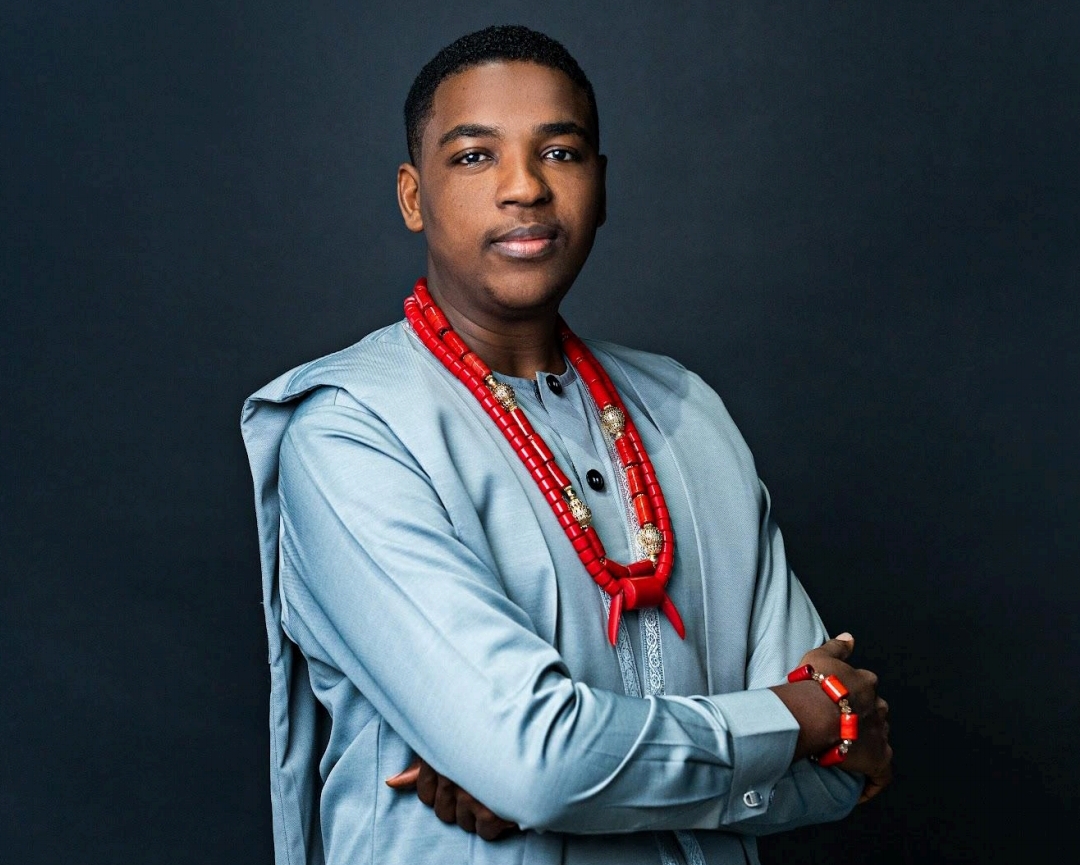
By Rita Okoye
Emmanuel Solomon is a versatile musician, director, educator, and researcher with a strong international footprint. A graduate of Dalhousie University and the MUSON Diploma School of Music, he has performed as a soloist with the National Arts Center in Ottawa and Dal Opera in Halifax. His work has earned him several honours, including the Atlantic Barbershop Harmony Award, the J. & A. Campbell Prize, Golden Key Academic Excellence recognition, the Queen Elizabeth II Platinum Jubilee Medal and the Measha Brueggergosman Classical Innovation Award.
In this interview with Daily Sun, Solomon speaks on his upcoming debut of the Resonant Bodies research project in May 2026, the inspirations behind his work, and his commitment to strengthening Nigeria’s musical ecosystem.
You’re returning to Lagos with a strong sense of purpose. What does this homecoming mean to you personally?
It is a profound full-circle moment. Professionally, it allows me to present the evolution of my craft as a composer and tenor. But more importantly, the strategy of this homecoming—focusing
First, on grassroots awareness through a church and school tour—reflects my deep desire to reconnect with and invest directly in the communities that first nurtured my voice, before taking these initiatives to larger institutional stages.
Your visit is built around giving back. What inspired this commitment to investing in Nigeria’s musical ecosystem at this point in your career?
We are entering a new age of AI technology where human isolation is unfortunately bound to become the norm. As social creatures, we fundamentally rely on one another for sanity, peace, and happiness. There is no better preparation for that future than music, which is our most powerful tool for social interaction and community engagement. I am investing in this ecosystem now to build those vital, resilient communities.
You’ll lead workshops across churches, schools, and other institutions. What gaps have you identified in Nigeria’s music education space that you hope to address?
While Nigeria is rightfully perceived as the epicenter of music and entertainment in Africa, there is much to be desired regarding the systematic strategization and development of our classical and choral sectors. I want to address things from the grassroots up. Through my workshops, I hope to correct fundamental misconceptions and demystify traditions that currently hamper our progress, ensuring we meet the rigorous global standards already well established in places like South Africa.
Can you walk us through the vision behind Lagos Sistema (LA SISTEMA SDR) and how will it impact underserved youth?
The vision is a profound social and cognitive transformation. Recent 2024 research from the University of Southern California and the National Institutes of Health proves that just one year of music lessons triggers measurable brain growth, enhancing language, memory, and emotional regulation. It acts as a comprehensive full-brain workout that traditional academic drills cannot replicate. Ultimately, my vision is for the Lagos State Government to adopt Lagos Sistema as a state-sponsored initiative. With my extensive experience working with the El Sistema initiative with OrKidstra and other organizations like the Michaelle Jean Foundation in Ottawa, Canada, I am fully prepared to helm and structure this initiative to equip our youth with lifelong cognitive advantages and essential discipline.
The Sistema model has seen success globally. How are you adapting it to reflect Nigeria’s unique cultural and social realities?
We are adapting it by taking the music directly to the people. The ‘Roots & Resonance’ tour for Lagos Sistema will be performed across churches and schools in Lagos, specifically to create grassroots awareness. We are embedding this elite training within the community structures that Nigerians already trust and attend daily. We hope to tailor our curriculum, in collaboration with local and international music composers and educators, with hybridized syllabi to suit the musical landscape and culture of Nigerian music, where significant content from Nigerian art and popular music is taught with strategic technical methods drawn from perfected Classical music pedagogy. Our approach will be discussed in detail on our new podcast: Resonance, created for the prime objective of discussing music education and performance, Myths about music as a profession in Nigeria, as the country has begun to garner more international notoriety, especially in popular and Afrobeat genres.
As a trained tenor with international exposure, how would you describe the evolution of your sound and artistic identity over the years?
My identity has shifted from being strictly a classical interpreter to an innovative creator, artistic director, composer, and educator. I’ve learned to treat my voice and my compositions not just as instruments of tradition, but as dynamic mediums for contemporary, cross-cultural storytelling and community building.
You’ve performed with institutions like the National Arts Center in Ottawa and Dal Opera in Nova Scotia. How have these experiences shaped your approach to performance and education?
Performing at that level taught me the critical importance of artistic discipline and institutional infrastructure. Those experiences, along with running a performing arts institution, entirely
shaped my pedagogical ethos; I want to bring that exact standard of rigorous, systematic production back to Nigerian stages and classrooms, at the very least chip in by adding my quota to what’s brewing on the advancement and future of music in Nigeria.
What can audiences expect from the Nigerian premiere of your original compositions and arrangements?
To build momentum and foster deeper community integration, we have strategically postponed our larger galas at the MUSON Center and Alliance Française to future dates. Instead, audiences can expect a highly intimate and powerful premiere at institutions like churches and schools. Our
first concert, in collaboration with St Paul’s Catholic Church, will take place on the 7th of June at 7:00 pm. We warmly invite the public and all potential collaborators to join us for this unique debut.
How do your compositions reflect your Nigerian roots alongside your global experiences?
My work is a continuous cultural dialogue. I utilize classical chamber and orchestral frameworks, but the soul, the syncopation, and the melodic narratives are deeply West African. It is about placing our indigenous musical heritage on a global concert stage without diluting its authenticity. I consider myself a storyteller, a polystylistic composer who explores musical idioms that are cross-continental and cross-periodic, all reflective elements that have influenced my artistry as a musician.
Vocal health is one of the focus areas of your masterclasses. Why is this often overlooked, and why should Nigerian singers pay more attention to it?
In Nigeria, immense passion often overrides technique, leading to premature vocal fatigue. The voice is a physical organ subject to wear and tear. My masterclasses emphasize that sustainable, globally competitive careers require treating vocal health with the same rigorous science as athletic conditioning.
Choral music remains a strong part of Nigerian culture, especially in churches. How can it be further developed into a globally competitive art form?
This is exactly why I created the BiVo Mixed Chamber Ensemble here in Lagos. Beyond performing my original works and standard repertoire, BiVo is a choral collective dedicated to advancing choral education. We are providing numerous workshops—like our recent sessions at St Paul’s Catholic Church—to all churches and institutions, with the express goal of advancing the performance quality that emerges from the Nigerian musical landscape to the global stage.
As both a researcher and practitioner, how do you balance the academic and
performance sides of music?
They feed each other perfectly. My academic research on technological innovations informs my vocal technique and compositional style. Conversely, the practical challenges I face on stage or
In the studio with ensembles like BiVo, I generate the exact questions I seek to answer in my academic and innovative work.
Your research on music and development touches on ethical storytelling in humanitarian fundraising. What are the key takeaways from that work?
The core takeaway is dignity. When we seek funding or global partnerships, we must frame our narratives not around deficit and despair, but around agency, immense talent, and the structural potential of our artists. We must be the authors of our own empowerment.
Do you think music from the Global South is sometimes misrepresented
internationally? How can artists reclaim their narratives?
Yes, it is frequently exoticized or narrowed into a few commercial genres. Artists reclaim their narratives by owning their intellectual property, expanding fearlessly into diverse genres like chamber music, and taking control of the educational frameworks that produce the next generation of performers.
You’ve received several prestigious awards, including the Queen Elizabeth II Platinum Award Jubilee Medal. Which recognition has been most meaningful to you, and why?
The Queen Elizabeth II Platinum Jubilee Medal holds profound meaning because it recognizes not just my vocal performance but also my commitment to community service. It validated my core belief that the highest calling of an artist is to elevate and serve their society. Another one of significant meaning is the Michaelle-Jean Foundation’s Measha Breuggergosman Award for Classical Fusion Innovation Award, recognizing my and my studio’s innovative approach to music education and community engagement with a commitment to nurturing and developing musicians.
As Executive Director of Bikkurim Studios Inc., how are you leveraging the platform to support emerging talents?
Bikkurim is designed to be an incubator. We are not just producing music or education; we are providing emerging talents with the professional infrastructure, high-fidelity recording capabilities, and artistic direction they need to successfully transition from raw local potential to globally competitive artists.
What role do you believe classical and choral music can play in shaping Nigeria’s contemporary music industry, which is largely dominated by Afrobeats?
Afrobeats is our brilliant global ambassador, but a healthy cultural ecosystem requires biodiversity. Classical and choral music provide the deep foundational training, cognitive development, and technical discipline that ultimately enrich, elevate, and diversify the entire Nigerian music industry for the future.
Collaboration is central to your Lagos initiative. Are there specific Nigerian artists or institutions you’re hoping to work with?
I am completely open to collaborating with any institution, corporate entity, NGO, philanthropist, artist or influencer dedicated to the advancement of music in Nigeria. We have interests from certain artists including the likes of renowned artists like the Trumpet Influencer, Joshua Olusanya, who is the current Guinness World Record holder for the most hours spent playing the trumpet. We have also established a wonderful partnership with St Paul’s Catholic Church for our June 7th concert and workshops, as well as some other institutions but my call is open to all schools, churches, and most particularly the government. Collaboration is the only way we can achieve the systematic development our sector desperately needs.
What advice would you give to young Nigerian musicians who aspire to build global careers while staying authentic to their roots?
Master your craft with uncompromising discipline. Understand the rigorous science of your instrument and the deep history of your art. But most importantly, realize that your unique cultural perspective is your greatest asset on the global stage—do not mimic, innovate.
Beyond this visit, what long-term impact do you hope your initiatives will have on Nigeria’s musical landscape?
Through the BiVo Mixed Chamber Ensemble and a fully state-sponsored Lagos Sistema, Ienvision a self-sustaining educational pipeline. I want to leave behind an infrastructure where Nigerian youths are consistently developing profound cognitive and artistic skills, and where our classical and choral musicians are recognized as globally competitive leaders in the international arts community.














Leave a comment