



•FG to train 10,000 ‘soil doctors’
From Okwe Obi, Abuja
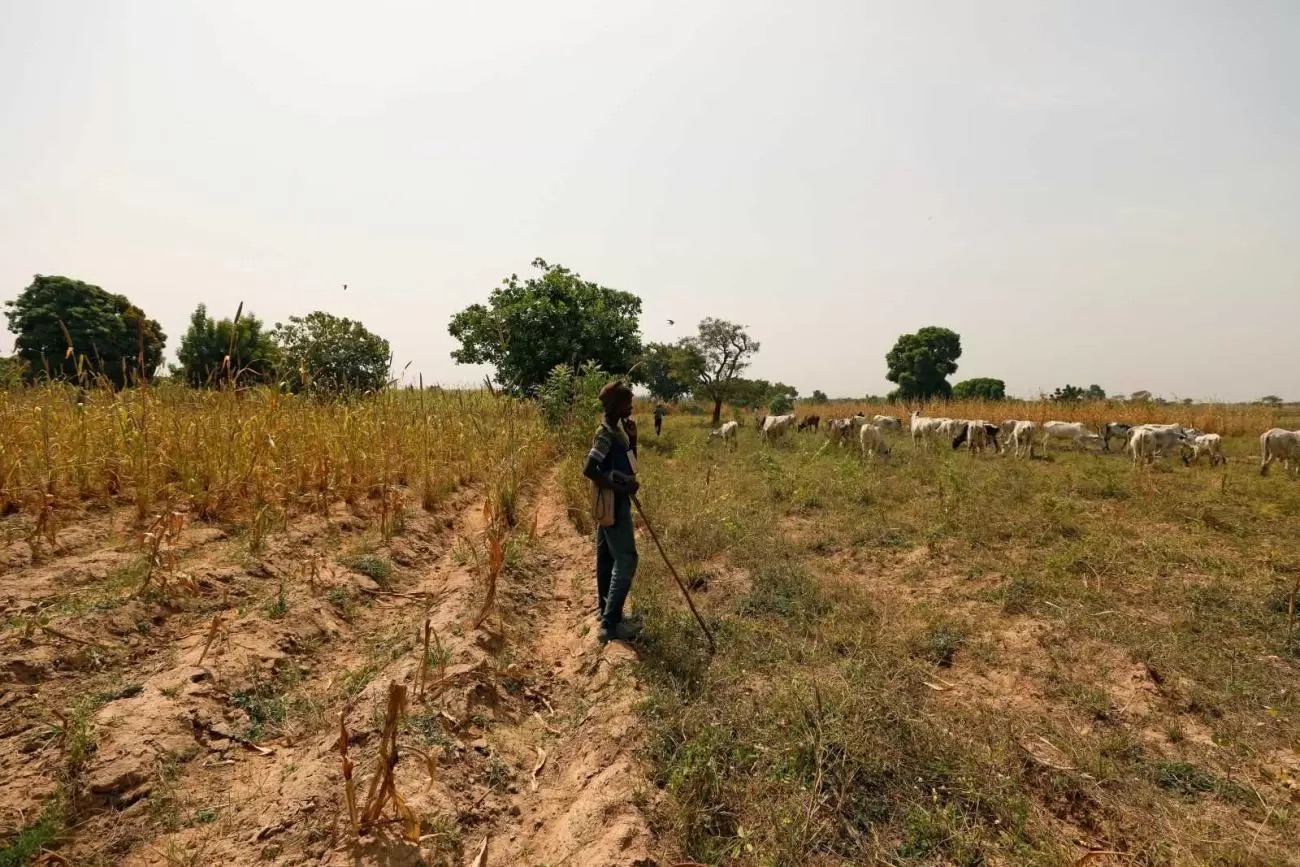
With worsening food insufficiency tormenting governments at national and subnational levels, a quiet but powerful constraint on agricultural productivity has been unravelled. It is illiteracy. Closely linked to that is ignorance.
According to analysts, illiteracy has led to poor farming habits like the indiscriminate application of fertiliser, maximised greenhouse gas emissions and lack of understanding of soil for cultivation.
In a broader context, experts say the inability to read, interpret instructions or apply basic calculations is limiting access to modern farming methods, improved inputs and timely decision-making.
As a result, yields remain suboptimal, post-harvest losses persist and efforts to boost food security face persistent setbacks despite ongoing agricultural interventions.
Also, the inadequate training of agricultural extension workers in soil advisory services poses a significant threat to food production, weakening the quality of guidance available to farmers and undermining efforts to improve yields and sustain soil health.
Worried by these challenges, the federal government sealed a deal with the Deutsche Gesellschaft für Internationale Zusammenarbeit (GIZ) and Gates Foundation, to restore degraded farmlands, improve fertilizer efficiency and climate smart resilience.
Also, the government announced plans to establish 774 soil laboratories across all local governments and train 10,000 youth as soil doctors who would then train 10,000 young extension agents in digital soil advisory services by 2027 for the restoration of degraded farmlands.
It explained that the initiative would be achieved through what it called Soil Health Scheme.
The Minister of State for Agriculture and Food Security, Aliyu Sabi Abdullahi, noted that the initiative would rehabilitate the country’s agricultural ecosystem, make soil health a viable business opportunity for young and female entrepreneurs in the sector.
Abdullahi pointed out that under the Nigerian Farmers’ Soil Health Scheme (NFSHS), which is developed with GIZ, ACReSAL World Bank, Soil Values, AGRA, Sasakawa Africa Association, and IITA Regional-Hub, every Local government area would have access to soil testing services.
The minister stressed that farmers will receive soil health cards with crop- and site-specific fertilizer recommendations to prevent indiscriminate applications, encourage precision agriculture, minimize greenhouse gas emissions, and endorse climate-smart practices, saying that farmers need to understand their soil before they can cultivate it.
He stated that the objective was in line with the presidential development agenda, which is to enhance productivity, nourish 220 million Nigerians, establish agriculture as a catalyst for employment and wealth, and transform Nigeria into a net food exporter.
According to him, the ministry’s partnership with GIZ had progressed from pilot projects to large-scale implementations which includes:
He recalled that the soil protection and rehabilitation for food security which began in Nigeria in 2015 with the rehabilitation of approximately 166,000 hectares of land resulted in an average yield increase of 40% for smallholder farmers.
He stated that the government had commenced training of more than 280,000 smallholder farmers in integrated soil fertility management in Benue, Ebonyi, Ogun, and other states.
In addition, he said the presidential fertilizer initiative is also revised to focus on soil-specific NPK blends tailored to agro-ecological zones, aimed at minimizing waste and lowering costs for smallholder farmers.
He assured farmers that the government would mainstream carbon farming incentives so farmers can earn from stewardship of their land.
“NiSIS will serve as the digital backbone for mapping soils in all 774 LGAs, providing farmers, researchers, and blenders with real-time information on soil properties, nutrient content, and management recommendations while the CoW unites government entities, the private sector, farmers, researchers, and blenders to exchange knowledge and resources aimed at enhancing soil health,” he added.
He commended GIZ for prioritising soil health within Nigeria’s agricultural transformation agenda.
To spread the initiative across the country, he charged state governments to domesticate the National Soil Policy, stressing, “No soil, no food. No food, no peace.”
To researchers, he urged the translation of science into simple tools that farmers can use immediately.
Moreso, he urged development partners to align investments around soil as a national asset and linking soil health to markets, finance, and youth enterprises.
Addressing farmers directly, he said, “The future of your land is in your hands. Adopt practices that build, not mine, the soil.”
“As the saying goes, ‘A nation that destroys its soil destroys itself.’ Nigeria will not be that nation.
“With commitment, science, and partnerships, we will restore our soils, deepen our impact, and secure food for generations”, he noted.
Earlier, the Permanent Secretary in the Ministry of Agriculture and Food Security, Marcus Olaniyi Ogunbiyi said the event marked another transition for the execution of the Nigeria Farmers Soil Health Scheme (NFSHS), saying “it is an effective and efficient management of Nigeria’s soils toward increased agricultural productivity for food security.”
Ogunbiyi pointed out that the future of food security in Nigeria depends significantly on how well citizens manage, restore, and preserve the health of the soils.
According to him, healthy soils are essential for increased agricultural productivity, improved crop nutrition, climate resilience, biodiversity conservation, and sustainable livelihoods for millions of Nigerian farmers.
He emphasised that Nigeria’s agricultural transformation agenda cannot be fully realised without deliberate investment in sustainable soil management
Project Manager, GP Soil Matters, Erkossa Teklu said that the Initiative would enhance soil health management and agricultural productivity in Nigeria through strong stakeholder coordination, Improved Soil Information Systems and Evidence-based decision-making.
He revealed that the target beneficiaries include; farmers, extension agents, policymakers, planners, researchers, academics and institutions as well as the private sector.















Leave a comment