



…MTN spends N887m on security in Q1, silent on fears of xenophobic reprisals
By Chinenye Anuforo
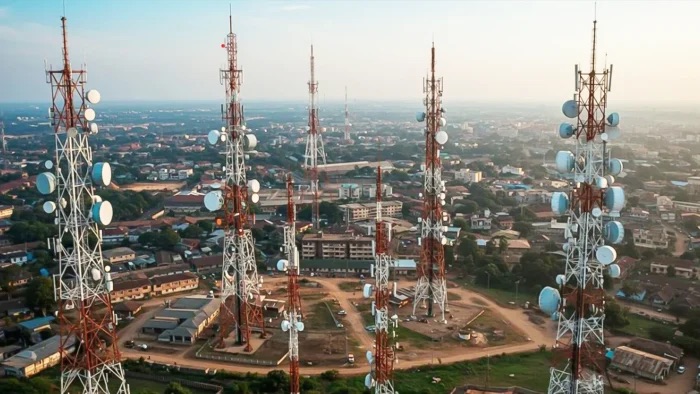
Worsening telecom services being experienced by subscribers across the country may not end soon as the operators are currently battling rising vandalism, diesel theft, fibre cuts and other challenges threatening Nigeria’s N3 trillion communication assets.
The development is swelling the cost of maintaining network services across the country.
As attacks on telecom sites intensify, MTN Nigeria revealed it spent N887 million on security in the first quarter of 2026 to protect critical installations, including base stations and fibre infrastructure. That is N266 million higher than N621 million that was sent on security within the same period last year.
Industry players warn that the persistent sabotage could further weaken service quality and delay network expansion if unchecked.
MTN, however, declined to speak on concerns surrounding possible xenophobic reprisals linked to rising tensions in some communities in its home country, South Africa, where African citizens were attacked and ordered them to leave the country.
Many feared that the manufactured chaos in South Africa could trigger reprisals in African countries, Nigeria inclusive, where the telecom giant has huge investments in.
MTN Nigeria alone reported network infrastructure valued at about N1.64 trillion in its Q1 2026 financial statement, while its total property, plant and equipment stood at N2.11 trillion.
The telecom giant also spent N428.05 billion on acquisition of property and equipment in the first quarter of 2026 alone as it intensified network expansion and upgrades nationwide.
Airtel Africa, another major player in the market, also disclosed capital expenditure of about $884 million for its 2026 financial year alongside aggressive expansion of sites and fibre infrastructure across its African operations.
The combined investments highlighted the growing scale of telecom infrastructure now exposed to attacks involving fibre optic cable cuts, diesel theft, stolen batteries, vandalised generators and damaged base stations.
According to the Association of Licensed Telecommunications Operators of Nigeria (ALTON), the industry recorded about 19,384 fibre cuts between January and August 2025, alongside 3,241 cases of equipment theft and more than 19,000 denial-of-access incidents affecting telecom infrastructure nationwide.
Industry stakeholders warned that the rising incidents are disrupting connectivity, inflating operating costs and threatening Nigeria’s digital economy ambitions at a time when demand for data and digital services continues to surge.
The Executive Vice Chairman of the Nigerian Communications Commission (NCC), Dr Aminu Maida, acknowledged that infrastructure vandalism has become one of the structural cost pressures confronting operators.
Speaking with journalists in Lagos recently, Maida said the regulator was addressing “structural cost drivers such as right-of-way charges and infrastructure vandalism to reduce operational expenses.”
He disclosed that operators are embarking on one of the largest infrastructure expansion drives in recent years. According to him, while the industry deployed just over 300 new or upgraded sites last year, operators have committed to about 12,000 site upgrades in 2026, with approximately 2,800 already completed.
The upgrades include deployment of new sites, expansion of existing capacity and migration from older 2G and 3G infrastructure to more advanced 4G and emerging 5G networks.
The Commission recently unveiled a Cyber Resilience Framework and said it was strengthening collaboration with telecom operators, financial institutions and national security agencies to protect critical digital infrastructure against both cyber and physical threats.
Industry operators have repeatedly argued that telecom assets should receive stronger protection as Critical National Infrastructure because attacks on telecom facilities now directly affect financial services, security communications and economic activities nationwide.
Airtel Nigeria also disclosed recently that the company recorded more than 50,000 major vandalism incidents over the past five years, highlighting the growing scale of infrastructure attacks confronting operators.
Experts said operators like MTN Nigeria may remain particularly sensitive to broader geopolitical tensions because of the company’s South African roots and the symbolic visibility of its infrastructure nationwide.
During previous xenophobic tensions involving Nigerians in South Africa, telecom assets linked to South African businesses faced threats and attacks in parts of Nigeria.
With telecom infrastructure investments now running into trillions of naira, analysts warned that any reprisal attacks targeting operators could have far-reaching implications for connectivity, financial services, investor confidence and Nigeria’s broader digital economy ambitions.
Despite the mounting challenges, the NCC insisted that reforms, infrastructure expansion and tighter regulatory oversight are gradually improving service quality.
Still, industry stakeholders maintained that protecting telecom infrastructure must become a national priority if Nigeria hopes to sustain its digital economy growth and achieve meaningful broadband penetration in the coming years.
Telecom infrastructure has become increasingly critical to the economy as banking transactions, fintech services, e-commerce, entertainment streaming, education and government services become more dependent on stable internet connectivity.
MTN Nigeria generated N826.07 billion from data revenue in the first quarter of 2026, up sharply from N528.98 billion in the corresponding period of 2025, highlighting the growing reliance of businesses and consumers on digital services.
MTN’s financial statement showed the operator spent N51.66 billion on network maintenance during the period.
Security-related costs are also rising.
The company also disclosed impairment linked partly to damaged network infrastructure, stating that some losses were driven by “obsolescence and damaged network infrastructure.”
ALTON Chairman, Gbenga Adebayo, warned that vandalism, diesel theft, stolen generators and battery theft are becoming major contributors to deteriorating quality of service across the sector.
Industry players said fibre cuts remain among the most disruptive incidents because they can cripple services across multiple locations simultaneously, affecting mobile connectivity, banking platforms, ATMs and enterprise operations.
Adebayo disclosed that operators record as many as 40 fibre cuts daily along the Lagos–Kano telecom corridor alone, worsening network congestion and service disruptions across the country.
“At the end of the day, we have one national network,” he said, explaining that a single fibre cut can affect multiple operators, banks, ATMs and enterprise services simultaneously because telecom infrastructure is heavily interconnected.
Diesel theft has also become a major concern because telecom operators rely heavily on generators to power thousands of base stations nationwide amid unstable electricity supply.
Maida acknowledged the challenge, noting that the high cost of powering telecom sites with diesel generators remains a major burden for operators.
He argued that Nigeria’s long-term connectivity future would depend heavily on fibre infrastructure and fixed broadband expansion rather than relying solely on mobile networks.
According to him, fibre-based broadband remains the most economically viable path to affordable and sustainable internet access, especially as demand for video streaming, cloud services and high-capacity applications continues to rise.
The Commission also noted that improving user experience remains difficult because rising data consumption often outpaces network upgrades. As operators improve capacity, Nigerians consume even more data, creating renewed pressure on already strained infrastructure.
Maida said the sector is only beginning to recover from years of underinvestment that contributed to current congestion and service quality concerns.
Analysts warned that vandalism and infrastructure theft could discourage further investment if operators continue to absorb mounting replacement and maintenance costs.
According to the ALTON chairman, vandalising telecom infrastructure should be treated with the same seriousness as attacks on oil pipelines because of its growing impact on Nigeria’s economy and digital ecosystem.
The telecom sector remains heavily dependent on imported equipment sourced largely from global manufacturers such as Ericsson and Nokia, making infrastructure losses even more expensive amid foreign exchange volatility.
The NCC disclosed that one major operator alone is investing over $1 billion this year, surpassing total industry spending recorded in the previous year.
Adebayo also disclosed that operators are increasingly unable to access some locations because of insecurity.
“We have territories that we cannot access because of issues of security,” he said.














Leave a comment