



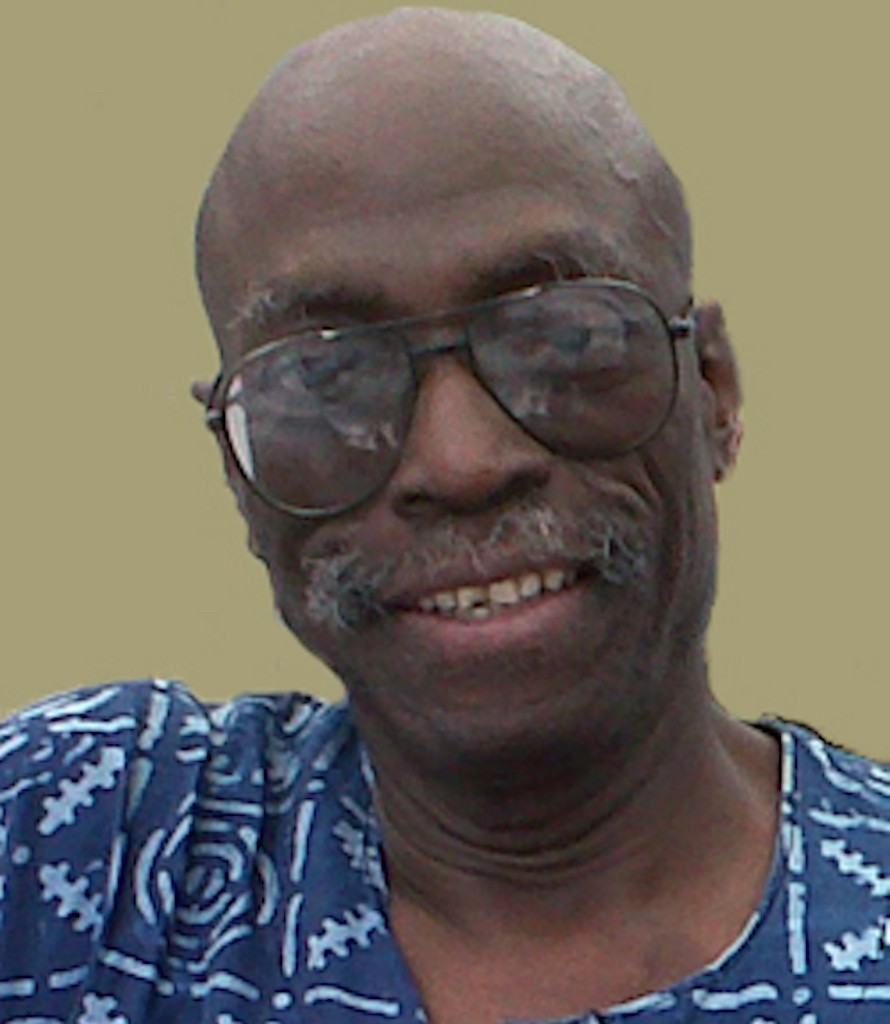
By Chima Anyadike
A few hours after news broke of the death of Professor Biodun Jeyifo on the morning of 11 February 2026, a friend who is a former vice‑chancellor of Federal University, Oye Ekiti, sent me “condolences on the passage of your friend,Teacher and Mentor.” Tributes, like the heartfelt one by Sola Adeyemi, began to appear in various media, on Jeyifo as a great scholar, public intellectual, social and literary critic, activist, and union leader. I decided that my tribute will take the form of a personal account of BJ, as he was fondly called, as my friend, teacher, and mentor.
BJ was not the usual lecturer, repeating the same notes year after year. He drew from his deep well of progressive knowledge and whetted the appetites of students ready and willing to be part of lively, down‑to‑earth discussions of literature and society. My first encounter with him was in his class on Politics and Ideology in African Literature. We had heard he was a Marxist, but I was pleasantly surprised that his lectures were free of the usual Marxist cant and overused catchphrases. It so happened that I performed very well in his classes and those of other great teachers, like the late Professor Oyin Ogunba, and topped my class upon graduation.
Prof. Ogunba invited me to join his Department of Literature in English, and Biodun Jeyifo took me on as his graduate student, supervising my master’s and doctoral theses. And so began BJ’s serious mentorship of my academic career. He secured my acceptance as a research scholar at the University of Wisconsin, Madison, where I completed my doctoral thesis. His supervision was painstaking: he insisted that a doctoral thesis on the African novel must involve the careful reading of every important African novel, and he demanded flawless language and rigorous argumentation.
When BJ was invited by WNBC/TV to interview Chinua Achebe in the early 80s, he took me along in his famous Volkswagen Beetle, he drove from Ife to Nsukka with the technical crew, and introduced me to Chinua Achebe. He didn’t trust commercial drivers, jokingly saying they put a heavy stone on the accelerator while managing the brake and clutch!
On our way back from that trip, he decided we should visit his friends, Eddie and Bene Madunagu, in Calabar. As we approached Umuahia, BJ complained of stiff legs and exhaustion. I suggested we drive to Queen Elizabeth Hospital, Umuahia, where my college mate Dr. Paschal Amanfo worked. Dr. Amanfo received us warmly, attended to BJ, and provided food and shelter for the night. BJ was back in his Beetle the very next morning.
On another occasion, his close childhood friend, like him a child of a policeman, and then a senior police officer himself at the time—provided us with a car, driver, and an escort to Calabar again to meet the Madunagus. On our way back, BJ suggested we pass through my home in Ekwulobia, Anambra State, where we spent a night. He bonded so well with my mother and my late older brother, whom he continued to make calls to and often send money gifts to them whenever I visited home, until they both passed on.
BJ was at Cornell University at that time (1993), and before returning home for holidays that year, he recommended me to the Africana Studies and Research Center (AFRC) of Cornell for a programme that invited six African scholars. In addition to the programme in Ithaca, it included a tour of three other universities. These were great opportunities for me to meet and forge many academic friendships, many of which proved rewarding and some of which remain strong to this day. BJ had a knack for creating intricate networks of his students over the years and across the world, and while he visited Ife, he often made my home a meeting point for academic acquaintances.
My later appointment as a visiting research scholar at Cornell’s Africana Studies Center (2004‑2006) was subsequently supported by him.
Cornell’s freshman orientation has long featured a world‑classic reading followed by a seminar with the author if he is alive. In 2005, while I was at Cornell, Professor Biodun Jeyifo steered that tradition toward Chinua Achebe’s Things Fall Apart. I was fortunate to sit in on Achebe’s discussion of his homeland and novel, hearing both his reflections and the audience’s probing questions. After the session, Professor Jeyifo gathered the Nigerian faculty for a brief, intimate meeting with Achebe.
This moment mattered on several levels. First, it placed a seminal African work at the heart of an American university’s core curriculum, signaling that African literature belongs on the global stage. Second, it gave students direct access to a literary giant, turning abstract text into a living conversation about colonialism, identity, and narrative power.
Finally, the post‑seminar gathering with Nigerian staff underscored BJ’s role as a cultural bridge—he not only introduced Achebe to Cornell, but also ensured that his compatriots could share in that dialogue, reinforcing a transnational network of scholars and writers.
The Cornell symposium, his steadfast columns in The Guardian and later The Nation, and the resonant lectures he delivered across continents all reveal a man firmly planted in his nation’s soil, yet whose ideas took flight and soared far beyond its borders.
In 2014, BJ was invited by China’s foremost university, Peking University (PKU), to introduce African studies to its Department of Asian Languages and Literature. He had them invite Professor Femi Osofisan and myself to participate in the programme. Between 2015 and 2016 my experience in China broadened my academic horizon, exposing me to new perspectives on African literature and its global relevance. It deepened my appreciation for cross‑cultural scholarship and broadened my experience in engaging with international audiences, providing me with a more versatile and global outlook as a scholar. It also enabled me to explore the vastness of China and its rich cultures alongside my wife, creating unforgettable memories that enriched both our lives and my worldview. During my time at PKU I built lasting connections with some of China’s leading scholars.
My wife, Dr. Bisi Anyadike (née Oriade), was also BJ’s undergraduate student and was touched by many of the same qualities that endeared him to me. This made his welcome to our home even more meaningful. He rarely came home on holidays each year without spending a few days with us, sharing his favourite meals. drinks—a good beer, Guinness Stout, or wine sipped during conversations that often drifted into the late hours of the night or early morning. We also made return visits to his Oke‑Bola home in Ibadan, where he once planned to establish a documentary film and research centre. The demands of his health, however, prevented him from spending long stretches of time at home for this.
Through our talks and what I observed, BJ was a deeply devoted family man. He wasn’t a doting figure, but he was powerfully present for family members who needed help or inspiration. I remember making trips with him to visit an aged uncle in Ilesa until that uncle died. He also tasked us with looking after his aged matrilineal aunt until she also passed away.
BJ was a friend who could be brutally honest with you and welcomed the same honesty in return. We often argued passionately on opposite sides. He would be infuriated with what he called my “Ying‑yang philosophy”—I always believed there were two or more sides. In some cases BJ didn’t want to see any other side. Yet we always found room for reconciliation, and conflict never took control.
On his 60th birthday, I was away at Cornell, so my wife organized a celebration in Ife for him. On that occasion, I wrote and published “Teaching as Activism: BJ at 60.” He commended me for my frankness but noticed the influence of my “Ying‑yang” on the essay.
Long before my own marriage and the birth of my own children my relationship with BJ had already included a friendship with his immediate family, Sheila, his wife, and his sons Okunola and Olalekan. While they lived in Ife in the 80s, I was a regular visitor to their home.
Years after my own marriage BJ grew to become my senior “brother,” and in my own home I promptly vacated my seat at the head of my dining table for him—a tradition my wife and later my daughters gladly respected for only him.
Whenever BJ and I settled into the low‑lit evenings at my home, the world outside seemed to fade and only two voices remained. We would pour a glass of Guinness or a chilled beer, and the clink of bottles became a quiet metronome for hours of talk that often drifted from literature to life’s hardest questions.
He would ask me, with that gentle, probing curiosity, “What does it mean to be a scholar in a country that both reveres and resists its intellectuals?” I would answer with stories of my own doubts and personal challenges. He listened, not to correct, but to echo my thoughts back to me, sharpened and reframed. He would say, “we are talking about the soul of a continent that is being forced to define itself through other people’s narratives”
We would also talk about his own battles: the health scares that shadowed his later years, the political fights that left him bruised but unbowed, his sisters in the U.K. and other family members he cared for, and how those small, personal responsibilities anchored him when public storms threatened to sweep him away. “Every fight,” he told me once, “is a conversation with yourself—about what you’re willing to lose and what you refuse to surrender.”
We talked about love, too—how his then wife, Sheila, and his sons had anchored his world and where he wished he had done some things differently, and how I and my wife, Bisi, had a steadfastness that he admired. He would chuckle, recalling my wife’s attempts to get him into a traditional Yoruba buba and agbada, and say, “She’s trying to dress me in culture, but I’m already wrapped in it, in every story I tell.”
Those conversations were never about reaching a conclusion; they were about sharing the weight of our questions and finding, in each other’s words, a kind of companionship that made the weight feel lighter. In those moments, BJ was more than a mentor—he was a confidant, a mirror, and a steady hand guiding me through the labyrinth of thought and feeling.
His passing leaves a quiet ache, a reminder that a powerfully guiding light has dimmed, a source of wisdom is now fixed in what has been written or said and now remembered. The same applies to a generosity that shaped so many lives and is now cast to memory. I will miss his steady presence, his spirit‑lifting laughter, especially when greatly amused, and the way he would easily turn a simple conversation into a lesson for a lifetime. But above all, I am happy and grateful that I met and knew BJ as my friend, teacher, and mentor, and most importantly, that the legacy he left behind as a great scholar, teacher, and public intellectual will endure the test of time.
*Prof Chima Anyadike is a distinguished scholar of African Literature












Leave a comment