



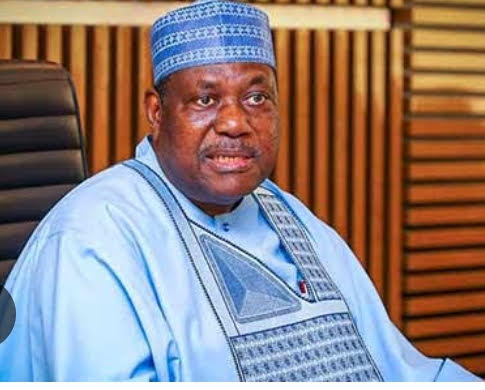
For a state long defined by its struggles with insecurity and political division, Benue is beginning to chart a different course. At the heart of this shift is a decisive reconciliation effort led by Secretary to the Government of the Federation, Senator George Akume, whose intervention has brought warring political factions to the same table. Beyond the politics, the move signals something deeper, a recognition that lasting development in Benue must be built first on peace, unity, and a shared sense of purpose. Chiemelie Ezeobi reports
Benue has long carried the weight of a state blessed with fertile land and industrious people, yet burdened by recurring security challenges and deep political fractures.
For years, communities have lived between hope and hesitation, as cycles of violence and political discord affected the pace of development and strained the social fabric of the society.
In such a climate, the promise of prosperity has often felt just out of reach. Roads can be built, investments can be attracted, and policies can be drafted, but without peace, progress struggles to take root. It is within this fragile context that a new chapter is beginning to unfold as one shaped not by confrontation, but by reconciliation.
A State Searching for Calm
Across Benue, from Makurdi to the rural farming communities that form the backbone of its economy, the impact of instability has been deeply felt. Farmers, who should be focused on cultivating crops, have at times been forced to abandon their lands.
Families have had to rebuild lives disrupted by conflict. And within the political space, divisions have often mirrored, and sometimes magnified, the tensions on the ground.
The internal crisis within the All Progressives Congress (APC) in the state only added another layer of uncertainty. What began as disagreements following the 2023 general elections gradually evolved into a full-blown factional struggle, splitting loyalties and weakening cohesion within the ruling party.
The situation deteriorated further in March 2026 when parallel congresses produced rival party executives, deepening divisions and raising concerns about the party’s future in the state.
For many observers, it was a dangerous trajectory, one that risked not only political instability but also the broader goal of restoring peace and economic confidence in Benue.
The Intervention that Changed the Tone
It was against this backdrop that the Secretary to the Government of the Federation and Leader of the North Central, Senator George Akume, stepped in.
In a move widely seen as both strategic and statesmanlike, Akume convened a widely representative stakeholders’ meeting aimed at ending the long-running crisis. But beyond the political calculations, his intervention carried something more fundamental, an understanding that unity at the top often shapes stability on the ground.
The high-level meeting, held on Sunday, brought together all warring factions and ultimately led to a reconciliation between Governor Alia and his political adversaries. Years of intra-party conflict within the APC in Benue were, at least for now, brought to a close.
Those familiar with the process describe Akume’s approach as measured and inclusive. Rather than impose a solution, he created a platform for dialogue, allowing grievances to be aired while steadily guiding stakeholders toward common ground.
His role as a long-standing figure in Benue politics and a respected voice across the Middle Belt proved crucial in building trust among the divided camps.
Peace as a Political and Economic Strategy
While the reconciliation has clear political implications, its significance goes beyond party unity. For Benue, peace is not just a political achievement; it is an economic necessity.
The state’s vast agricultural potential has often been cited as a key driver of growth, yet insecurity and instability have limited its full realisation. Investors are cautious where uncertainty persists, and communities cannot thrive where divisions dominate.
By restoring cohesion within the ruling party, Akume’s intervention is expected to create a more stable environment for governance. With fewer internal distractions, the government can refocus on policies that drive development, from improving rural infrastructure to supporting farmers and attracting investment.
As part of the reconciliation framework, Akume proposed the adoption of automatic tickets for elected officials, including Governor Alia and members of the National and State Assemblies.
The move is seen as both a peace incentive and a strategic effort to reduce internal competition, thereby stabilising the party structure and allowing leaders to concentrate on governance.
Party insiders suggest that the initiative is also aligned with broader efforts to strengthen the APC ahead of the 2027 general elections and support the re-election of President Bola Ahmed Tinubu.
However, within Benue, its immediate impact is likely to be felt in the form of reduced political tension and a renewed focus on delivering results.
The Human Side of Reconciliation
For ordinary residents, political agreements are often judged not by the statements issued in meeting rooms, but by the changes they bring to daily life
In communities that have experienced both insecurity and political neglect, the hope is that this newfound unity will translate into tangible improvements like safer environments, better access to farmlands, and a government that can act decisively without being held back by internal disputes.
There is also a psychological dimension to peace. When leaders set aside differences and work together, it sends a powerful signal to the wider society. It suggests that cooperation is possible, even after prolonged conflict, and that shared interests can outweigh personal ambitions.
Observers note that Akume’s “fatherly posture” throughout the reconciliation process marked by restraint, patience, and a willingness to listen, played a significant role in calming tensions. In a political landscape often characterised by rivalry, such an approach stood out.
A Fragile but Promising Path Forward
With the peace deal now in place, attention is turning to its durability. Political agreements can be fragile, particularly in environments where mistrust has taken root over time.
Maintaining unity will require continued dialogue, mutual respect, and a commitment from all parties to prioritise the collective good.
Yet there is cautious optimism as many
stakeholders view the reconciliation as a turning point and an opportunity to reset not just the APC in Benue, but the broader trajectory of the state. If sustained, the peace could create the conditions needed for long-term stability and growth.
For Senator George Akume, the development reinforces his standing as more than a federal appointee. It underscores his role as a stabilising force and elder statesman within the Middle Belt, someone capable of bridging divides and steering complex negotiations toward resolution.
For Benue, the implications are even more profound as after years of navigating uncertainty, the state is being offered a chance to rebuild on a foundation of unity.
The road ahead may still be challenging, but the message is clear: prosperity begins with peace, and peace, when carefully built and genuinely sustained, has the power to transform not just politics, but lives.













Leave a comment