



By Uche Usim
Nigeria’s economic landscape is in the midst of a major shift.
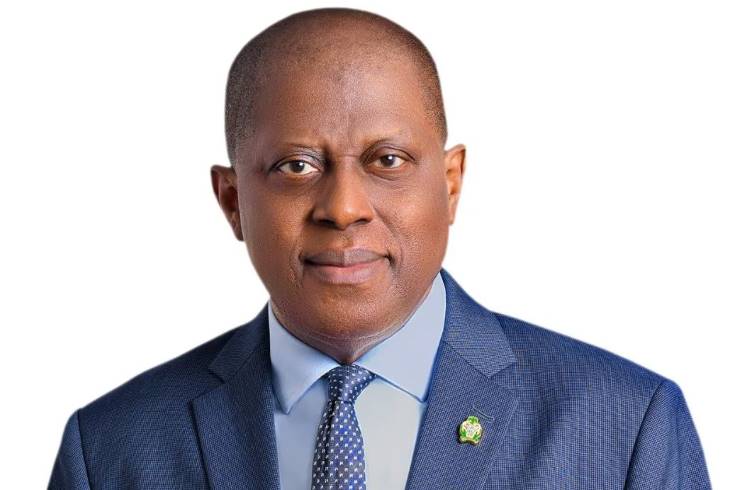
Key reforms spearheaded by the Central Bank of Nigeria Governor, Olayemi Cardoso, begin to take hold and gradually percolate into the economy.
What initially felt like a difficult recalibration is now evolving into a more durable and shock-resilient framework, gradually restoring confidence and strengthening the outlook for sustained growth.
Across boardrooms and policy circles, the consensus is that Nigeria is better positioned today than it has been in years.
A more transparent foreign exchange regime, improving reserves, stronger financial sector buffers and a gradual return of capital inflows are reshaping perceptions of Africa’s largest economy.
While challenges remain, the trajectory has shifted from fragility to cautious stability, and now towards sustainable expansion.
Cardoso does not mince words when telling the story of how his team steered the Nigerian financial sector from tempest to gradual stability.
He says his core goal is to build an economy that can absorb shocks without unraveling, while laying the groundwork for long-term growth.
Genesis of reforms as resetting levers
The turning point came with a series of bold, and at times controversial, policy decisions. The monetary and fiscal authorities moved in tandem to dismantle long-standing distortions that had weakened the economy’s foundations.
The liberalisation of the foreign exchange market marked a defining moment. For years, Nigeria operated multiple exchange rates, creating arbitrage opportunities, discouraging investment, and eroding confidence. Unifying the exchange rate not only improved transparency but also signaled a commitment to market-driven pricing.
Simultaneously, the halt of central bank financing of fiscal deficits addressed a key source of macroeconomic instability. The removal of fuel subsidies, long considered politically untouchable, freed up fiscal space, even as it triggered short-term inflationary pressures.
These reforms were complemented by improved revenue mobilisation, tighter monetary policy, and enhanced regulatory oversight. Together, they formed a coherent strategy aimed at restoring credibility and stabilising the macroeconomic environment.
The results, though gradual, are becoming increasingly evident.
Building buffers, restoring confidence
One of the most critical outcomes of the reform agenda has been the rebuilding of Nigeria’s economic buffers. External reserves have strengthened, providing a cushion against external shocks. The foreign exchange backlog, once a major deterrent to investors, has been largely cleared, unlocking confidence and improving liquidity in the market.
Equally important is the growing stability of the exchange rate. While volatility has not been entirely eliminated, the trend towards a more predictable and transparent FX market has reduced uncertainty for businesses and investors alike.
International institutions have taken note. The World Bank described Nigeria’s policy moves as bold interventions capable of improving long-term sustainability. Sovereign risk indicators have also improved, with spreads narrowing to levels last seen before the pandemic-induced economic strain.
For investors, these developments matter. Stability reduces risk; transparency builds trust. And trust, ultimately, drives capital.
Investors return, capital flows strengthen
The renewed confidence is translating into tangible outcomes. Nigeria’s return to the international capital markets late last year marked a symbolic and practical milestone. It signaled that global investors are once again willing to take positions in Nigerian assets.
Portfolio inflows are gradually picking up, while diaspora remittances, estimated at roughly $600 million monthly, continue to provide a steady stream of foreign exchange.
Cardoso highlighted the significance of these developments, noting that recent gains in inflation moderation, FX stability, and reserve accumulation have strengthened investor sentiment.
He said Nigeria’s experience suggests that spillover effects from global shocks have been relatively contained, reflecting the positive impact of ongoing reforms.
The message is clear: the groundwork laid by policy adjustments is beginning to pay off.
Banking sector stronger, safer, more resilient
A critical pillar of the reform agenda has been the strengthening of the banking sector. Recognising that a stable financial system is essential for economic growth, the CBN introduced new minimum capital requirements aimed at enhancing banks’ resilience.
The response from the industry has been encouraging. Many banks have already raised fresh capital through rights issues and public offerings, well ahead of the 2026 deadline.
Cardoso expressed confidence in the sector’s health: “The non-performing loan ratio remains within the prudential benchmark of five per cent, showcasing strong credit risk management.
The banking sector liquidity ratio comfortably exceeds the regulatory floor of 30 per cent, a level which ensures banks are maintaining adequate cash flow to meet the needs of customers and their operations. The recent stress test conducted also reaffirmed the continued strength of our banking system.”
These indicators point to a system that is not only stable but also capable of supporting economic expansion. Access to credit, particularly for micro, small and medium enterprises (MSMEs), is expected to improve as banks strengthen their balance sheets.
Cardoso added: “I am pleased to note that a significant number of banks have raised the required capital through rights issues and public offerings well ahead of the 2026 deadline. I believe that the banking sector is in a strong position to support Nigeria’s economic recovery by enabling access to credit for MSMEs and supporting investment in critical sectors of our economy.”
In essence, the financial system is being repositioned as an engine of growth rather than a source of vulnerability.
Inflation, policy shift and the road to stability
Taming inflation remains one of the most pressing challenges. The initial phase of reforms, particularly subsidy removal and exchange rate adjustments, triggered price spikes that strained households and businesses.
However, recent data suggests that inflationary pressures may be easing. This has allowed the Monetary Policy Committee to begin cautiously adjusting its stance.
Cardoso explained the rationale: “The committee’s decision to lower the monetary policy rate was predicated on the sustained disinflation recorded in the past five months, projections of declining inflation for the rest of 2025 and the need to support economic recovery efforts.”
This shift from aggressive tightening to measured easing reflects growing confidence in the stability of the macroeconomic environment.
At the same time, the CBN is laying the groundwork for a transition to an inflation-targeting framework, a move that would align Nigeria with global best practices and enhance policy credibility.
Cardoso emphasised the importance of coordination: “Managing disinflation amidst persistent shocks requires not only robust policies but also coordination between fiscal and monetary authorities to anchor expectations and maintain investor confidence. Our focus must remain on price stability, the planned transition to an inflation-targeting framework, and strategies to restore purchasing power and ease economic hardship.”
The balancing act is delicate: support growth without reigniting inflation, and stabilise prices without choking economic activity.
Stronger growth on the horizon
The outlook for Nigeria’s economy is increasingly positive. Both domestic and international forecasts point to a steady acceleration in growth over the next few years.
The World Bank projects that Nigeria’s economy will expand by 4.4 per cent in 2026 and 2027, the fastest pace in over a decade. This growth is expected to be driven by a combination of factors, including a rebound in agriculture, continued expansion in services, and modest gains in the non-oil industrial sector.
In its assessment, the bank noted: “Economic reforms, including in the tax system, along with continued prudent monetary policy, are expected to continue supporting activity. They are also expected to improve investor sentiment and reduce inflation further.”
The CBN’s own projections are similarly optimistic, forecasting growth of approximately 4.49 per cent in 2026.
These projections are not merely statistical targets, they reflect a broader shift in economic dynamics. Growth is becoming more diversified, less dependent on oil, and increasingly driven by domestic demand and structural improvements.
Global risks, local resilience
Despite the positive outlook, risks remain. The global environment is fraught with uncertainty, from geopolitical tensions to tightening financial conditions.
The ongoing Middle East crisis, in particular, has disrupted oil and gas markets, adding volatility to global energy prices. Yet, Nigeria appears relatively insulated compared to many economies.
According to insights linked to the International Monetary Fund, oil-exporting countries like Nigeria may face fewer immediate risks, especially if production remains stable.
IMF Managing Director Kristalina Georgieva highlighted the uneven impact of the crisis: “The conflict has caused considerable hardship around the globe. My heart goes out to all people affected by this war and all wars. Our focus remains on how best to weather this latest shock and ease the pain on economies and people.”
She noted that the severity of the impact depends on factors such as whether a country is an oil importer or exporter, and the strength of its policy framework. For Nigeria, the reforms implemented over the past two years are proving to be a critical line of defence.
Sub-Saharan Africa’s mixed outlook
Nigeria’s improving outlook contrasts with broader trends in Sub-Saharan Africa, where growth is expected to remain steady but faces mounting risks.
The World Bank estimates regional growth at 4.1 per cent, but warns of downside pressures from rising fuel and food prices, high debt levels, and structural constraints.
These challenges underscore the importance of sustained reform efforts. Countries that fail to maintain macroeconomic stability risk falling behind in an increasingly competitive global environment.
According to experts, the CBN reforms must be sustained to get the long term benefits.
According to them, while the stabilisation phase is a significant achievement, it is only the first step. The next phase of Nigeria’s economic journey will require translating macroeconomic gains into tangible improvements in living standards.
This means tackling structural bottlenecks, power supply, infrastructure deficits, and productivity constraints, that continue to limit growth potential.
It also means ensuring that the benefits of reform are broadly shared. Rising GDP figures must translate into jobs, higher incomes, and improved welfare for citizens.
The emergence of a domestic private refinery, for instance, offers an opportunity to move up the value chain, reduce import dependence, and create jobs. Similarly, improved access to credit can unlock the potential of small businesses, which remain the backbone of the economy.
Delicate but promising transition
For many, Nigeria’s economic transformation is still a work in progress. The gains achieved so far are real but fragile, requiring careful management and sustained policy discipline.
Yet, the direction is unmistakable. The reforms initiated by the Central Bank and the wider economic team have begun to reshape the country’s economic landscape.
From a system burdened by distortions and vulnerabilities, Nigeria is gradually evolving into a more transparent, resilient and investor-friendly economy.
Cardoso summed up the central bank’s commitment: “As we shift from unorthodox to orthodox monetary policy, the CBN remains committed to restoring confidence, strengthening policy credibility, and staying focused on its core mandate of price stability.”
It is a long road, but one that now appears more navigable.
In an era defined by uncertainty, resilience has become the ultimate currency of economic success. For Nigeria, building that resilience has required difficult choices and bold reforms.
The early results are encouraging: stronger buffers, improving investor confidence, a more stable financial system, and a clearer path to growth.
Challenges persist, and the global environment remains unpredictable. But the foundations being laid today could determine Nigeria’s economic trajectory for years to come.
If sustained, the current reform momentum may well mark a turning point, one where Africa’s largest economy not only weathers shocks but emerges stronger from them.










Leave a comment