



• External reserves rise to $38.63bn ν FG’s borrowing spree after subsidy removal troubling –Experts
From Chinwendu Obienyi and Adanna Nnamani, Abuja
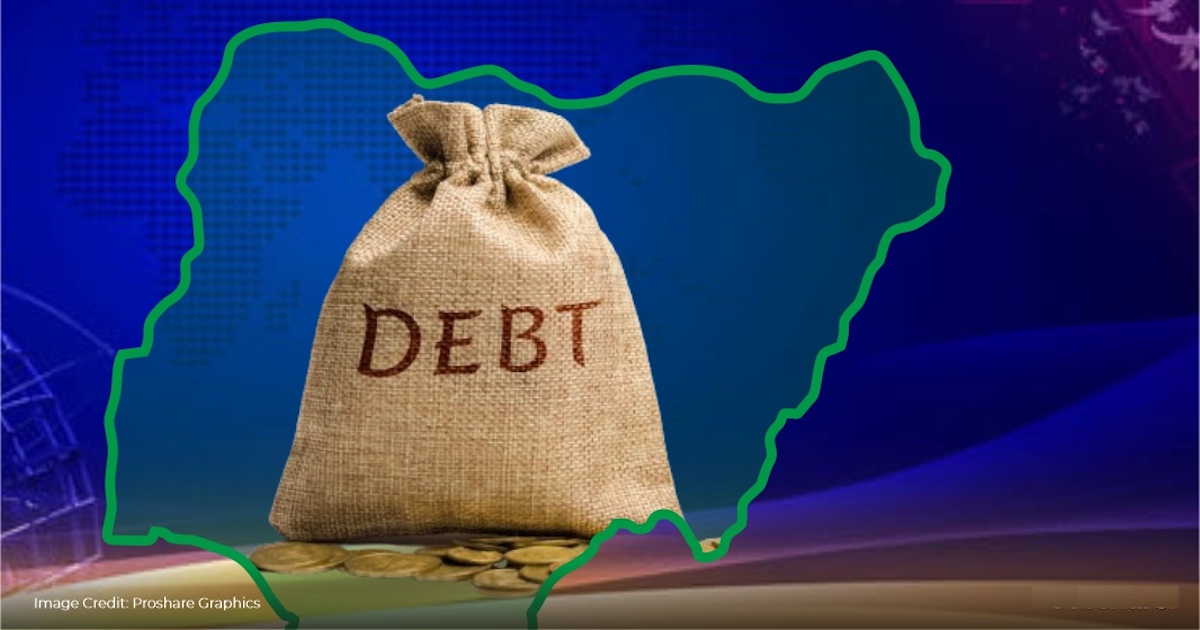
With Nigeria’s total debt stock inching towards $121.8 billion (about N186.41 trillion using weekend’s N1,534.72 official exchange rate), experts say the time to end the borrowing binge and ramp up local revenue generation is now.
Already, alarm bells are tolling, especially as the National Assembly approved $24.8 billion in fresh loans last week.
The issue has brought Nigeria’s fiscal stability under renewed scrutiny with many economists saying the $121.8 billion debt stock now is becoming unsustainable, especially when exports are not at the desired thresholds.
Again, they want the government to curb fiscal recklessness and wean themselves off the borrowing binge as more funds ought to be available to work with having junked fuel subsidies.
Analysts warned that debt service is already crowding out spending on education, health and infrastructure as Nigeria spends over 90 per cent of its revenue on debt servicing, thereby leaving little room for capital expenditure or investment in public welfare.
Both chambers of the National Assembly cleared President Bola Tinubu’s comprehensive borrowing plan for the 2025–2026 fiscal period.
The Senate approved an external loan package totaling $21.5 billion, €2.2 billion and ¥15 billion (approximately $94 million), alongside a €65 million grant. The borrowing is earmarked for critical infrastructure, health, agriculture, education and power sector projects.
In addition to foreign loans, the upper chamber endorsed a N757.98 billion domestic bond issuance aimed at settling long-overdue pension liabilities under the Contributory Pension Scheme (CPS), some dating back to December 2023.
The move, senators said, is expected to provide long-awaited relief to thousands of retirees affected by persistent payment delays. The House of Representatives on its part also approved a separate $347 million loan sought by the President to cover a funding shortfall in the much-debated Lagos-Calabar Coastal Highway. The total financing requirement for the project rose from $700 million to $747 million, due to additional financial commitments needed to secure full funding from credit agencies and investors.
With these new tranches added to Nigeria’s already hefty N149.39 trillion debt (approximately $97 billion as of Q1 2025), the country’s debt profile is now projected to hover around $121.8 billion, raising alarms about the sustainability of the federal government’s borrowing binge.
Similarly, debt service costs alone are projected to gulp about N10 trillion in 2025.
While the Tinubu administration maintains that the loans are critical to bridging Nigeria’s infrastructure gap and stabilising social security systems, economic experts are raising the red flag.
Many are warning that unless the government accelerates efforts to grow domestic revenue and reduce fiscal leakages, the country risks entering a debt trap where new borrowings are used primarily to service existing obligations.
An economic and development expert, Dr Aliyu Ilias, expressed disappointment that despite the removal of fuel subsidies, which should have freed up funds for the government, borrowing has only increased under the Tinubu administration.
The economist, therefore, called on the National Assembly to enact legislation that restricts the use of borrowed funds strictly to capital expenditure.
Also speaking, a renowned economist and former Director of the Central Bank of Nigeria (CBN), Prof Akpan Ekpo, stated that while the debt-to-GDP ratio may appear manageable, the debt-to-revenue ratio is more critical and dangerous.
Ekpo warned that the country risks falling into another debt crisis similar to the pre-2005 scenario that led to the Paris Club debt relief unless new loans are strictly tied to growth-enhancing projects.
He advised the government to borrow more from concessional lenders like the African Development Bank (ADB), instead of expensive commercial creditors with high interest rates and short tenors.
In his submission, For Adeola Adenikinju, Professor of Energy Economics and the Director of the Centre for Petroleum, Energy Economics and Law (CPEEL), University of Ibadan, with the size of Nigeria’s economy the fear of the debt profile rising is no longer a serious issue as at now.
“It is not a serious issue relative to the size of the economy because you have to make sure that the size of the economy works.
“Two, you can also measure it with the size of our GDP. So, If you are looking at it relative to the size of the GDP, with the rebased GDP, then we don’t really have much to worry because with the increase in debt, the $21 billion over three years, it will make our debt to GDP ratio likely to be between the 50 per cent acceptable range.
“If you look at it from the size of the debt repayment to revenue ratios then there is an issue. The more of your revenue that goes into debt repayment then the less money you have to do developmental projects and other projects in the economy and that is going to affect the capacity of the government to fund social services like education, health and also meaningfully be involved in capital projects that can drive development”.
In his intervention, the Chief Executive Officer, Financial Derivatives Company, Bismarck Rewane, during a programme monitored by Daily Sun, noted that despite Nigeria’s economy being resilient, its current debt trajectory is not sustainable.
Rewane said, “The current debt trajectory is not sustainable. If we do not see a commensurate increase in revenue, productivity, and exports, Nigeria could face a severe refinancing crisis by 2026.”
Data from the World Bank supports this outlook. While Nigeria’s debt-to-GDP ratio remains moderate by international standards, its debt service-to-revenue ratio is among the highest in Sub-Saharan Africa. It exceeded 73 per cent in 2024 and is expected to cross 80 per cent in 2025, meaning that a significant portion of government revenue goes to debt repayment leaving little for capital projects or social investments.
Analysts say the root of the crisis is not just excessive borrowing, but the federal government’s chronically low revenue base. Despite multiple reform efforts, including tax reforms and subsidy removals, government earnings remain far below potential.
“Borrowing is not a crime,” said a fiscal policy analyst at KPMG Nigeria. “The real issue is how much we are earning, and whether we are using borrowed funds productively. If we are borrowing to pay pensions or service recurring costs, that is a warning sign.”
Also expressing his concerns, the Chief Executive Officer, Centre for the Promotion of Private Enterprise (CPPE), Dr Muda Yusuf, said, “The fiscal numbers from the latest CBN report are disappointing, especially from the oil sector. Our debt-service-to-revenue ratio is nearing 80 per cent, that is a major red flag,” he said.
With the government’s 2025 budget still under consideration by the National Assembly, he anticipates a significant deficit that will be largely financed by both foreign and domestic loans. He argued that unless Nigeria aggressively expands its non-oil revenue base through improved tax compliance, diversification, and digital economy levies, the reliance on debt will only deepen.
The thing is this. We must be more realistic with budgeting, as the gap between projections and actual delivery continues to widen. The economy is not inclusive enough. SMEs are bleeding profusely under the weight of 30 per cent interest rates, inflation, and energy costs,” he said, warning that continued reliance on expensive credit is “suicidal” for businesses.
Beyond sustainability concerns, there are mounting calls for greater transparency and oversight in how borrowed funds are deployed. BudgIT, a leading civic tech organisation tracking public finance, has criticised the lack of clear frameworks for measuring the impact of loans.
Co-founder, BudgIT, Oluseun Onigbinde, said, “We understand the need to borrow for development. But there must be transparency. What are the milestones? What are the project outcomes? Without this, we are simply piling debt with little to show for it.”
The Tinubu administration has embarked on ambitious reforms from fuel subsidy removals to unifying exchange rates and revamping the tax system. Yet, with inflation still declining albeit in a gradual state, currency volatility ongoing, and oil revenues fluctuating, analysts believe 2025 could be a defining year for Nigeria’s economic credibility.
“The next 6 months will test our resolve.
“If we don’t fix the revenue side and enforce spending discipline, our ability to borrow in the future could be seriously compromised”, Rewane warned.
The Vice-Chairman, Board, Highcap Securities Limited, David Adonri, feels there are no reasons to fear fiscal hiccups yet.
According to him, the loans are intended to finance a medium-term prospective plan.
“The underlying assumption is that the economy is on a growth trajectory, targeting a GDP of $1 trillion by 2030.
“In that context, the quantum of borrowing appears modest relative to the expected scale of economic expansion. One could argue, therefore, that there is no immediate cause for concern, especially if the economy continues to grow as projected. A growing economy typically has a stronger capacity to absorb and service debt.
“However, it is important to note that the projected expansion is just a projection. There is inherent risk in tying debt sustainability to targets that may or may not materialise. That is the crux of the risk which is the gap between projections and actual performance.
“That said, the country has, so far, maintained its debt servicing obligations, which suggests that the financial framework remains intact. Should the economy fully recover, the size of this borrowing would be negligible in relation to GDP. When considered against government revenue, however, it becomes a more sensitive metric as revenue must be sufficient to meet repayment obligations”, he said.
Meanwhile, the naira extended its modest gains against the United States dollar in the official foreign exchange market last Friday, buoyed by a slight uptick in Nigeria’s external reserves, which rose to $38.63 billion as of Thursday, July 24, 2025.
Latest figures from the Central Bank of Nigeria (CBN) showed the official exchange rate closed at ₦1,534.72 per dollar on Friday, a marginal improvement from ₦1,534.79 recorded the previous day, representing a day-on-day appreciation of ₦0.07.
In contrast, the naira slipped slightly at the parallel market, weakening by ₦3 to close at ₦1,537 per dollar, compared to ₦1,535 on Thursday.
The slight recovery in the official market came as Nigeria’s external reserves edged up by $260 million within two days, climbing from $38.37 billion on Tuesday, July 22, to $38.63 billion on Thursday, July 24, 2025.











Leave a comment