



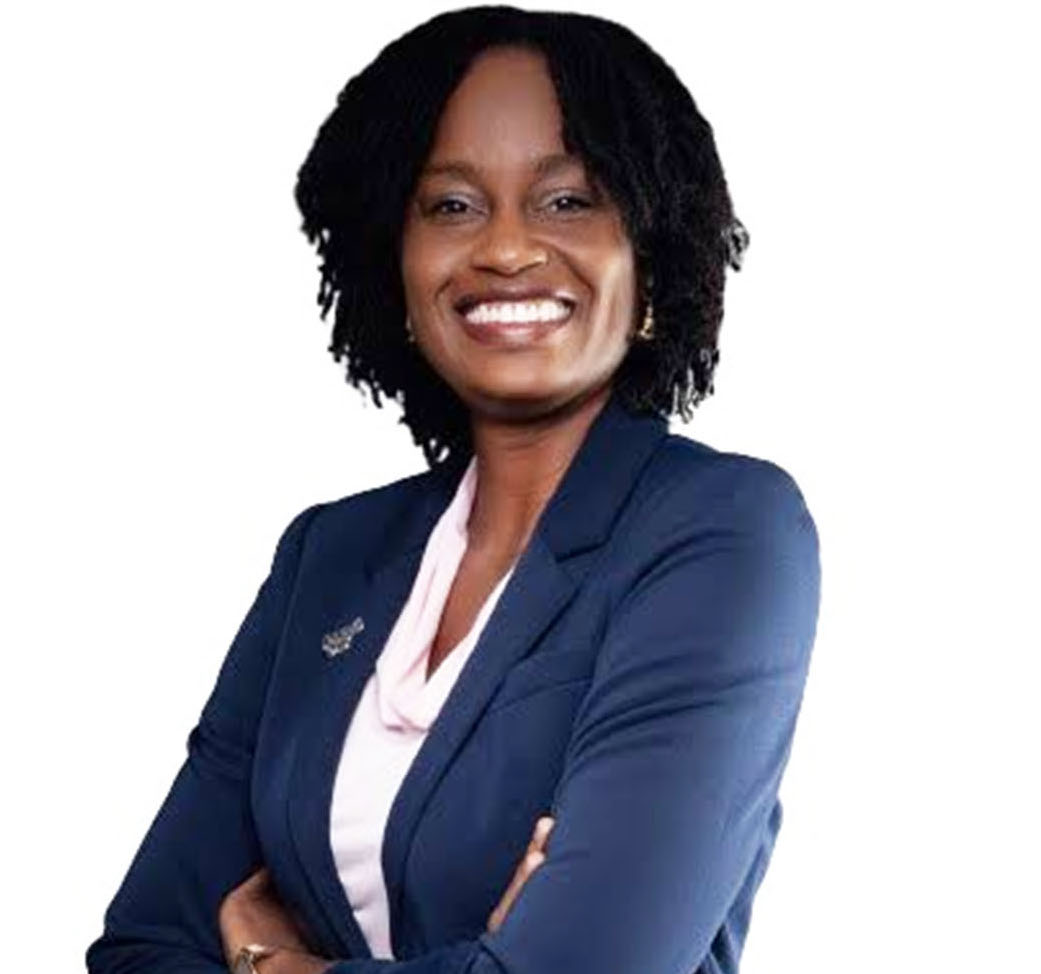
In commemoration of International Women’s Day (IWD) 2026, corporate lawyer and sustainability advocate Onyinye Ojukwu speaks on the role of women in nation-building and the challenges women face in the corporate world, while calling for gender equality. Kingsley Aliamaka presents the excerpts:
What does International Women’s Day mean to you as a woman working in the corporate world?
International Women’s Day reminds me that I represent my gender in the corporate world. It also reminds me that I stand on the shoulders of the brilliant women who paved the way for people like me. I am also conscious that there is a long line of women coming behind me whose representation this generation will shape.
For this reason, it is important that in my leadership and engagement, I act in ways that make both my younger self and the women who will follow me proud. Some of the challenges I navigate today should not be the same challenges they have to face.
Progress is real and worth celebrating. In the Nigerian banking sector, the number of female CEOs has increased from 2 in some years ago to 11 in 2026, a testament to what is possible when barriers are deliberately dismantled. And yet, while it has become increasingly common to see women in leadership positions, it must become even more common to see women at the apex of large organisations. There is still much to do.
This is why organisations must move beyond aspiration to tangible change. The World Economic Forum estimates that at the current pace, it could take about 131 years to reach full gender parity globally. That is not a timeline we should accept. We must therefore ask ourselves one honest question: what will we do differently?
Based on your experience in corporate governance, what should organisations do to boost gender equity?
Organisations must first be honest about the factors affecting women’s progress. This includes clear performance metrics and policies that support growth without penalising women for realities such as childbirth, caregiving, and the invisible domestic labour that still falls largely on them.
Beyond policies, organizations must also be willing to give power. It is not enough to create opportunities for women; they must also provide access. Opportunity says the door is open. Access means giving the key, the map, and support to walk through it.
Research shows that closing the gender gap in economic participation could add $12 trillion to global GDP. This means organizations that embed gender equity into their ESG frameworks are also making a smart strategic decision. In that sense, Give to Gain becomes not just a slogan, but good governance.
Given your position at Tenece Holdings Limited, how will you advise organisations on supporting women for senior leadership positions?
Senior male executives should deliberately sponsor promising and high-performing women. Making this formal helps ensure it happens consistently and gives women the visibility and access they need at the levels where advancement decisions are made. It should also be part of how senior leaders are evaluated, because what gets measured gets done.
From a governance perspective, boards should reflect the diversity they expect from their organizations. A board without diverse perspectives is limited in its ability to assess equity outcomes. Research by McKinsey shows that companies in the top quartile for gender diversity on executive teams are 25% more likely to outperform on profitability. Diversity, therefore, is not just a preference; it is good governance.
Will you consider yourself one of the few women who have the opportunity to thrive in a versatile, dynamic space like yours, or do you consider it common?
It is still not very common to see many women in senior corporate positions, and I would certainly like to see more. But I also believe this: it is one thing to be given opportunities and another to recognize and take them when they come. Both matters.
I know my own journey has been shaped by hard work, deliberate choices, and access that not every woman has. I had mentors, and the Tennessee work environment, while challenging, allowed me to grow into increasingly complex roles. I also chose to invest in my own development, including pursuing an MBA in Sustainable Innovation, because I believe the future of business requires leaders who think beyond profit alone.
That said, I resist the narrative that presents women in leadership as anomalies. We are not anomalies. We are examples of what becomes possible when systems allow it. Formalising advocacy for high-performing women will help ensure more women are positioned to take and sustain these opportunities.
Do you believe Nigerian companies have sufficiently invested in mentoring and sponsoring women, or is there still a gap between policy and practice?
The results already tell the story. There is still more work to be done, especially regarding sponsorship.
Sponsorship is often more powerful than mentorship because it provides access, which many women need to reach senior roles. Research by Herminia Ibarra at INSEAD shows that women are often over-mentored but under-sponsored. A mentor advises, but a sponsor actively advocates and uses their influence to open doors. That kind of support is still not happening consistently across many Nigerian organisations.
Many companies have gender policies or women’s networks on paper. While those are important, policies without accountability rarely produce real outcomes. Very few organizations report openly on gender pay equity or promotion rates. The gap between policy and practice is real, and closing it will require clear commitments backed by senior leadership.
In a highly structured organisation like yours, legal and governance roles require rigour and resilience. What would you personally say you have sacrificed to gain influence at the executive level?
Often, what is lacking is time for personal life: family, friendships, or hobbies. It is important to say, honestly, rather than dressing it up, that we are all still learning to navigate this better and create boundaries that allow us to give attention to the different areas of our lives. That balance requires deliberate effort.
I also think the question of what women have sacrificed should be seen as a diagnosis rather than a badge. Women in leadership are often asked what they have given up, while men are rarely asked the same question. That in itself says something about the system. The trade-offs are real, but they also reflect structures that were not designed with women in mind. Naming the sacrifice matters, but it is just as important to ensure that the next generation of women does not have to make the same trade-offs to reach the same rooms.
The current workplace dynamics reward visibility and assertiveness. How would you advise organisations not to overlook capable women who may lead differently but also deliver exceptional value?
Senior executives first need to understand that while women may lead differently, they still deliver exceptional value, often on the very metrics organizations claim to care about. Research by Zenger Folkman shows that women score higher on most leadership effectiveness measures, yet they are promoted less often. This is not a capability gap; it is an evaluation gap.
That understanding must translate into what organisations actually measure. Leadership outcomes should be clearly defined and tracked so that women have a fair chance in performance evaluations. Relying on goodwill alone will not drive real change.
Organizations should also create multiple pathways to visibility, through project leadership, cross-functional exposure, mentorship circles, and recognition of behind-the-scenes contributions. Influence should not depend solely on personality type. Many women who lead differently build strong, lasting organisational cultures. When organisations overlook that value, they are not just missing a diversity goal; they are also missing a competitive advantage.
Do you consider flexible work structures, equal pay, transparency, sponsorship, and board access to be sufficient compensation for innovation, performance, loyalty, and sacrifice?
It is a good and necessary starting point. However, organizations must ensure that these initiatives go beyond ticking boxes. They have to be practiced consistently, and the outcomes measured.
Flexible work, equal pay, transparency, sponsorship, and board access are not rewards for exceptional women. They are simply the baseline for a fair workplace. When we frame them as special benefits, it suggests women should be grateful for what should already be standard.
What organizations really need to give is belonging, i.e., the experience of being genuinely valued at every level, not just accommodated.
What practical support systems should Nigerian employers put in place to ensure the retention and advancement of top female talent without them feeling they sacrificed so much to break the ceiling?
Organisations need to implement policies that directly address issues affecting women. Things like formal sponsorship by senior male executives, real support for caregiving responsibilities, and flexible work structures where possible. These are not unusual ideas; they are practical, evidence-based interventions. A 2025 McKinsey report on Women in the Workplace in India, Nigeria, and Kenya found that companies with deliberate policies such as flexible work, mentorship, and sponsorship programs tend to see more women advance across their organisations.
Beyond policies, employers must also make promotion criteria clear and transparent to prevent informal networks from driving advancement. Regular salary equity audits, with results shared internally, can also create the accountability needed to change institutional behaviour.
From an ESG perspective, gender equity is increasingly becoming a material metric. Companies that take this seriously will not only retain talent but also attract investment. In this case, the equity and business cases clearly align.
There is often resistance to conversations around equity framed as ‘special treatment’. How would you respond to critics who fail to see the need for inclusion?
Critics sometimes view equity initiatives as “special treatment,” but this perspective often overlooks the historical context in which leadership systems developed. In many organisations, senior leadership pipelines were built when men dominated the workforce and decision-making roles. As a result, informal networks, after-hours relationships, and proximity to influential leaders often gave men more advantage in ways that were rarely visible or formally acknowledged.
Equity initiatives do not aim to grant one group privilege over another; rather, they seek to address structural imbalances that have accumulated over time. When organisations introduce formal sponsorship programs, transparent talent measurement, structured coaching, and deliberate access to high-visibility assignments, they are not granting women unfair advantages. Instead, they are replacing informal systems in which access depended on personal networks with transparent processes that allow all high-potential employees to compete on merit.
It is also important to distinguish between equality and equity. Equality means giving everyone the same resources, while equity recognises that people may need different forms of support to reach the same starting point. In practice, this might involve intentional efforts to ensure underrepresented groups have access to mentorship, leadership exposure, and development opportunities that others may have historically received informally.
Experience shows that these efforts benefit organisations, not just individuals. For example, at Tenece, through our technology training initiative, Genesys Tech Hub, we initially observed that the vast majority of applicants were male. By redesigning the program to be more inclusive and intentionally encouraging female participation, we increased female enrolment from about 5 per cent to nearly 40 per cent. Importantly, the women who joined the program performed exceptionally well, demonstrating that the issue was never capability—it was access and visibility.
Ultimately, inclusion is not about lowering standards or granting advantages. It is about ensuring that talent, wherever it exists, has a fair opportunity to emerge and contribute. Organisations that recognise this are not only addressing fairness but also strengthening their leadership pipeline and improving long-term performance.
What systematic barrier do you think must be dismantled in corporate organisations to ensure women do not have to work twice as hard for the same recognition as their male counterparts?
Proximity to senior executives, social familiarity, and after-hours networking often shape who gets high-visibility work. Because women are more likely to shoulder primary caregiving responsibilities, they are often excluded from these spaces, reducing their visibility and limiting access to sponsors who influence advancement.
One of the biggest barriers in corporate Nigeria is the informal way power operates. Policies can change, but careers are often shaped by conversations and relationships built outside formal meetings, and these spaces remain less accessible to many women.
To address this, organisations need to formalise the current informal processes through structured networking, transparent succession criteria, fair distribution of cross-departmental projects, and clear accountability for who is being championed. The African Development Bank estimates that closing the gender gap in labour market participation in Sub-Saharan Africa could significantly boost regional GDP. The economic case is clear; what is needed now is the institutional will to act.
How will you advise women in leadership roles to actively support the next generation?
Women in leadership should ensure that sponsorship is formalized within their organisations and advocate for it where it does not yet exist. Beyond institutional change, they should also personally sponsor younger women by putting their names behind them, opening doors, and making their work visible to decision-makers.
It is also important to teach the next generation how to build strategic alliances, understand how decisions are made, and set clear boundaries. Share not just your achievements but also your mistakes and what you learned from them. That honesty often builds more confidence than a perfect success story.
Give back with specificity, not just inspiration. Share the unwritten rules and navigational knowledge that informal networks have historically reserved for a few. And where you sit on boards or executive committees, use that influence to institutionalize these pathways. Individual support matters, but systemic change endures.
If we reconvene in the next five years, what measurable gains would you be looking to see for the trust, sacrifice, commitment, and opportunities women have continued to give to the system?
I would like to see formal sponsorship and advocacy structures for young female executives, supported by both male and female senior leaders. These should be embedded in performance management, not left to goodwill. We also need clear and measurable performance metrics so that familiarity and proximity no longer quietly determine who gets promoted.
In practical terms, I would like to see women holding close to 50% of board seats in publicly listed Nigerian companies. Currently, women hold about 31.1 per cent of board seats in Nigeria’s top 30 listed companies, the highest since tracking began and a sign of real progress. However, there is still more ground to cover. I would also like to see companies publicly reporting gender pay equity as part of their annual disclosures.
Most importantly, we need to see stronger retention. Advancement without retention means the pipeline is leaking. If these numbers improve meaningfully over the next five years, then we will know that the sacrifices of this generation of women have led to real change.
What advice do you have for women as we celebrate International Women’s Day this year?
I wish all women a purposeful week, one focused on genuine awareness and measurable action. This will ensure the week is not just performative but leads to the changes we want to see. Words alone are not enough; we must commit to clear and lasting outcomes.
I am convinced that the women of Nigeria and Africa carry deep resilience, intelligence, and purpose that, when supported rather than resisted, can transform industries, economies, and societies. I am also inspired every day by Nigerian women; those who paved the way before us and those continuing the work today. Their impact across business, governance, education, and entrepreneurship shows how far we have come and how much further we can go.
To every woman navigating a boardroom, courtroom, classroom, or any space where her presence is still seen as unusual: you are not asking for too much. Lead with integrity, empathy, and excellence. And to every organisation that benefits from women’s contributions, the invitation to act intentionally has never been clearer.















Leave a comment