



By Henry Uche
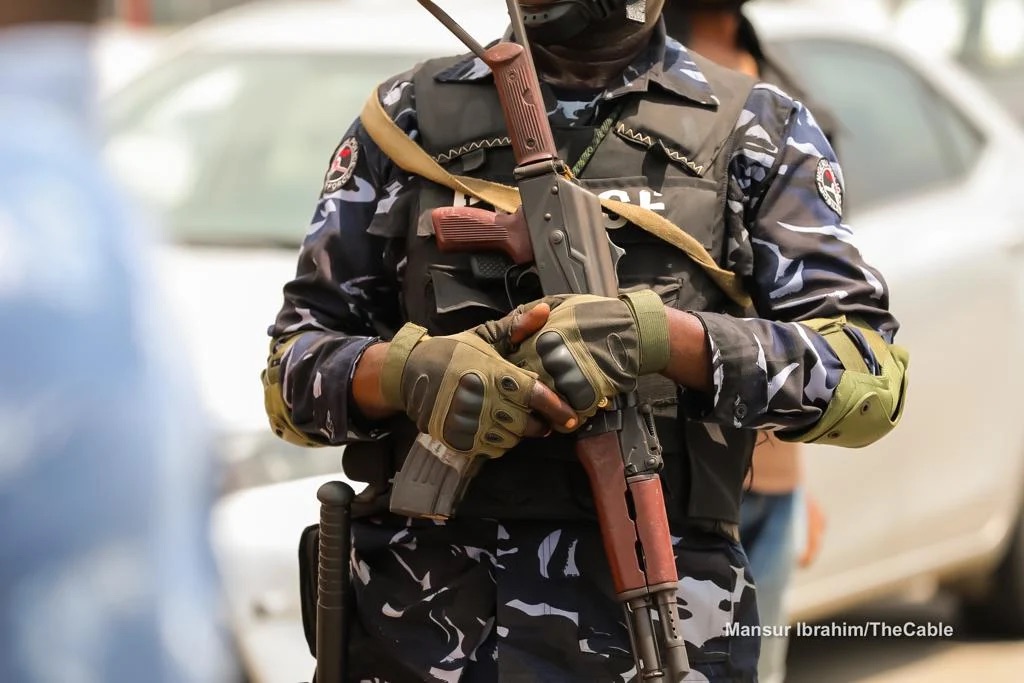
As debate over state police gains traction, insurance and security experts are warning that the idea is far more complex than it appears, especially in the area of derisking.
While it promises faster response to local security challenges, analysts say it could open the door to political interference, weak oversight and uneven standards across states. Funding gaps and coordination with federal forces also raise serious questions.
For many, the issue is no longer whether Nigeria needs state police, but whether it can implement it without deepening existing risks, especially with security deterioration becoming more apparent nationally.
Since 2009, Nigeria has faced an escalating wave of insecurity that has cut across regions and taken on multiple forms. In the North-East, Boko Haram and ISWAP have sustained a brutal insurgency, while the North-West contends with organised banditry, cattle rustling and mass kidnappings. In the North-Central states, clashes between farmers and herders have deepened tensions, while the South-East grapples with separatist agitation and cult-related violence. Across urban centres nationwide, rising crime adds to an already fragile security landscape.
Questions are increasingly being raised about the federal government, particularly the APC-led administration since 2015. Critics argue that the military appears overstretched and unable to decisively end terrorism, while others insist Nigeria has the capacity to confront these threats if the political will is present. Instead, some observers say the response has been slow and inconsistent, allowing violent groups to persist and expand.
Constitutionally, Section 214(1) establishes the Nigeria Police Force (NPF) as the primary law enforcement body, while Section 215(1) outlines its responsibilities, including crime prevention, law enforcement, protection of lives and property, and maintaining public order.
Amid the worsening insecurity, experts and opinion leaders have renewed calls for state policing, arguing that decentralising control could improve responsiveness. However, risk analysts continue to weigh the potential benefits against concerns over abuse, political interference, and uneven implementation.
At the 2026 Strategic Risk Management Forum, organised by the Risk Managers Society of Nigeria (RIMSON), the Managing Director of Beacon Security and Intelligence Limited, Dr. Kabir Adamu, examined the theme: “State Police: Mitigating the Risks and Harnessing the Benefits.” His presentation focused on the prospects, challenges and the way forward for decentralised policing in Nigeria.
Adamu situates the debate within the context of Nigeria’s growing security challenges, ranging from terrorism and cultism to banditry, armed robbery, abduction, gender-based violence and cybercrime. He noted that these threats are driven by deep-rooted structural issues, including poverty and inequality, high unemployment, social exclusion, weak justice institutions, poor governance and entrenched corruption.
Drawing from global practices, the security and risk expert outlined five policing models that could guide reform and improve operational effectiveness. The first, Traditional Policing, emphasises a reactive approach, focusing on responding to reported crimes through patrols, investigations and arrests. While it allows for quick response to emergencies, it is often criticised for its limited emphasis on prevention and community engagement.
The Community Policing model, on the other hand, prioritises building trust and collaboration between law enforcement and communities. It relies on partnerships, problem-solving and engagement, strengthening cooperation, but can be resource-intensive and time-consuming.
He also highlighted the CompStat model, which leverages data analytics, performance tracking and accountability to improve efficiency. However, it may encourage bureaucratic rigidity and require significant time to implement effectively.
The Intelligence-led Policing model focuses on using intelligence and data to anticipate and prevent crime through targeted operations. While proactive, it is heavily dependent on accurate intelligence and can demand substantial resources.
Finally, the Problem-oriented Policing model seeks to address the root causes of crime through data-driven analysis and tailored interventions. Though highly effective in tackling specific issues, it requires considerable expertise and sustained investment to succeed.
Current police challenges
Chronic underfunding and limited resources, coupled with corruption and ethical lapses, poor training and low professionalism, political interference, persistent insecurity challenges, weak community trust, and limited technological capacity, among other issues.
Why the push for state police is growing
Several converging forces have pushed the question of state policing to the centre of Nigeria’s security reform debate, making it one of the most consequential policy conversations in recent years. At the heart of the argument lies a strong federalism perspective. Nigeria, as a federation, is built on the principle that powers are shared between the national and sub-national governments across the exclusive and concurrent legislative lists. Advocates of state police argue that internal security should fall within the concurrent domain, allowing states to establish and manage their own police structures in the same way they oversee ministries, courts and legislative institutions.
Beyond constitutional theory, practical governance realities are adding urgency to the debate. Governors across the country increasingly express frustration over their limited control of security apparatus within their jurisdictions. While they are held politically accountable for rising insecurity, they do not have direct command over the police deployed in their states. This creates a structural disconnect: the governor faces public pressure and scrutiny, yet operational authority rests with the Inspector-General of Police, who controls state Commissioners of Police. In many cases, when governors issue directives, the constitutional provision that allows Commissioners to refer such instructions to the President further complicates swift action and weakens local accountability.
The scale of Nigeria’s insecurity has also made the current policing arrangement appear inadequate. With an estimated ratio of one police officer to about 648 citizens, the Nigeria Police Force is overstretched and unable to effectively cover a country as vast and complex as Nigeria. Communities across regions increasingly feel unprotected, while the demand for locally responsive and context-specific security solutions continues to grow. This gap between need and capacity has strengthened calls for decentralised policing.
Political momentum has further accelerated the conversation. The evolving support from key political actors, including President Bola Ahmed Tinubu, has opened a window for constitutional reform that was previously difficult to imagine. The convergence of executive interest, growing support from state governors, and worsening insecurity has created conditions where reform is not only desirable but increasingly unavoidable.
Anticipated gains
According to security and intelligence experts, state policing, if properly designed, could significantly improve local responsiveness and operational efficiency. It would allow policing structures to adapt more effectively to cultural, geographic and social realities across different states. It also aligns with the principles of true federalism and the United Nations Sustainable Development Goal 16, which emphasises peace, justice and strong institutions. Additionally, it could ease pressure on the overstretched federal police structure.
“Despite the caveats from global evidence, there is a genuine and legitimate case for state police in Intelligent Nigeria, provided it is designed and implemented well,” a leading risk expert noted, underscoring that the idea is not inherently flawed but highly dependent on execution.
However, the proposal is not without serious concerns. Experts warn that introducing state police could exacerbate existing social tensions if not carefully managed. One of the most prominent risks is ethnic profiling. If recruitment is dominated by indigenes, there is a likelihood that non-indigenes could be disproportionately targeted or treated as outsiders, raising concerns about discrimination and abuse.
There are also fears around religious and cultural enforcement. In states where religion already plays a strong role in governance, state police could potentially be used to enforce dominant beliefs and norms, rather than uphold neutrality. This could further marginalise minority groups and undermine social cohesion.
Vulnerable groups such as women and youth may face increased risks if policing structures are influenced by conservative or patriarchal systems. In addition, indigene-based recruitment could result in a force that is not representative of the broader population, weakening democratic accountability and fairness.
“The most serious risks of state police in Nigeria are social. In a country where ethnic and religious affiliations are regularly weaponised in governance, a police force controlled by the state government is a potentially powerful instrument of discrimination and repression,” the expert warned.
Political risks also loom large. Nigeria’s history provides cautionary lessons, particularly from the First Republic, when regional police forces were allegedly used as tools for political repression, ultimately contributing to their abolition. Today, concerns persist that state police could be captured by political actors and deployed to suppress opposition or consolidate power.
In regions where secessionist sentiments are already present, a state-controlled police force could potentially be used to advance sub-national agendas that threaten national unity. Observers also point to the experience of State Independent Electoral Commissions (SIECs), which have often been accused of being influenced by ruling parties. This raises fears that state police could face similar political capture.
“The political risks of state police are no less serious. Nigeria’s democratic institutions, particularly at the state level, remain fragile. Governors already exercise enormous power over state legislatures, state electoral commissions, and, in many cases, the judiciary. Adding a state police force to that arsenal of power creates conditions for democratic regression,” the expert maintained.
Economic considerations present another layer of complexity. Nigeria’s states have widely varying revenue capacities. While a few economically strong states may be able to fund and sustain effective police forces, many others would struggle due to heavy reliance on federal allocations. This disparity could lead to uneven policing standards across the country.
There are also concerns about salary sustainability. States that already face challenges in paying civil servants may struggle to maintain regular and competitive remuneration for police officers, potentially leading to poor morale, corruption, or even collapse of the system in some regions.
Another concern is crime displacement. If policing strength varies significantly between states, criminal networks may simply relocate to weaker jurisdictions, creating pockets of insecurity rather than solving the broader problem. Additionally, because many crimes are trans-border in nature, fragmented policing structures may find it difficult to respond effectively without strong federal coordination.
“The economics of state policing present a serious challenge that has not received adequate attention in the public debate,” a crisis management and intelligence specialist observed, highlighting the financial and structural risks involved.
Security and operational challenges further complicate the picture. Experts warn that fragmented procurement processes could increase the risk of small arms proliferation, as poorly regulated systems may allow weapons to leak into illegal markets. There are also concerns about command and control, as unclear lines of authority between federal and state forces could lead to confusion during critical operations.
Intelligence sharing is another critical issue. Without strong inter-agency cooperation, criminals could exploit gaps between jurisdictions to evade capture. In worst-case scenarios, overlapping authority could result in clashes between security agencies, creating chaos instead of order.
“While state policing is seen as a solution to local insecurity, it carries significant risks that have dominated the Nigerian political debate for decades,” the expert cautioned.
Operational concerns include patronage-based recruitment, replication of existing governance failures, and poor coordination between states. Critics argue that without strong safeguards, state police could mirror the same inefficiencies that currently plague federal structures.
At the core of the debate is a fundamental misconception: that increasing the number of police institutions will automatically reduce insecurity. Experts caution that policing alone cannot resolve Nigeria’s security challenges, which are deeply rooted in governance failures, economic hardship, and social inequality.
If Nigeria proceeds with state policing, a robust legal and constitutional framework will be essential. Such a framework must clearly define roles, limits, and oversight mechanisms to prevent abuse. Experts recommend the establishment of a National Police Standards and Regulatory Council to ensure consistency, accountability and professionalism across all policing structures.
Inclusive recruitment is another critical factor. Police forces must reflect the diversity of the populations they serve, incorporating provisions for gender balance, minority representation, and merit-based selection. Without this, the system risks becoming exclusionary and unrepresentative.
“The establishment of state police is too consequential to be left to politicians and security officials alone,” the expert cautioned, stressing the need for broad stakeholder involvement. Civil society, the private sector, and development partners all have important roles to play in shaping a balanced and accountable system.
“Security cannot be policed into existence,” he added. “Nigeria’s insecurity is fundamentally a governance problem, an economic problem, a social problem, and a security problem. Sustainable solutions require addressing all these dimensions simultaneously.”
Ultimately, the success or failure of state policing in Nigeria will depend on careful design, strong oversight, and political discipline. Experts agree that it is not a question of whether state police will emerge, but whether Nigeria will build the right system or repeat past mistakes.
“The stakes are high. A well-designed system could improve security for millions. But a poorly designed one could deepen divisions and weaken democracy. The choices Nigeria makes today will define its security future for generations”, he noted.













Leave a comment