



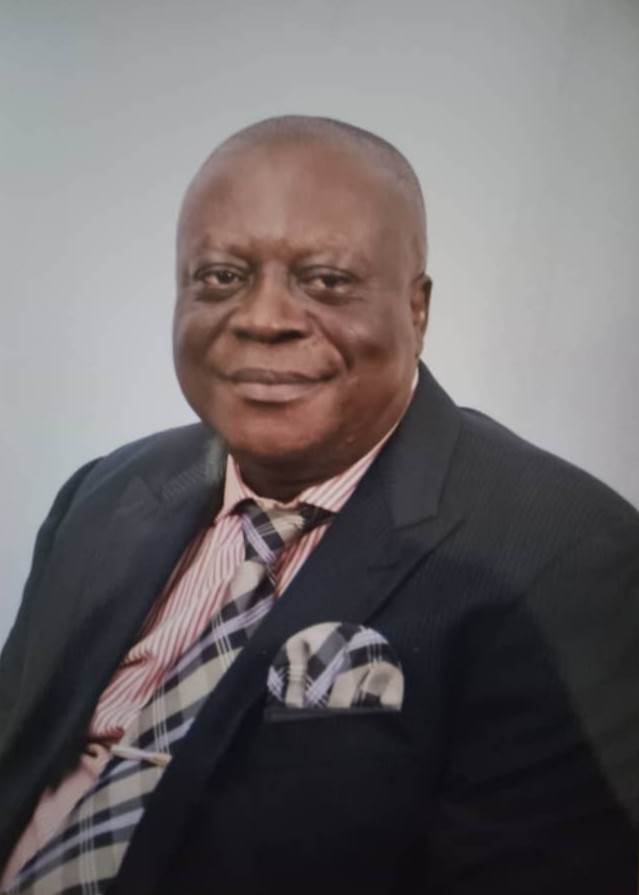
By Kunle Somorin
When the clock struck midnight on 22 February 1966, the quiet township of Ogbor Uvuru in Imo State awoke to a sound far louder than any drumbeat or church bell – an echo of history itself, reverberating through the streets of a man who, at sixty, stands poised on the cusp of a second, more profound ascent. Chief Obioma Success Akagburuonye – known to many simply as “OSA” or, more reverently, Akaraogu, the one who brings wealth back home – has arrived at an age that, in many cultures, is both a marker of survival and a herald of legacy. Yet his arrival is less a moment of reflection on the years that have passed and more an invitation to contemplate the interplay of fate, faith, and the relentless pursuit of communal uplift.
In the modest rural setting of Ogbor Uvuru, where the rhythm of life is set by the rise of the sun over farm works and the low murmur of the nearby river, a child was born into a family whose means were modest but whose values were unassailable. As schoolmates later recalled, the young Obioma was never content to accept the world as it was presented. “Why do we go to school?” he would ask; “How could it be better?” he pressed further. That relentless curiosity, a trait that would later become the lodestar of his endeavours, was not merely the chatter of a precocious child – it was the seed of a philosophical inquiry that would later be echoed by the great thinkers of antiquity. Socrates, after all, taught that “the unexamined life is not worth living.” In the dusty classrooms of Ogbor, a nascent version of that maxim was already being rehearsed.
While many of his peers pursued a single avenue of study, Success charted a dual course that set him apart from the very beginning of his adult life. He first earned degrees in civil engineering, a field that demands exactitude, an eye for structure, and a respect for the immutable laws of physics. Yet he did not stop there. Recognising that the construction of bridges and buildings could be rendered meaningless without a robust legal framework, he pursued law degrees, immersing himself in statutes, jurisprudence, and the art of advocacy.
The convergence of these two disciplines fashioned a man who could, as one observer put it, “build a city and defend it in a courtroom with equal aplomb.” It is a rare combination; it recalls the Renaissance polymaths who refused to be siloed, insisting that interdisciplinary insight is the engine of true progress. In his own words, Success often remarked, “Concrete may hold a roof, but the law holds the people beneath it.” This synthesis later became the backbone of his enterprise, Praco Limited, and the philosophical foundation upon which his philanthropic enterprises would stand.
The early 1990s were a period of rapid urbanisation across Nigeria. As Lagos, Abuja, and a host of secondary cities scrambled to accommodate a swelling population, land – once a static commodity – was transformed into a dynamic canvas for ambition. Where most saw parcels of dirt awaiting purchase, Success perceived potentiality. His Praco Limited, a real‑estate venture soon redefine the skylines of the nation’s capital city and beyond.
Praco’s inaugural project was a modest housing estate on the outskirts. Even in those early phases, the company’s ethos was unmistakable: every unit was designed not merely for occupancy but for community. Communal courts, shared green spaces, and affordable pricing were woven into the blueprint. The project received praise from leaders who noted, “It is the first development that truly cares for the people who will live there, rather than merely for the profit it will bring.”
As the portfolio expanded – encompassing commercial hubs, mixed‑use complexes, and infrastructural upgrades – Success’s reputation grew in tandem with his empire. Yet, with prominence came scrutiny.
No success story is immune to turbulence. In the early‑2000s, Success’s involvement in a contentious land acquisition in Abuja attracted the attention of the Economic and Financial Crimes Commission (EFCC). The investigation, which led to a protracted legal battle, threatened to erode public confidence in his ventures. Nonetheless, Success addressed the episode not with denial but with a candid acknowledgment of the lessons it offered. “You cannot lead without being tested,” he told a gathering of journalists as he received The Sun Humanitarian Service Awards on 31 January. “The test refines you; it does not define you.”
The philosophical resonance of his response mirrors Nietzsche’s observation that “What does not kill us makes us stronger.” For many observers, the EFCC episode proved not a blemish but a crucible that hardened his commitment to transparency. He won all matters that was raised in court up to the Supreme Court, even when he suffered a two-years and two months detention in the process of contrived investigations.
Political entanglements also peppered his journey. Plots to assassinate him was exposed for which by a former governor of his home state, Senator Rochas Okorocha, was mentioned. That added another layer of complexity. Rather than retreat into partisan alignment, Success anchored himself in the Imo Charter of Equity, a manifesto advocating a fair rotation of political power among Orlu, Okigwe, and Owerri. With Owerri’s turn slated for 2027, his candidacy is framed not as personal ambition but as an embodiment of collective justice, a stance that has earned both staunch allies and formidable opponents.
If engineering gave him the tools to shape the physical world and law gave him the language to safeguard his creations, faith supplied the compass. From the earliest days in his family’s modest home, a devotion to God was woven into the fabric of his being. He frequently recounts and on the 400-page biography, Me and My God, written on his life and times, he states that: “When the world doubted me, I leaned on God, and He became my strength.”
His spirituality is not cloistered; it is manifest in concrete projects. The Noah’s Ark Church, an ultra‑modern edifice that rises like a beacon over Ogbor, stands as a testament to his belief that faith and development are mutually reinforcing. At its inauguration, he declared, “A house built without a heart is but a shell; a church built without a purpose is but a building.” The church auditorium was commissioned last year by former President of Nigeria, Chief Olusegun Obasanjo.
Philosophically, his conviction echoes St. Augustine’s assertion that “Faith is the light that guides the soul through the darkness of uncertainty.” For Success, that light has illuminated decisions ranging from the allocation of resources for a new water factory to the sponsorship of scholarships that carry bright minds out of rural obscurity into global arenas. To date, over 300,000 Imolites have benefitted from the philantrophic gesture from his Hope Rising for Imolites, a non-government organization that has etched into his native region. In recent years, his foundation has orchestrated a series of community‑centric projects that intertwine infrastructure with social welfare:
- Road Networks: The previously impassable stretches linking Uvuru to neighboring markets have been paved, slashing travel time and invigorating local trade.
- Educational Scholarships: Over a hundred bright youths have been funded to pursue tertiary education, many of whom have returned to serve as teachers, doctors, and engineers in Imo.
- Housing Initiatives: Families rendered homeless by floods or economic hardship have been provided with durable, dignified dwellings.
- Rural Telephony: He brought the Ministry of Communication to Aboh Mbaise in 2002 to deliver wireless telecommunication facilities to his people
- Youth Empowerment: Trained a legion of Imolites on security to stave off crimes and more on solar technology to enable access to electricity and jobs.
- Water Factory: A state‑of‑the‑art water purification plant now supplies clean drinking water to more than 20,000 residents, curbing water‑borne diseases.
The effect of these interventions is amplified by the personal stories that accompany them. A farmer from Uvuru, who recently received a new roof, told a reporter, “When the rains came, my house collapsed. Chief Success rebuilt it, but more than that, he gave us hope that we are not forgotten.” In the words of Mahatma Gandhi, “The best way to find yourself is to lose yourself in the service of others.” Success’s life illustrates precisely that tenet.
From 19 to 22 February, Imo State will host an unprecedented four‑day festival commemorating OSA’s sixtieth birthday. The itinerary, though extensive, flows with the rhythm of a living narrative, each event threading into the next like chapters in a novel.
The opening day will feature a leadership conference, where Senator C. Anthony Muse and representatives of the Imo Pentecostal Fellowship of Nigeria will explore the role of Christian ethics in contemporary governance. Their deliberations will echo the timeless concerns of Aristotle, who argued that “the purpose of the state is to enable its citizens to lead a good life.”
An adjoining exhibition will showcase his journey – photographs, newspaper clippings, and personal artifacts arranged to portray a man whose ambition was never self‑serving but communal. The centerpiece of the festival is the novelty football match coordinated by former Super Eagles legend Segun Odegbami. The former captain will don the striker’s jersey against a “Friends of Akagburuonye” XI – a friendly contest that fuses sport, camaraderie, and the raising of funds for the new water factory. The match, set against a backdrop of drums and chants, will symbolise the unity his projects have fostered.
Other scheduled activities include the commissioning of a new football pitch, the inauguration of a freshly built church, the handing over of a family home, and the rehabilitation of a critical road. As part of the birthday celebrations, Chief Success is overseeing the rehabilitation of a 19‑kilometre road leading to his village, Ogbor Uvuru. The road work will be formally flagged off by the visiting Ghanaian leader, underscoring the cross‑border significance of the occasion.
In addition, he is commissioning terrace buildings inside his family compound to house all six of his father’s sons, as well as commissioning both an Anglican and a Catholic church – structures that reflect his abiding faith in God and his commitment to religious harmony.
Culminating the celebrations is the grand book launch of Me and My God. The ceremony will be chaired by former President Olusegun Obasanjo, while Ghanaian President John Mahama will attend as a special guest, underscoring the pan‑African significance of Success’s story. Dr Reuben Abati, a distinguished journalist and broadcast personality, will lead a critical review of the autobiography, dissecting its themes of grace, resilience, and purpose. The governor of Imo State, Hope Uzodinma, will serve as chief host, delivering opening remarks that situate OSA’s achievements within the broader narrative of Imo’s development.
The term “second mountain”, popularised by author David Brooks, refers to the phase of life wherein one’s pursuits shift from personal achievement to meaningful service. In this context, Success’s sixtieth birthday marks not a climax but a transition. He has already scaled the first mountain – amassing wealth, reputation, and influence. The second mountain beckons him toward mentorship, equitable governance, and the deepening of his spiritual practice.
His reflections on this shift resonate with Seneca’s observation that “Life is long if you know how to use it.” By allocating his resources toward infrastructure, education, and health, he demonstrates an acute awareness that time gains value when spent on the betterment of others.
Moreover, the interplay of fate and agency – two twin forces that have long occupied philosophers – finds practical expression in his life. The circumstances of his birth in a humble village could be deemed fate, yet the relentless curiosity that drove him to ask “why?” and “how?” is a testament to personal agency. In his own words, “God places the seed; we water it.” This synthesis mirrors the ancient Stoic belief that while external events lie beyond our control, our responses to them are wholly within our power.
When the final fireworks burst over Ogbor on the night of his birthday, the light will not merely celebrate the passage of sixty years; it will illuminate a living legacy that continues to expand. The roads now smooth, the homes newly built, the children now studying – each represents an ongoing ripple that will reverberate long after the applause subsides.
The testimony that the community offers provides perhaps the most compelling evidence of his impact. A former mentee, now a civil engineer based in Lagos, confided, “Chief Success taught me that success is not about what you take, but about what you give. His mentorship changed my life.” Another community elder noted, “He is not just a benefactor; he is a father to many. His impact cannot be measured in money but in lives transformed.” These voices echo the timeless Biblical proverb: “Whoever is generous to the poor lends to the Lord, and He will repay him for his deed.”
In sum, Chief Obioma Success Akagburuonye’s sixtieth birthday is a cultural milestone as much as it is a personal one – a moment where personal ambition, divine faith, and communal responsibility coalesce into a singular, resonant narrative. As Imo State and the nation at large bear witness, the tale that unfolds will serve not only as a chronicle of an extraordinary individual but also as a template for how success, when anchored in purpose, can become a conduit for enduring transformation.
- Somorin, former chief press secretary to Governor Dapo Abiodun and a media scholar writes from Crescent University, Abeokuta














Leave a comment