



By Maduka Nweke
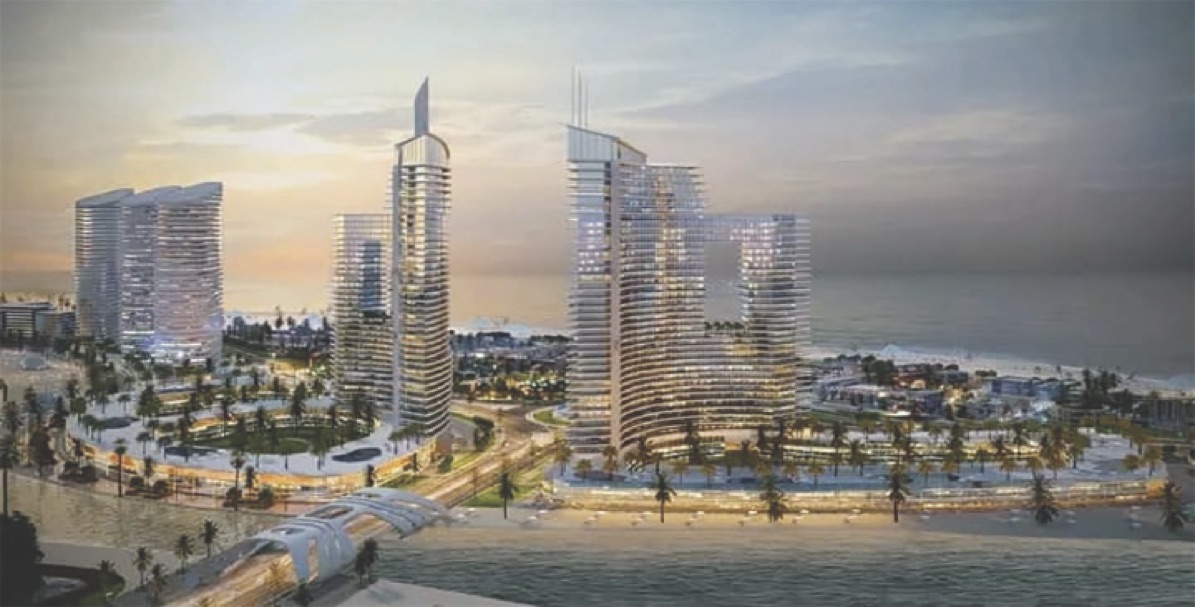
Many may rightly call Eko Atlantic City the billionaires’ playground snatched from the sea. But it is more than just the display of architectural masterpieces in aquatic splendor.
It is more of a response to a distress call as developers turned chaos to calm.
The story of Eko Atlantic began in the early 2000s when Lagos faced a mounting ecological threat. Victoria Island, the beating heart of Nigeria’s financial and residential elite, was under siege.
Each rainy season, the Atlantic crept further inland, swallowing beaches, roads and property.
“It became a matter of necessity, not a choice. Protecting Victoria Island from the surging ocean waves was urgent”, the developers recalled.
So, engineers went to work and the result of the painstaking research, reclamation project and ambitious urban experiment gave birth to the place, which is redefining Lagos’ skyline and its place on the global architectural landscape.
By 2009, dredgers had begun pumping millions of tonnes of sand from the ocean bed, gradually pushing the coastline outward. Today, more than 7.6 million square metres of land has been reclaimed, with the project targeting a sprawling 10 million square metres upon completion.
Born out of necessity but shaped by ambition, Eko Atlantic is a symbol of Nigeria’s struggle to balance progress with inclusivity.
Like Dubai, to which it is often compared, the city dazzles with its futuristic skyline and also stirs unease, questions and debates that ripple far beyond its walls.
Funding
Privately funded by South Energyx Nigeria Limited, a subsidiary of the Chagoury Group and backed by both the Lagos State and Federal Government, the project promised not just protection but reinvention. “Eko Atlantic is more than flood control,” its visionaries declared. “It is the future of Lagos.”
The Dubai of West Africa
For first time visitors, when you step inside Eko Atlantic, it feels like stepping into a different Lagos altogether. Wide boulevards lined with palm trees, shimmering high-rises with glass façades, manicured green spaces and a marina where luxury yachts are expected to dock.
Here, Nigeria’s elite envision their new haven. The city is designed to host 250,000 residents and accommodate 400,000 daily commuters, making it a financial, commercial and residential hub rolled into one. Already, banks, multinational firms and developers have staked claims.
“This city is going to be the new financial centre in West Africa.
Even though the city is not yet 100 per cent completed, it is already contributing about 7.8 percent to Lagos State’s annual revenue. That figure translates into more than $1 billion a year to the economy”, said Mr. Olawale Opayinka, MD/CEO of Eko Development Company, during a media tour.
The numbers are staggering. With a projected GDP contribution of over $1 billion annually, Eko Atlantic is expected to account for 0.25 percent of Nigeria’s GDP, currently around $400 billion.
And like Dubai, Eko Atlantic aims to be more than a business hub. It is also a status symbol, a “billionaire’s quarter,” where luxury apartments, five-star hotels, and private villas will cater to Nigeria’s super-rich and global investors.
“Everything you could ever need is within the city,” Opayinka said. “Once you’re inside, you won’t want to leave.”
Exclusivity
But as the towers rise, so too do questions. Who, really, is Eko Atlantic for?
“It is a major investment for housing, but only for the very high-income group,” noted Mr. Moses Ogunleye, Managing Director of MOA Planners Limited.
He continued: “The city has been built with first-grade infrastructure and facilities. That explains the high cost of land and property there.”
Indeed, property prices in Eko Atlantic are already some of the highest in Nigeria. It is marketed as Nigeria’s answer to Dubai’s Palm Jumeirah or Canary Wharf in London, a glittering enclave for the wealthy, not the average Lagosian.
Mrs. Olufunmilade Akingbagbohun, former National Chairman of the Nigerian Institution of Mechanical Engineers, captured this tension:
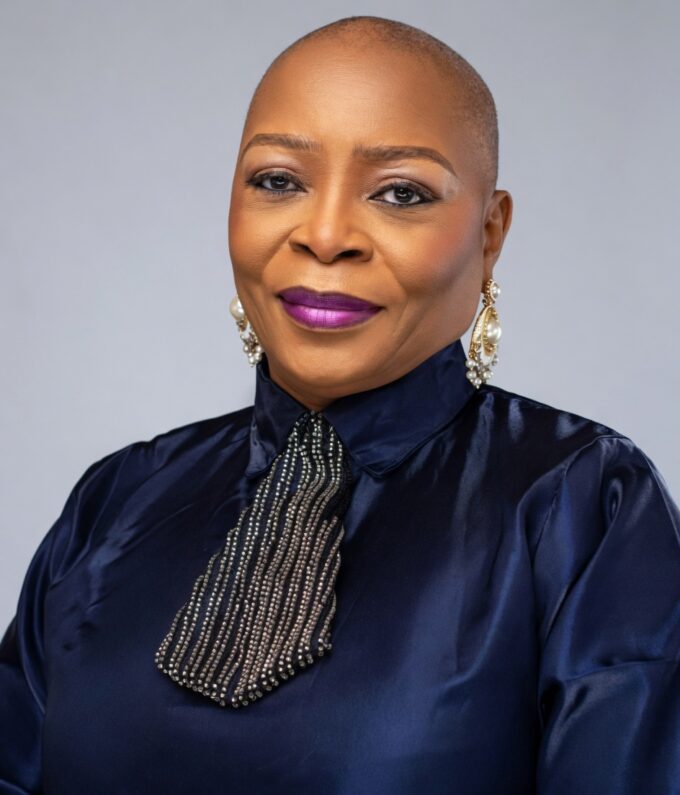
“As a mechanical engineer, I marvel at the sheer scale and technical complexity of Eko Atlantic City. The project’s innovative approach to land reclamation, flood protection, and urban planning showcases Nigerian ingenuity. It is complete in all ramifications. But it also depicts the ambitions of the nouveau riche. My concern is affordability and accessibility. If developers and government agencies can create initiatives for inclusivity, Eko Atlantic could become a beacon of prosperity for all Nigerians.”
Engineering against the tide
At its core, Eko Atlantic is an engineering marvel. A massive sea wall known as The Great Wall of Lagos now shields Victoria Island from the Atlantic’s fury. Stretching 8.5 kilometres, the granite-and-concrete barrier is designed to withstand even the fiercest storm surges.
Within the city, modern infrastructure abounds: underground power cables, high-speed internet, water treatment plants, and green energy initiatives. Roads are wide, drainage is efficient, and space is planned with precision, a stark contrast to the congested, chaotic sprawl of Lagos just beyond its gates.
“Eko Atlantic incorporates sustainable principles,” Akingbagbohun noted. “Its water management, energy-efficient buildings, and green spaces demonstrate a commitment to eco-friendliness. It is truly a model city.”
Yet, not all engineers are convinced. Critics warn that while the project protects Victoria Island, it may worsen erosion further down the coast, displacing vulnerable communities.
Displacement
Sulaimon Arigbabu, Executive Secretary of the Human and Environmental Development Agenda (HEDA), voiced a sobering reminder of the social cost:
“Eko Atlantic City is a reality that has come to stay. There might not be much anyone can do about it anymore. But the argument remains: has it caused further harm to other shorelines? Since Eko Atlantic came to be, there has been disruption and even loss of land along the Lagos lagoon.”
Arigbabu drew painful parallels to history. In the 1990s, the government evicted thousands from Maroko, a once-thriving community near Victoria Island, in the name of development. Families lost homes and land, and most never recovered. Now, he warned, inequality risks being deepened.
“Eko Atlantic is a rich man’s paradise, a rich man’s heaven. But what happens when we build societies that are exclusive to the rich? It drives inequality, and inequality drives social injustice. The danger is that we do not know what form that injustice might take in the future.”
He called on Lagos State and the Chagoury Group to create socially inclusive projects elsewhere, as a matter of corporate responsibility.
Lagos’s global ambition
For all its controversies, Eko Atlantic undeniably represents Lagos’s desire to stand shoulder-to-shoulder with the great cities of the world. The city is pitched as Africa’s answer to Dubai and Singapore — a place where capital flows, investors flock, and global tourists marvel.
“It is not just about fine buildings or new technologies,” Arigbabu cautioned. “People won’t jump straight into Eko Atlantic. They’ll pass through the rest of Lagos first. If the rest of Lagos doesn’t work, the attraction of Eko Atlantic will fade. In Dubai, the city works for everyone. That’s why its luxury is sustainable. Lagos must also work for everyone.”
This sentiment echoes widely: Eko Atlantic can dazzle, but unless its success translates beyond its borders, lifting communities, strengthening infrastructure, and bridging inequalities, it risks becoming an island of prosperity in a sea of struggle.
For now, Eko Atlantic stands as both a triumph and a paradox. On one hand, it is a stunning example of Nigerian ambition and ingenuity, a city literally built out of the sea, promising jobs, tourism, and investment. On the other hand, it is a lightning rod for debates about inequality, environmental justice, and the social responsibility of megaprojects.
As the sun sets over the Atlantic, the city’s glass towers glint in gold. To some, they are symbols of a bold future where Lagos is resilient, modern, and globally competitive. To others, they are reminders of exclusion, privilege, and the deep divisions that development can lay bare.
In the end, Eko Atlantic is not just about buildings or land reclamation. It is about the story of Nigeria itself, a nation wrestling with how to protect its people, harness its wealth, and carve out a future in an era defined by both climate change and inequality.
Perhaps the true measure of Eko Atlantic will not be in its skyscrapers or GDP contribution, but in whether it can bridge the gulf, literal and metaphorical, between its gleaming towers and the teeming streets of Lagos beyond its gates.













Leave a comment