



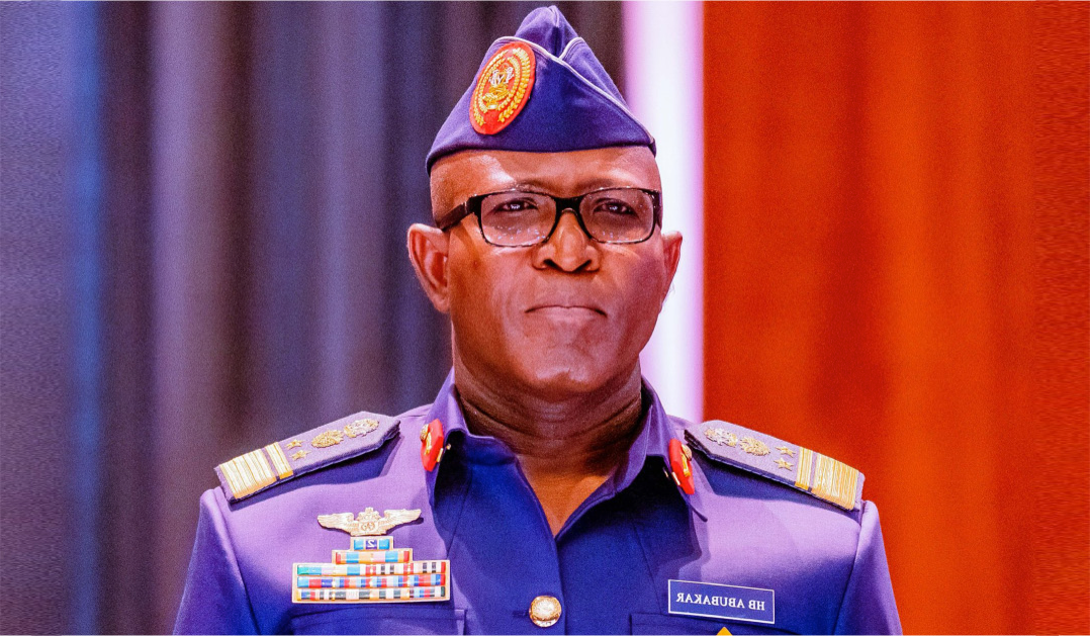
A robust maintenance culture within the Nigerian Air Force formations plays a pivotal role in recalibrating the effective employment of air power, writes Linus Aleke
I Just recently, the NAF stressed that institutionalising an effective and robust maintenance framework across its engineering units is crucial for minimising unscheduled downtime, prudent resource allocation, and informed operational planning. These outcomes, it added, enable the NAF to maintain a continuous operational presence, project airpower effectively, and respond swiftly to meet the demands of national security in all operational environments.
In a keynote address at the NAF Aircraft Engineering Conference 2025 in Abuja recently, the Chief of the Air Staff (CAS), Air Marshal Hasan Abubakar, postulated that while the recent accomplishments of NAF’s aircraft and armament engineers and technicians have shown that the Service is on track, there is always room for improvement, and the NAF must continually seek to do things better.
The Air Chief averred that the theme of the Conference, “Enhancing Aircraft Serviceability in the NAF through Strong Maintenance Culture and Strategic Partnerships,” is not only apt and timely but also aligns with key elements of the third and fourth key enablers of his Command Philosophy, which are “Proactive logistics support and strong maintenance culture” as well as “prioritising research and development, leveraging cutting-edge technology, strategic partnerships, and lessons learnt.”
He stated that a strong maintenance culture directly contributes to the high serviceability rates necessary to enhance the Service’s operational effectiveness for sustained air power delivery in furtherance of national security objectives.
The CAS also posited that strategic partnerships play a key role in enhancing aircraft serviceability by bridging capability gaps, accelerating technical capacity development, and ensuring the timely availability of critical spares.
Outlining the number of platforms acquired in the past two years to strengthen the air capability of the NAF not only to defend the nation’s territorial integrity via the air but also to bring to an end to the murderous activities of terrorists, bandits, and the criminal enterprise of kidnappers and other emerging criminal syndicates, Abubakar assured that the NAF has reached new heights in operational capability. According to him, “15 brand new aircraft were received by the NAF, including six T-129 ATAK helicopters, two AW-109 Trekker Type A helicopters, three Beechcraft King Air aircraft, and four Diamond 62 aircraft. An additional 49 platforms are expected before the end of 2026. They include three CASA 295 aircraft, 10 AW 109 Trekker Type B helicopters, 12 AH 1Z helicopters, and 24 M 346 fighter aircraft.”
Having outlined the numbers of aircraft types the Service has taken delivery of and those that are expected before the end of 2026, the Air Chief stressed that these aircraft are all high-tech platforms that require very sophisticated maintenance activities to operate effectively.
“Therefore, while taking proactive logistics actions and providing the needed maintenance resources, we must implement advanced, innovative, and data-driven aircraft and armament maintenance practices that ensure the optimal serviceability of all our aircraft. To this end, the NAF in April last year adopted the predictive maintenance culture,” he stated.
The Chief of the Air Staff said the predictive maintenance culture would enable the Service to anticipate and schedule maintenance ahead of time, while also preventing unexpected equipment failures. Noting that the NAF has continued to commit significant resources towards increasing its serviceability rates, Air Marshal Abubakar stated that funds are now provided for the purchase of consumables required for the quarterly maintenance of all NAF aircraft fleets.
“Similarly, we have been relentless in ensuring the timely provision of critical spares as well as the provision of up-to-date technical publications, ground support equipment, tools, and specialized equipment. Through these efforts, we have achieved an average serviceability rate of about 72 per cent. However, the target is a 90 per cent serviceability rate across all our platforms. In this regard, significant investments have been made to ensure that every operable aircraft in the NAF inventory becomes serviceable by the fourth quarter of 2025.
“At this point, I must appreciate the Aircraft Engineering Branch and our aircraft and armament engineers and technicians. Through their meticulous efforts, we have recorded some encouraging achievements over the last two years. Particularly, the conduct of the first in-country 4,800 hrs Periodic Depot Maintenance on a DO-228 aircraft, NAF 031, and the reactivation of another DO-228 aircraft, NAF 039, that was originally operated by the defunct Ministry of Mines, Power, and Steel and grounded for over 23 years. We also successfully conducted the first in-country repair of the A-29ST aircraft main landing gear shock strut and reactivated two of the Agusta AW109EM helicopters.
“Some other aircraft reactivated include one Mi-35P, one Mi-171, and two Bell 412 helicopters, two A-Jet aircraft, as well as one ATR 42 aircraft. Other achievements include repair of structural damage on the left wing of L-39ZA aircraft NAF 358, the fuselage of DO-228 aircraft NAF 029, and the left engine intake on A-Jet aircraft NAF 453. Similarly, structural repairs and replacement of ribs and skin on the left engine intake of A-Jet aircraft NAF 471, structural repairs and installation of main rotor blades on Mi-35P helicopter NAF 531, as well as the first 150 hours inspection on JF-17 aircraft NAF 720. Maintenance such as 2,500 hours and 5,000 hours/five-year inspections on Bell 412 EP helicopter NAF 600 and a C-check on ATR 42 MPA NAF 931 were also conducted,” he enumerated.
The Air Chief further stated that a number of engines, propellers, as well as other major aggregates on NAF platforms, were either repaired, overhauled, or sent to various MROs to sustain the operation of the NAF aircraft fleet.
These, the number one Air Force Officer in the country said, include in-house recovery of six LARZAC engines for the A-Jet aircraft fleet, three T-56-A-15LFE engines for the C-130H aircraft, and two AI-25TL engines for the L-39ZA aircraft. He added that one Auxiliary Power Unit (APU) and six propeller assemblies for the C-130H aircraft were repaired at 631 ACMD, while a total of 62 avionics/electrical components, test benches, and ground support equipment were repaired/overhauled at CAOCC.
He said, “Our innovative armament personnel also contributed to the successful precision upgrade of the Alpha Jet aircraft using the stand-alone weapon control and firing system. Other achievements include retrofitting of a Martin Baker ejection seat on the A-Jet aircraft and overhaul of the aircraft armament equipment, repair of five A-Jet aircraft DEFA guns electrical flanges, coordination of the revalidation of A-Jet ejection seat pyro-cartridges at AFRDC, and coordinating the production of a prototype UABIT-6S fuze for use on MK 82 series bombs.
“Our armament personnel also successfully achieved the adaptation of SA LAU 32 (70mm) rocket launchers of A-29 ST aircraft on A-Jet aircraft NAF 471, coordination of the reactivation of unserviceable A-Jet ac 68mm SNEB rockets at AFRDC, and coordinating the repair of 997 assorted weapons at DICON. All these efforts have helped shore up our aircraft serviceability rates, enabling the NAF to sustain its operations and contribute effectively to the enhancement of Nigeria’s national security.”
He stated that while intensifying efforts to conduct scheduled and unscheduled maintenance activities to improve the existing aircraft serviceability rates, the NAF has focused on building capacity for advanced and in-depth maintenance on its existing and new aircraft acquisitions.
These, he said include training of personnel in the implementation of predictive maintenance concepts using data analytics, unit-level enhanced training programmes in technical skills and craftsmanship, as well as comprehensive digital documentation and reporting across all NAF platforms to reduce downtime and enhance aircraft availability in the NAF.
To further enhance aircraft life cycle management in the NAF, the Air Chief revealed that the NAF recently established the Directorate of Aircraft Life Cycle Management (DALCM) under the Aircraft Engineering Branch. The establishment of DALCM, he said, is integral to enhancing NAF’s long-term operational effectiveness.
He explained that the Directorate is tasked with ensuring the availability, reliability, and service longevity of all NAF aircraft by overseeing the entire life cycle of each platform, from acquisition and induction to operational deployment and eventual retirement. He further averred that this life cycle approach is intended to ensure that all fleet management activities are strategically aligned with NAF’s evolving operational requirements.
“Given the current phase of our fleet modernization, marked by the acquisition of advanced platforms such as the 24 M-346 aircraft and 10 AW109 Trekker Type B helicopters from Italy and the 12 AH-1Z helicopters from the United States, the relevance and necessity of this Directorate cannot be overemphasised.
“Moving forward, all new acquisitions must be subjected to rigorous planning, structured sustainment frameworks, and integrated life cycle support mechanisms from inception. In furtherance of this objective, and in recognition of the critical importance of proper programme oversight, I recently led a delegation, comprising relevant specialist directors, including the Director of Aircraft Life Cycle Management, to participate in the Second Programme Management Review (PMR) for the AH-1Z helicopter project in the United States. This engagement underscores our commitment to building the requisite frameworks for effective fleet sustainment and operational readiness through strategic partnerships,” he said.
Stating that through collaboration and continuous learning, the NAF can refine and strengthen its systems and processes, staying ahead of the challenges it faces, Abubakar expressed confidence that the discussions and insights shared during the Conference will help pave the way toward a more agile and robust NAF.
Also reminding participants that effective aircraft maintenance is a fundamental enabler of NAF’s operational effectiveness, the CAS stressed that mission success in contemporary air operations is directly tied to the availability, airworthiness, and sustained performance of aircraft platforms. In conclusion, Air Marshal Abubakar stated that the Chief of Aircraft Engineering did not only assemble experienced and dedicated professionals, both serving and retired, for merry-making or a jamboree but to discuss the prevailing aircraft engineering issues in the Nigerian Air Force (NAF) so as to propose innovative solutions.
Speaking while welcoming the best of the best in military aircraft engineering, both serving and retired, to the conference, the Chief of Aircraft Engineering (CACE), Air Vice Marshal Abiola Amodu, reminded them that their presence reflects a collective commitment to advancing the operational capabilities of the NAF and, ultimately, the security of the country. Emphasizing that the role of aircraft engineering in military operations cannot be overstated, AVM Amodu stressed that it is the backbone that supports NAF’s mission and objectives.
He stated that it is imperative for the NAF to embrace a proactive approach to engineering support in this era marked by rapid technological advancements and evolving threats. Reiterating the imperative of a maintenance culture in NAF units to enhance operational readiness and recalibrate its efficiency in the employment of air power to deny enemies of the state and criminal syndicates freedom of action, the Chief of Aircraft Engineering noted that the conference provides participants with an invaluable opportunity to share insights, explore innovative strategies, and enhance understanding of how an effective aircraft maintenance culture can directly impact operational readiness and efficiency.
He said, “By fostering a culture that prioritizes maintenance, we are not only extending the lifespan of our equipment but also enhancing our operational effectiveness. This Conference is an ideal platform to discuss best practices, share experiences, and collaborate on solutions that will strengthen our maintenance protocols.
“That is why we have brought the best in military aircraft maintenance from sister Services and seasoned NAF aircraft engineers, including the veterans, most of whom served as Chiefs of Aircraft Engineering, Director of Aircraft Engineering, and Director of Armament in the NAF. We thank you for laying a solid foundation that has made it easy for us to build on. In my capacity as the Chief of Aircraft Engineering, permit me to share with you some progress we have made in the area of aircraft maintenance in fulfillment of the CAS Command Philosophy of ‘Transforming the NAF into an agile and resilient force that effectively meets the airpower demands of national security in all operational environments,’ driven by some key enablers.
“Concerning optimizing force structure and establishment for enhanced operational effectiveness, the establishment of the Directorate of Aircraft Life Cycle Management ensures the involvement of the Branch in acquisition to decommissioning of various platforms in the NAF, often called the cradle-to-grave process.
“We have standardised the procedure for dispatching rotables as well as management of aircraft/armament consumables in the NAF. We have also released aircraft engineering instructions to address issues of storage of small arms and ammunition as well as control of ammunition during Small Arms Range Classification Exercises. We are also working on modalities for the proposed establishment of an in-country overhaul/repair facility for Messrs Pratt & Whitney engines, a Flight Instrument Workshop for Super Mushshak aircraft, as well as a Technical Training Centre at AFIT.”
On deliberate training and mission-oriented force development aimed at institutionalizing and sustaining a culture of maintenance, AVM Amodu stressed that the Aircraft Engineering Branch facilitated the conduct of NAFTRAC on 18 platforms across 12 engineering/armament units for effective manning and maintenance. These, he said, include NAFTRAC on A-29ST, WL-II, Super Mushshak, and CH-3A/CH-4B RPAs, among others, noting that the knowledge gained from the training enabled personnel to conduct maintenance on the different aircraft types.
He explained that the ultimate objective of aircraft maintenance is to provide the necessary support to air operators and combat forces.












Leave a comment