



By Chinwendu Obienyi
Nigeria, the most populous and vibrant black nation on earth, is still digitally deficient judging by any metric.
Currently, over 40 per cent of the adult population remains financially excluded and economic opportunities are unevenly distributed.
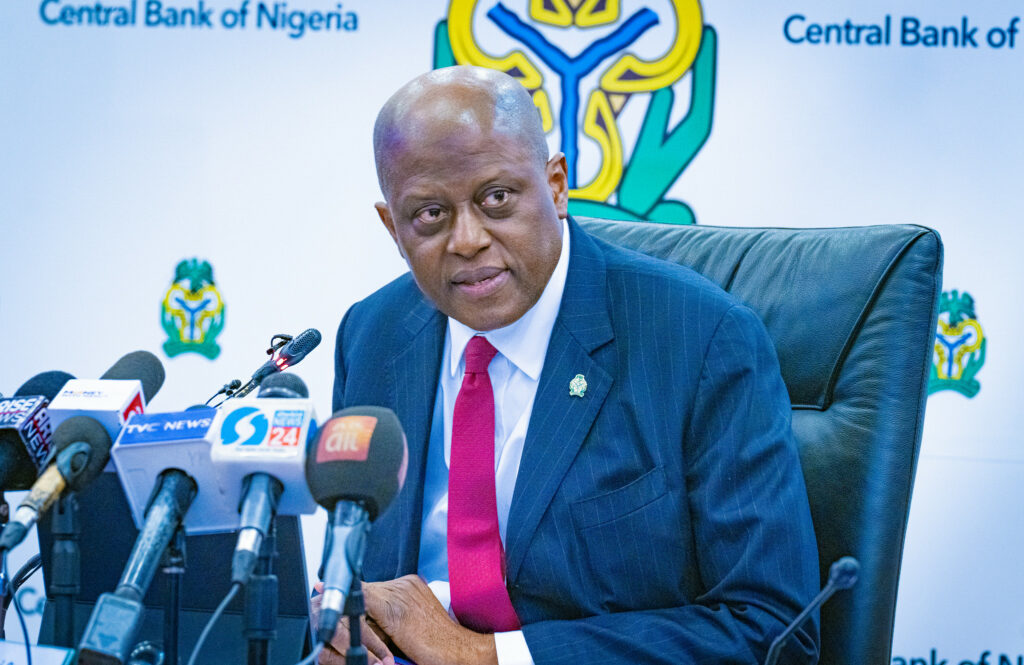
To address this imbalance and plant the nation on a progress path, the Central Bank of Nigeria (CBN) is betting on digital transformation via a fortified framework.
Recently, the apex bank embarked on what may be described as an aggressive financial inclusion drive.
Themed; “Driving Alternative Payment Channels as Tools for Financial Inclusion, Growth and Accelerated Economic Development,” the CBN’s recent outreach vessel docked in Lagos and Abeokuta. The message was clear that the effort goes beyond mere policy talk but a clarion call for inclusion, innovation and the future of the Nigerian economy.
From sensitisation campaigns to digital payment rollouts, the apex bank is charting a new course, one rooted in technology, transparency and accessibility for all.
However, questions still abound over the ability of the CBN to shake up fintech in Nigeria. Users on X are visibly angered with network charges on USSD transfer, loan scams from Opay and Palmpay.
A user @qceefx said, “Why are networks still charging people N6 at any USSD transfer, whether the transaction goes through or not, you will be debited N6, once you click any bank USSD code they deduct money from one’s airtime”.
@IkeOscar said, “I think the CBN might want to look into Opay loans scamming Nigerian citizens.
Hence, what does this shift mean for the economy? Can digital finance truly drive inclusive development in Africa’s largest economy?
Financial inclusion as a national imperative
At the heart of CBN’s strategy is financial inclusion, the idea that every Nigerian, regardless of income, education or geography, should have access to affordable financial services.
Speaking at the CBN Fair in Abeokuta, Hakama Sidi-Ali, Acting Director of the Corporate Communications Department, described the naira as not just a means of exchange but “a critical symbol of national identity.”
She urged Nigerians to handle the currency with respect while also embracing emerging digital tools that promote financial inclusion.
“The theme of this fair,” she stated, “was carefully chosen to address the imperative of value addition and the links that catalyse SMEs and other economic activities to attain the much-needed price stability.”
Sidi-Ali also stressed that the CBN, under the leadership of Governor Olayemi Cardoso, remains committed to delivering on its core mandate of monetary and price stability, while actively stimulating productivity and inclusiveness.
Alternative payment channels a new economic arteries
From mobile money and USSD codes to agent banking and digital wallets, alternative payment channels are rapidly transforming how Nigerians interact with money. These channels provide fast, low-cost, and secure means of transaction especially for those in remote or underserved regions.
According to the Nigeria Inter-Bank Settlement System (NIBSS), mobile and online transfers have recorded double-digit growth in both transaction volume and value in the past year alone. This surge reflects the increasing acceptance of digital finance, particularly among youths and small business owners.
CBN’s push to promote these channels is not merely a nod to technology trends; it is a strategic move to widen access to economic opportunities.
“These solutions not only help bridge the gap between urban and rural communities,” said the CBN in its Lagos fair announcement, “but also support the Federal Government’s vision for an inclusive, cash-lite economy.”
Empowering SMEs and the informal sector
Nigeria’s informal economy made up of market traders, artisans, transport operators, and smallholder farmers, constitutes a significant portion of GDP and employment. Yet, most of these players operate outside the formal financial system, limiting their ability to scale or access credit.
Through agent banking and mobile platforms, the CBN is enabling small businesses to receive digital payments, build financial histories, and connect to new markets. This directly contributes to productivity, reduces cash-related risks, and boosts transparency in business operations.
CBN Branch Controller, Abeokuta Branch, Malik Adebola Ololade, in his welcome address, said that the CBN Fair is one of the Bank’s major public enlightenment initiatives aimed at sensitising members of the public on the Bank’s policies, programmes, and interventions.
He added that it also serves as a platform to deepen financial literacy, promote transparency, and strengthen trust between the Bank and the Nigerian people.
“Over the years, the Fair has evolved into a veritable channel for fostering two-way communication between the Central Bank and the grassroots. It enables us not only to explain our policies but also to listen to your concerns, feedback, and expectations. This year’s event continues that tradition, and I encourage everyone here to actively participate in the discussions.
“As we navigate the evolving economic landscape – both globally and locally -the need for increased public awareness of monetary policy, financial inclusion, consumer protection, digital payments, and intervention programmes cannot be overemphasized. The CBN remains committed to ensuring a sound financial system and an inclusive economy where every Nigerian can thrive”, he stated.
Digital finance as catalyst for growth
The link between digital finance and economic growth is increasingly evident. As more people access formal financial services, there is greater potential for savings mobilisation, consumer spending, job creation, and entrepreneurship.
The CBN has already recorded tangible gains.
According to Sidi-Ali, recent reforms have led to; Increased foreign investment inflows, positive trade balances and a quantum leap in the financial inclusion rate.
She stated, “Over the past twenty-two months, the Bank has, among others, rolled out the following functional policies to strengthen the financial system: Exchange rate unification to minimize arbitrage opportunities and reduce volatility in the foreign exchange market and cleared over 7 billion dollars of verified backlog of FX forwards; launch of Nigeria Foreign Exchange (FX) Code; Bank Recapitalisation to strengthen the resilience and global competitiveness of the banking sector; launched the non-resident BVN to connect Nigerians abroad with home, launched the Unified Complaints Tracking System (UCTS), among other policies”.
These structural reforms, coupled with the promotion of digital finance, aim to create a more transparent, efficient, and competitive financial system.
Challenges ahead
One of the biggest barriers to digital adoption is trust. Many Nigerians, especially in rural areas, remain skeptical of digital platforms due to concerns around fraud, technical glitches, and lack of knowledge.
This is why the CBN is investing heavily in financial literacy and public sensitization as events like the CBN Fair are designed to educate citizens on how to safely use digital payment tools, understand their consumer rights, and engage with financial institutions effectively.
Also, digital infrastructure gaps, particularly in rural areas, still limit access to reliable internet and mobile networks. Cybersecurity threats and the risk of financial scams like the MMM or FF also pose concerns, particularly for new users.
Moreover, successful financial inclusion goes beyond just access because it requires usage, value creation, and continued education. Thus, for the digital economy to be truly transformative, the CBN must work closely with telecoms to ensure connectivity, fintech start-ups to drive innovation, traditional banks to modernize services and other industry regulators to maintain consumer protection and data privacy.
This way, a collaborative approach will ensure that alternative payment channels are not only widely available but also reliable, safe, and affordable.
Conclusion
As the world becomes increasingly digitised, Nigeria cannot afford to be left behind. The Central Bank’s drive to promote alternative payment channels is more than a modernization effort, it is an economic revolution grounded in access, equity, and innovation.
With deliberate policies, strong leadership, and continuous public engagement, the CBN is laying the groundwork for a more resilient, inclusive, and digitally enabled economy, one where every Nigerian, regardless of his or her background, can thrive.















Leave a comment