



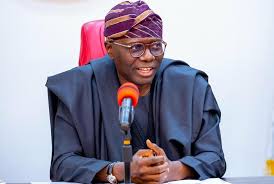
Sanwo-Olu is committed to education and human capital development, argues
SAMUEL AYELABOWO
In a rapidly evolving world where knowledge and skills define prosperity, governments that prioritise education are not merely investing in schools, they are shaping destinies. In Lagos State, this philosophy is finding strong expression under the leadership of Governor Babajide Sanwo-Olu, whose administration is making deliberate, large-scale investments in education and human capital development.
The recent launch of a ₦34.9 billion ($25 million) outcomes-based education fund marks a defining moment in Lagos’ education reform journey. More than just a policy initiative, it is a bold statement of intent: that every child, regardless of background, deserves not only access to education but the opportunity to learn, grow, and thrive.
For decades, education policy in many parts of Nigeria has focused heavily on enrolment figures, how many children are in school. While access remains crucial, it is no longer sufficient. The real question is whether children are actually learning.
Sanwo-Olu’s education fund signals a strategic shift from access to outcomes. By adopting an outcomes-based financing model, the Lagos State Government is aligning funding with measurable results such as literacy, numeracy, and retention.
This approach introduces a new level of accountability. It ensures that investments in education are not merely symbolic but transformative. As the governor aptly noted, the goal is to ensure that “every investment translates into real learning, real opportunity, and measurable outcomes.”
This is a critical pivot that places Lagos at the forefront of education reform not just in Nigeria, but across Africa.
At the heart of this initiative is a clear and urgent objective: reducing the number of out-of-school children. Despite Lagos’ status as Nigeria’s economic hub, the challenge of children outside the formal education system persists, driven by poverty, migration, and social dislocation.
The Lagos Education Access Fund aims to address this head-on by targeting over 50,000 out-of-school children between the ages of six and 14. Through structured community outreach and targeted interventions, the programme seeks to remove barriers that keep children away from classrooms.
But what makes this initiative particularly compelling is its holistic approach. It recognises that getting children into school is only the first step. Sustaining their attendance and ensuring meaningful learning outcomes is equally important.
By also supporting 150,000 pupils already in school, the programme ensures that the focus extends beyond enrolment to quality education. This dual strategy, bringing children in and improving what they experience once inside, reflects a comprehensive understanding of the education challenge.
The new initiative builds on the successes of Project Zero, a flagship intervention launched in 2021. Through this programme, Lagos has identified, tracked, and reintegrated more than 36,000 children into formal education.
Project Zero demonstrated that targeted interventions, backed by data and community engagement, can yield tangible results. It also provided valuable lessons on the importance of monitoring, follow-up, and stakeholder collaboration.
By scaling up these efforts through the new education fund, Sanwo-Olu is not starting from scratch. Instead, he is building on a proven foundation, expanding its reach, and enhancing its impact.
One of the most commendable aspects of the Lagos approach is its recognition that education does not exist in isolation. Children drop out of school not just because of lack of access, but often due to economic hardship at home.
To address this, the government has integrated livelihood support for parents and guardians into its education strategy. Over 360 beneficiaries have received vocational training in areas such as fashion design, soap making, catering, and hairdressing.
This intervention reflects a deeper understanding of the socio-economic dynamics at play. When families are economically stable, children are more likely to remain in school. By empowering parents, the government is indirectly strengthening educational outcomes.
It is a model that links education policy with economic empowerment—a synergy that is both practical and impactful.
Beyond policy and funding, physical infrastructure remains a critical component of education delivery and learning outcomes. Classrooms, schools, and learning facilities are the foundation upon which educational experiences are built.
Sanwo-Olu’s administration has made significant strides in this area, delivering more schools and classrooms in the past seven years than were constructed in the previous two decades. This expansion is not merely quantitative; it is strategic, aimed at addressing overcrowding and improving the learning environment.
Modern classrooms, better facilities, and improved learning conditions contribute directly to student engagement and academic performance. They also enhance the dignity of education, making schools places where children are eager to learn.
Another key element of the governor’s approach is the emphasis on accountability, not just within government, but across society. The proposed executive order mandating that school-age children should not be seen outside during school hours underscores this commitment.
While enforcement must be handled with sensitivity, the message is clear: education is a shared responsibility. Parents, communities, and institutions all have a role to play in ensuring that children are in school.
This approach shifts education from being solely a government obligation to a collective societal duty. It encourages communities to take ownership and fosters a culture where education is valued and prioritised.
The success of the Lagos education initiative is also anchored in strategic partnerships. Collaboration with the Education Outcomes Fund (EOF) and other development partners brings not only financial resources but also technical expertise and global best practices.
These partnerships enhance the effectiveness of the programme, ensuring that it is aligned with international standards while remaining responsive to local realities.
In an era where complex challenges require collaborative solutions, Lagos is demonstrating how governments can leverage partnerships to achieve greater impact.
At its core, Sanwo-Olu’s investment in education is an investment in human capital. It recognises that the true wealth of any society lies in its people, their knowledge, skills, and potential.
By focusing on children, the government is investing in the future workforce, innovators, and leaders of Lagos. It is laying the foundation for sustained economic growth, social stability, and global competitiveness.
In a state that already leads Nigeria in economic output, this focus on human capital ensures that growth is not only sustained but inclusive.
The broader implication of these efforts is the positioning of Lagos as a model for education-driven development. As cities around the world grapple with issues of inequality, unemployment, and social mobility, Lagos is charting a path that places education at the centre of its development strategy.
The emphasis on outcomes, accountability, infrastructure, and socio-economic support creates a comprehensive framework that addresses both immediate challenges and long-term goals.
Governor Babajide Sanwo-Olu’s education initiatives reflect a leadership style that is both pragmatic and visionary. By committing substantial resources, embracing innovative financing models, and addressing the root causes of educational challenges, his administration is redefining what it means to invest in the future.
The ₦34.9 billion education fund is more than a financial commitment; it is a declaration that the future of Lagos will be built in classrooms, shaped by knowledge, and sustained by empowered citizens.
In a country where the education sector often faces neglect, Lagos is setting a powerful example. It is demonstrating that with the right vision, commitment, and strategy, education can become a transformative force.
And in that transformation lies the promise of a brighter, more prosperous future, not just for Lagos, but for Nigeria as a whole.
Ayelabowo writes from Ikeja, Lagos State











Leave a comment